


Results 1 to 5 of 5
-
2 Days Ago #1
 Registered User
- Join Date
- Jan 2022
- Posts
- 104
Suspension Setup Strategy for Increasing Speed
Howdy fellers. I have a couple questions regarding suspension setup theory in relation to down-track feel.
Reading about the conventional vs modern strategies for cornering is really really fascinating to me. Something I've been trying to do is place my car into one of those buckets to figure out from the kinematics perspective what my car is good at and what its lacking so that I can tailor my driving differently to go faster around autocross since that's what I built this car for.
The more and more advanced I get into racing, the more often I hear the words "Sway bars make you slower" and I'm trying to wrap my head around this in a way that can be applicable to my car. In my trial-and-error of trying stuff, a huge amount of my knowledge is from making HUGE changes to learn what happens at the extreme, to then dial it back. Thinking about it, if sway bars make me slow, does this mean the ideal suspension for nuclear speed is not using sway bars at all? This specific question is rhetorical just to get my brain blood flowing.
The first problem is I don't have the theoretical and book knowledge to determine exactly what "Sway bars make you slower" means from a on-paper sense (general understanding but not detailed reasoning); all of my knowledge is "seat of the pants" so to speak, down-track, in this specific car which is a VASTLY different perspective than other cars that are comparably fast or faster. The actual number of "FAST" chevelles around autocross is so astronomically small so I don't really have many (any) people I can creep on to "copy" their setups, and even the guys that do have 3 links have different goals with their cars so I can't even creep on theirs regardless lol
The chevelle platform suffers from many things, all of that aside I've built what is VERY quick chevelle that has mended MUCH of what makes it slow. It has a very manageable and predictable amount of body roll/weight transfer right now. The front is pretty well dialed in (750lb/in spring and I *think* a 1000lb/in sway bar spec-ed by ABC performance so I trust Tony)....out back I built a 3 link/panhard setup with a significantly lower roll center than the 4-link. I've managed to match the weight transfer out back to match the front decently well but with a bigger sway bar instead of different spring rates. 225lb/in spring and a 1100lb/in sway bar. Onto the next point.
The second problem is, I really like how my car handles in cornering right now EVEN THOUGH I technically am potentially leaving time on the table with a massive sway bar.
If I go to ridetech's or QA1 or anyone's spring-rate calculator and I plug in pick-up point values of my current setup, I get a "recommended rate" of between 200-250lb/in, which for a while perplexed me. After idle pondering, that's because those calculators ONLY factor the squat/lift force axis of movement, they DO NOT factor in roll center height and bar rates for cornering rates.
So, I guess this can potentially be a downside of the 3 link; if the "optimal" cornering spring rate is significantly higher than the "optimal" accel/decel rate. Or maybe I'm overthinking it, who knows.
So this leads to my questions.
(These are NOT questions for chevelle owners even though this is a chevelle; I'm looking for answers from folks with the numbers/theory knowledge to possibly point me in the a direction I can explore further. Now, enough of me being a snooty a-hole)
1: If a car has Xlb/in of rate in cornering (sway bar added to spring rate), what is the ideal ratio of spring-to-bar rate in the rear in cornering?
2: If I reconfigure my setup to utilize that preferrable ratio of spring:bar, does the car act *significantly* differently in accel/decel compared to the soft spring/big bar?
3: If a car has a non-ideal bar/spring rate ratio, WHERE EXACTLY down-track would I benefit from going to a stiffer spring/lighter bar; IE what kind of corner on a road course or what kind of element in autocross?
4: Using my numbers, 550lb/in (half of sway bar) and 225lb/in from spring gives me 775lb/in total at 1 wheel; would I use that number as the general guide for selecting new parts? (Example, I have a 440lb/in bar in the garage, could I get 500lb/in springs to come close to that 775lb/in, or is this reasoning flawed?)
-
2 Days Ago #2

 Registered User
- Join Date
- Sep 2010
- Location
- Beach Park IL
- Posts
- 3,056

1. There isn't. Certainly not based on spring and bar rates.
That kind of nulls the rest of the questions. Here's some general thoughts to ponder.
There is an ideal roll rate. And the number exists for the front and the rear separately and total. Technically it will be different for short tight courses vs long open courses, same with surface as high grip concrete is different than seal coated asphalt. That's why adjustable sway bars are rad, especially in the rear.
For equal roll rates, the car that gets more of the roll rate from springs will typically be faster. If you are pushing up on the sway bar with the outside tire, the bar is lifting the tire and counteracting the spring on the inside tire.
The spring rate calculators are really just spitting out load numbers and then adding a multiplier for use case. They are a good start but they tend to be too stiff on the street side and too soft on the race side in my experience.
What you should be looking at is ride frequency as a method to determine spring and wheel rates. That will get you much closer but then it still comes down to testing to get the car setup to your liking.
This is the most important thing. All of it is a bell curve.
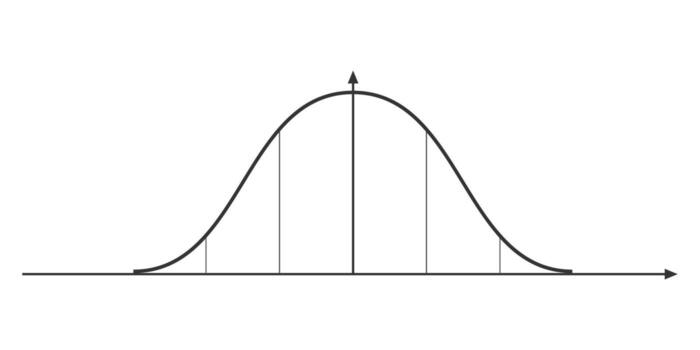
Right there in the middle is ideal. Either side of that is pretty good and from there it drops off rapidly. For a given tuning parameter, if you are on the less side of ideal and you add more, you will go faster. If you are on the more side of ideal and add more you will go slower. This applies to everything. Tire pressure, shock settings, roll rates, wheel rates, etc. Do the ride frequency math and then calculate your roll rates.Donny
Support your local hot rod shop!
-
2 Days Ago #3
Registered User
- Join Date
- Jan 2022
- Posts
- 104
That, i hadn't thought of; the SPRING should have a rate such that it *can* "overpower" the sway bar, NOT vise-versa. This makes a lot of sense and suggests an answer to my 3rd question; so technically if I find a combination of parts that has similar roll characteristics to the car right now but with a more optimal bar:spring rate ratio, I *should* be able to push the car harder everywhere that isn't a straight line since it has more traction....theoretically. Originally Posted by dontlifttoshift

Talk to me like im an idiot (i am); what are some good resources you or anyone would recommend that teaches me the math behind this stuff so I can reasonably come to my own conclusion on this stuff?
2 Days Ago #4
Registered User
- Join Date
- Sep 2010
- Location
- Beach Park IL
- Posts
- 3,056
I like math but not enough to actually do it. There are several ride frequency calculators out there, here is one. I have no idea how accurate it is or isn't. https://www.badinvestmentbuilds.com/...ncy-calculator
Donny
Support your local hot rod shop!
1 Hour Ago #5
Registered User
- Join Date
- Sep 2007
- Posts
- 460
IMO handling that inspires confidence is worth a lot. It will get you through a corner quicker than a 'faster' setup which is unforgiving. IMO setups that need heavier sway bars tend to lend confidence.
Think of it this way:
If the setup can go 100 mph, but you only feel comfy pushing it to 90% = you actually go 90 mph.
If the setup can go 96 mph, but you feel comfy pushing it to 96% = you actually go 92 mph.
You can build the suspension geometry with high roll centers and it will need very little sway bars. The car will be responsive, especially transitioning from left to right. But it will be less forgiving. Bumps in the road will kick the car around. Etc.
The more common layouts (lower roll centers + bigger sway bars) give the driver more room to feel the car's body-lean in corners. And it reduces the upset from road bumps. That means the driver can feel what's happening, and that gives him more confidence to push it to 96%.

 Reply With Quote



