


Results 1 to 7 of 7
Hybrid View


-
2 Weeks Ago #1

 Registered User
- Join Date
- Sep 2010
- Location
- Beach Park IL
- Posts
- 3,060

1. There isn't. Certainly not based on spring and bar rates.
That kind of nulls the rest of the questions. Here's some general thoughts to ponder.
There is an ideal roll rate. And the number exists for the front and the rear separately and total. Technically it will be different for short tight courses vs long open courses, same with surface as high grip concrete is different than seal coated asphalt. That's why adjustable sway bars are rad, especially in the rear.
For equal roll rates, the car that gets more of the roll rate from springs will typically be faster. If you are pushing up on the sway bar with the outside tire, the bar is lifting the tire and counteracting the spring on the inside tire.
The spring rate calculators are really just spitting out load numbers and then adding a multiplier for use case. They are a good start but they tend to be too stiff on the street side and too soft on the race side in my experience.
What you should be looking at is ride frequency as a method to determine spring and wheel rates. That will get you much closer but then it still comes down to testing to get the car setup to your liking.
This is the most important thing. All of it is a bell curve.
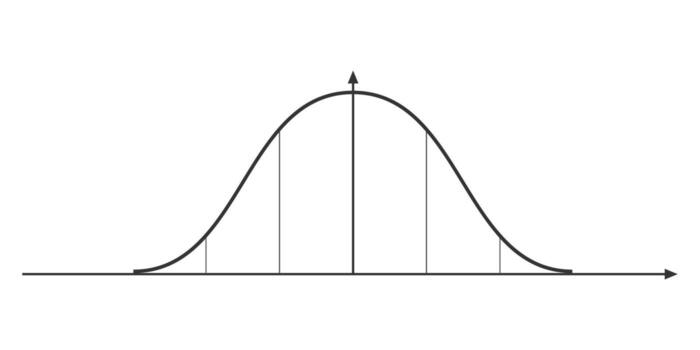
Right there in the middle is ideal. Either side of that is pretty good and from there it drops off rapidly. For a given tuning parameter, if you are on the less side of ideal and you add more, you will go faster. If you are on the more side of ideal and add more you will go slower. This applies to everything. Tire pressure, shock settings, roll rates, wheel rates, etc. Do the ride frequency math and then calculate your roll rates.Donny
Support your local hot rod shop!
-
2 Weeks Ago #2
Registered User
- Join Date
- Jan 2022
- Posts
- 104
That, i hadn't thought of; the SPRING should have a rate such that it *can* "overpower" the sway bar, NOT vise-versa. This makes a lot of sense and suggests an answer to my 3rd question; so technically if I find a combination of parts that has similar roll characteristics to the car right now but with a more optimal bar:spring rate ratio, I *should* be able to push the car harder everywhere that isn't a straight line since it has more traction....theoretically. Originally Posted by dontlifttoshift

Talk to me like im an idiot (i am); what are some good resources you or anyone would recommend that teaches me the math behind this stuff so I can reasonably come to my own conclusion on this stuff?
1 Week Ago #3
Registered User
- Join Date
- Apr 2009
- Location
- Michigan
- Posts
- 336
Regarding resources, Race Car Vehicle Dynamics by Milliken and Milliken was the standard when I was in school, and I believe it still is.
- Ryan

 Reply With Quote