Results 1 to 20 of 132
Hybrid View


-
05-11-2017 #1
 Registered User
- Join Date
- Sep 2011
- Location
- Southern Ontario
- Posts
- 640

Interesting stuff Gustave, I appreciate the write up and nice pictures to boot!
-
05-11-2017 #2 Starting The Transformation
- Join Date
- Feb 2010
- Location
- El Segundo, CA
- Posts
- 268
 Thanks. I hope this of interest to some people, now or in the future.
 Originally Posted by Peter Mc Mahon

05-11-2017 #3
Starting The Transformation
- Join Date
- Feb 2010
- Location
- El Segundo, CA
- Posts
- 268
One last item regarding the 5x5 and GN bearings. There is this little do-dad:
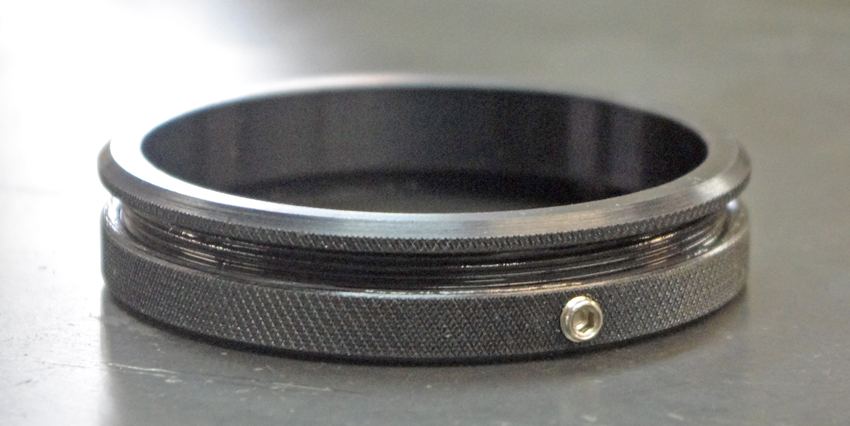
This is called a "bearing spacer". I first heard about these when I was chatting on the phone with Ken at Speedway Engineering about ways to reduce brake piston knockback on floaters. At the time I heard what he said, but had no idea what he was talking about. It took me a bit of thinking to realize how these bearing spacers actually work.
Think about the typical way one would adjust pre-load on the front wheel bearings, and then insert a cotter pin to keep the retaining nut from backing out. That retaining nut is not really tight. In fact it is merely hand-threaded onto the spindle snout until it just kisses the wheel bearing. Now think of the action of threading a (non-locking) nut onto a bolt. If you carefully jiggle the nut you can feel that it moves a tiny bit. It has to by definition, otherwise you would never be able to thread the nut onto the bolt by hand (it would be an interference fit).
If you were to subsequently thread a second nut onto the bolt and tighten them against each other with wrenches, you would no longer be able to detect any movement at all in either nut. All play will have been taken up by the action of pushing the nut threads against the bolt threads.
The same situation presents itself on a front spindle snout when you adjust the wheel bearings. The nut it never really tightened against anything, so there is this small amount of play present.
The idea behind bearing spacers is that they fit between the inner bearing races, and as you tighten the retaining nut against the outermost inner wheel bearing race, it pushes against the bearing spacer, which then pushes against the inner-inner wheel bearing race, which is bottomed out against the end of the snout. The net result is that you can tighten the retaining nut to 100 ft lbs (as is often recommended), and still achieve perfect wheel bearing adjustment. The trick is that the bearing spacer is adjustable for length, and you have to fiddle with the size of the bearing spacer through trial and error to get the adjustment just right. But when it is right, you can just crank the retaining nut right down and there is not more play in the nut. Hope this makes sense. DRP seems to be where circle track racers get their bearings spacers. They were the recommended source by Ken at Speedway.
Here is a video on the DRP website showing how the spacers work and how to adjust them:
https://youtu.be/ezDmH9iFsYI
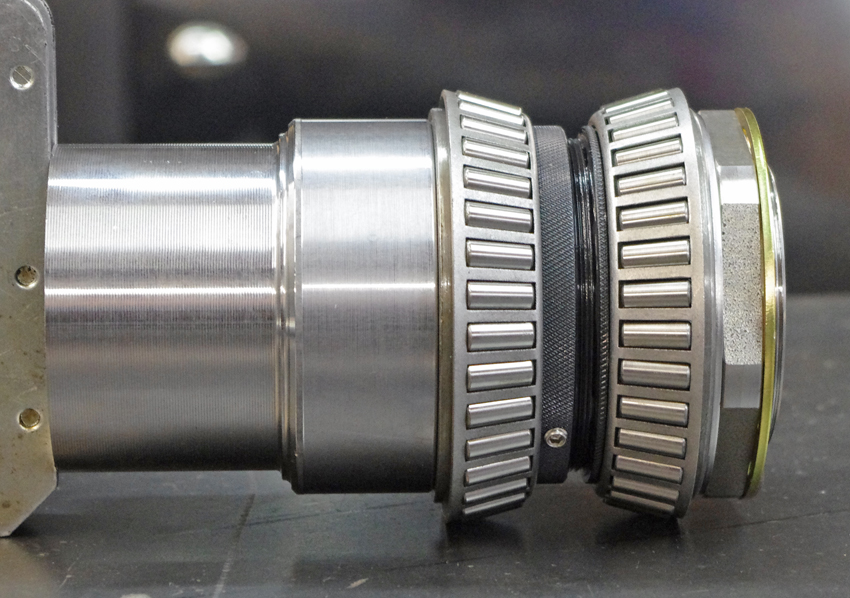
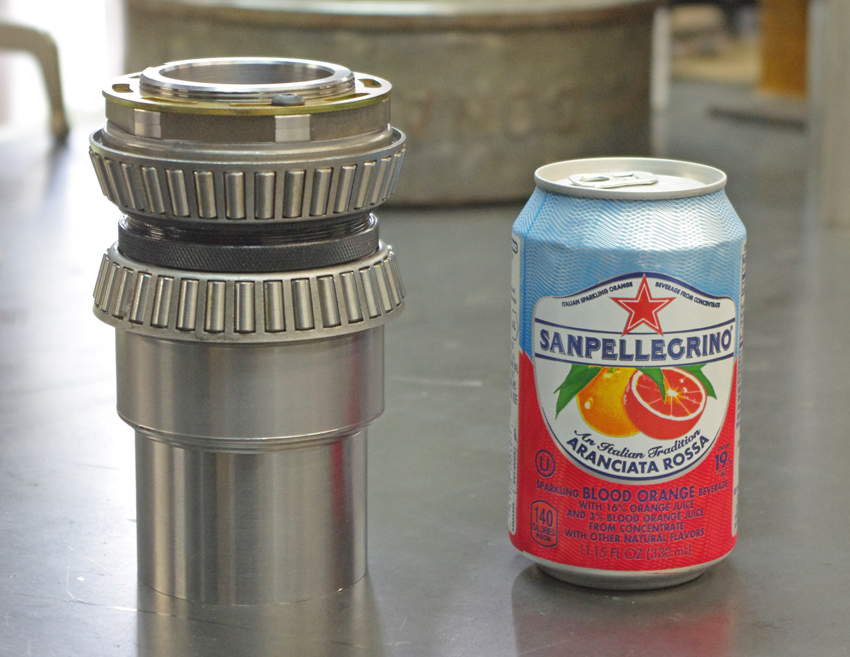
Here is a picture of the 2.5" GN bearing spacer installed between the bearings:
05-11-2017 #4
Starting The Transformation
- Join Date
- Feb 2010
- Location
- El Segundo, CA
- Posts
- 268
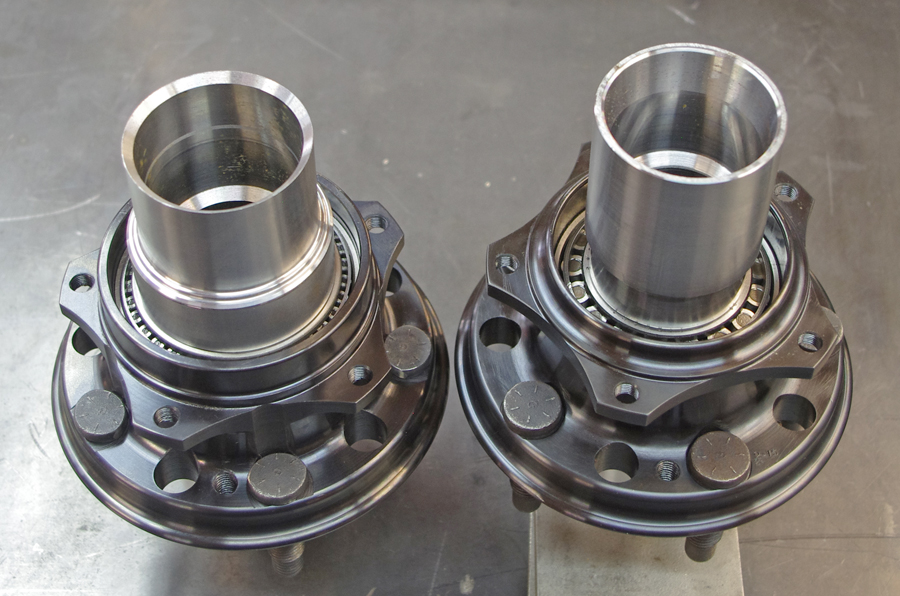
Couple things I forget to mention. These Grand National and 5x5 hubs come with 5/8" studs, not 1/2". The thread can be fine or coarse (as in the photos). I plan to install ARP studs with an extra long shank so that the brake hat and wheel are not pressing against the threads of the studs, but against the shank. Just seems the right way to do things.
The dust caps, which attached with 3 or 4 screws depending on brand, are 3.06" OD. Larger than the common Corvette size of 2.78" but not totally unheard of. The pointy dust cap is meant to speed installation of wheels during pit stops. I prefer the look of the flat ended dust cap.
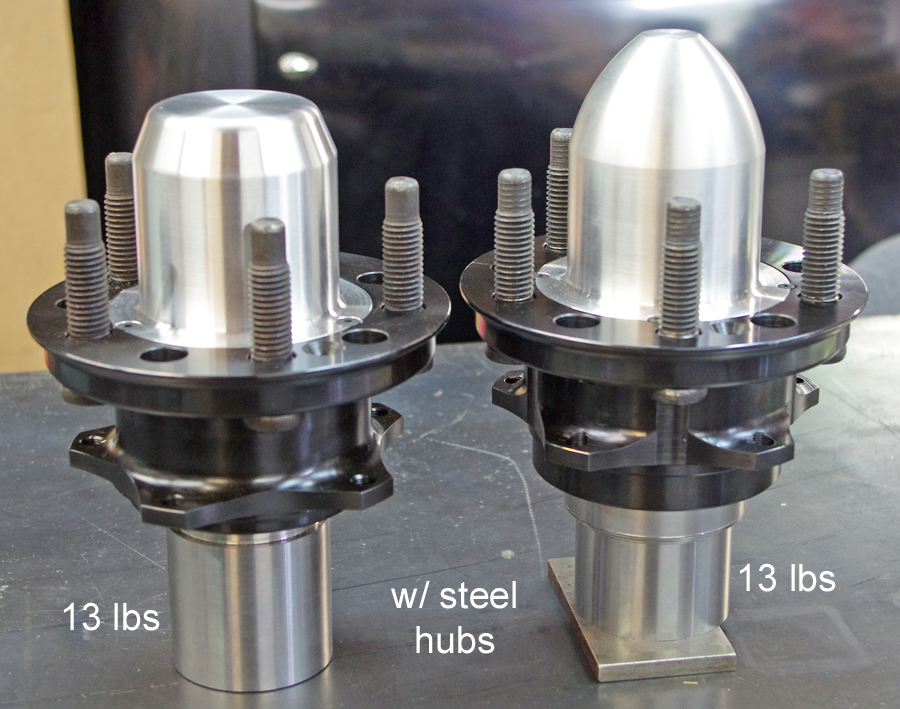
Note that each design, when completely assembled, weighs 13 lbs. This vs. a Corvette ZR1 hub which weighs 8 lbs. So a 5 lb difference. But I have steel hubs at my disposal. One can purchase identical aluminum hubs which weigh about 3 lbs less. This narrows the gap to 2 lbs, which you can easily loose or gain just be changing tire type. And many folks in the Pro Touring realm would happily kiss away 2 lbs on each wheel just to get a particular "look" (I probably fall in that camp).
Regarding steel hubs vs. aluminum hubs. Aluminum is lighter, but is also less strong, less stiff, loses both strength and stiffness as temps increase above 250 deg, and the hubs expand more as they heat up, thereby changing the bearing preload. So not a slam dunk necessarily.
In particular regard to knockback induced by flex, the larger 2.5" GN hub might actually present a better design when going with aluminum. The larger diameter of the "barrel" of the hub means the wheel mount surface is better supported as the wheel pushes on it and tries to flex it (thus moving the rotor relative to the caliper). You can sort of see this in the pics:
05-13-2017 #5
Starting The Transformation
- Join Date
- Feb 2010
- Location
- El Segundo, CA
- Posts
- 268
I did some research into the bearings of the 2.0" 5x5 design vs. the 2.5" GN designs.
The 5x5 bearing has a part number 368A with a corresponding race p/n of 362A
The GN bearing p/n is L610549 with a race p/n L610510
Here are the dynamic load ratings for the two bearing types:
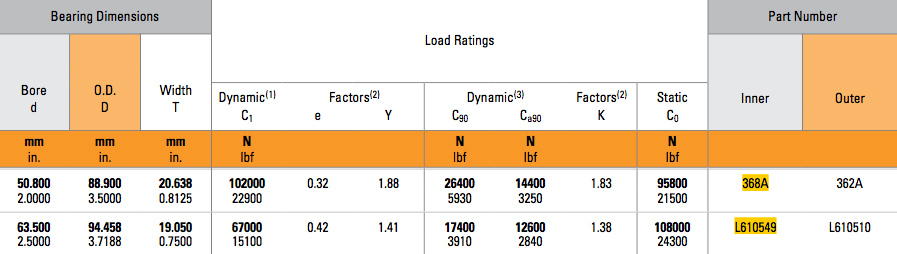
One can see that the 2.0" 5x5 bearings have a higher dynamic load rating than the GN bearings, both radially and in the axial (thrust) direction.
If you, like me, are not familiar with the way the load ratings are expressed, here's an explanation:
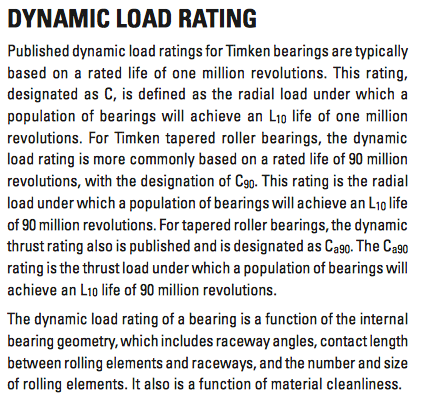
Based on this it seems the C90 and Ca90 ratings are the ones to focus on. And in this respect the 2.0" 5x5 bearings have a 52% higher radial and 14% higher thrust load rating than the 2.5" GN bearings. That is something you might hang your hat on.
05-14-2017 #6 Registered User
- Join Date
- Mar 2010
- Posts
- 469
This is very interesting stuff. I'm looking into the DRP spacers and bearings at the moment. I questioned the import bearings that came with my floater. "Everyone" says they are "fine". I really don't get why manufacturers skimp on the bearings, it's a difference of $50-$100 on a brutally expensive part.
Also, FWIW, it's a nice dream that my truck will way 3000lbs and have a 50/50 weight distribution, but no, nope, huh-uh, not very likely.
Thanks again for taking the time to write these posts, very cool stuff.

 Reply With Quote