


Results 1 to 8 of 8
Thread: Rear Disk Brakes Dragging
-
04-30-2014 #1

 Registered User
- Join Date
- Aug 2004
- Location
- Walla Walla, WA
- Posts
- 1,512

Rear Disk Brakes Dragging
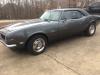
I got my 11 year '68 Camaro build on the road yesterday, and have determined that the rear disk brakes are dragging.
The brake setup is a CPP branded Hydratech hydroboost with their master cylinder and combination valve, C5 front calipers and Wilwood rear disks with the integral drum emergency brakes. I drove it about 8 miles from the alignment shop to my home yesterday. There was noticeable brake drag from the rear brakes during the drive, and when I checked at home the rear calipers were about 40-50 degrees hotter than the fronts.
It's not the emergency brakes, there's no residual pressure valve in the line to the rear brakes. My only thought is that I got a disk/drum combination valve rather than a disk/disk, although the Summit tech line says there's no difference between the two.
Thoughts on where I should start looking?
Mike Kelcy - '68 Camaro with some stuff done to it.
-
04-30-2014 #2 -Moderator/Sponsor-
- Join Date
- Apr 2001
- Location
- The City of Fountains
- Posts
- 16,120
Does your rear have c-clips? Is it a fixed caliper in the rear?
Andrew1970 GTO Version 3.0
1967 Cougar build
GM High-Tech Performance feature
My YouTube Channel Please Subscribe!
Instagram @dr__efi
I deliver what EFI promises.
Remote Holley EFI tuning.
Please get in touch if I can be of service.
"You were the gun, your voice was the trigger, your bravery was the barrel, your eyes were the bullets." ~ Her
04-30-2014 #3 Registered User
- Join Date
- Aug 2010
- Location
- now In Dandridge, Tn.
- Posts
- 1,301
Have a 1/4" wrench handy for the bleed screws. Drive the car 5 miles or so, until you can feel the drag (drive time + heat) then, as a test, reach under and loosen one of the bleed screws and see if that solves the problem. Then drive home, it will probably tighten up again when you get home. My guess is you still have air in the lines, and as it heats up, it expands and causes the brakes to drag. If you let it sit and cool, it goes away. If it was residual pressure, it would stay. When we build a fresh car or truck, with all new lines, it takes two or three rounds of bleeding, with test drives in between, pulling 5 to 6 ounces at each corner, to get all of the air out.
04-30-2014 #4
Registered User
- Join Date
- Aug 2004
- Location
- Walla Walla, WA
- Posts
- 1,512
Ford 9" rear, so no C clips. The rear calipers are a 4 piston Wilwood setup. I think the calipers are fixed, but the pistons on either side accommodate any offset in the rotor. Originally Posted by andrewb70

I called CPP, and they said that either the rod from the brake pedal to the booster is too long or the rod from the booster to the MC is too long. He suggested that the rear brakes drag because they are on the rear port of the MC, i.e., the first port to be affected when you apply the brakes.
I'll check and report back.Mike Kelcy - '68 Camaro with some stuff done to it.
04-30-2014 #5 Registered User
- Join Date
- Aug 2007
- Location
- Jonesboro, Arkansas
- Posts
- 2,506
Well, not to hijack a thread, but I'm having the same problem. I have 4 wheel disc. After mine sits it's ok, which I'm going to check out the air in the line idea..
Carl Wilson
1968 Camaro - T-56 6 speed - 383 Stroker, 2014 Mustang GT seats. FiTech EFI, Tanks Inc. Tank with Deutschwerks fuel pump.
04-30-2014 #6
Registered User
- Join Date
- Aug 2004
- Location
- Walla Walla, WA
- Posts
- 1,512
Hydratech customer service is great.
Even though I bought the unit from Summit as a CPP product, Paul at Hydratech PM'd me and suggested I call their tech department. I did, and Jim suggested I try shimming the MC out a bit from the boost unit. I did so, and the rear drag has almost gone away. I'll try a slightly thicker shim to see if that cures it completely.
That's not to say the brakes won't need more bleeding, but with the shims they're vastly improved.Mike Kelcy - '68 Camaro with some stuff done to it.
05-02-2014 #7
Registered User
- Join Date
- Aug 2010
- Location
- now In Dandridge, Tn.
- Posts
- 1,301
I wanted to put a a little info, hope this helps out.
There are two normal types of master cylinder pistons when it comes to the input seat. Shallow bore (left pict 1) and Deep bore (right pict 1). Most commonly, Shallow bore styles are used with power brakes, and Deep bore types are used in manual set ups. It is now common in the aftermarket to use Deep bore pistons in all master cylinders, and convert them to Shallow bore style by inserting a "plug" into the bore. (shown below the Deep bore master on the right). Here's the catch. The fit from a booster or hydro to the piston should be set at "zero" lash. Think of setting up a solid cam at .000" to .002", basically zero lash. If the output rod from the booster/hydro is not letting the piston return 100%, you may (not always) have some brake drag problems. I have found it to be VERY common, with new aftermarket masters, that the plug is too long. usually .070" to .100", yes, almost 1/8". You should be able to bolt the master flush to the booster/hydro without compressing the piston into the master. I cut the plugs down in a lathe, but they can be ground or sanded.
Another way to adjust this is with the booster output rod (pict 2) most - not all - are adjustable at the tip of the output rod on the booster. Sorry, but most hydroboost unit are not adjustable. Checking the master/booster fit should be standard practice on any new brake install, just like setting valves. Hope that helps out.
05-02-2014 #8 Registered User
- Join Date
- Aug 2012
- Location
- Southern Oregon
- Posts
- 183
Great job explaining it Rob. Like you said, it is very common with aftermarket master cylinders/boosters. I will be chucking a plug/slug into the lathe today to shorten it. The plug on it happens to be 1/8" too long.

 Reply With Quote