


Results 1 to 16 of 16
-
06-13-2012 #1
 Registered User
- Join Date
- Nov 2010
- Location
- Novi Mi
- Posts
- 143

How does this act similar to a sway bar
I came across several photos of a technology that came from race cars is my guess.
It acts like a sway bar in respect to opposing motion by producing an opposite force on the bell crank. Is there any torsional resistance built into the pivot point in the middle of the assembly? I know this would be great for packaging as I plan to run my shock/coilover setup in the same or similar setup.
-
06-13-2012 #2
 Registered User
- Join Date
- Sep 2002
- Location
- So. Cal
- Posts
- 1,179
It's exactly a sway bar. The blades can rotate changing the bar resistance. If the blade is flat to the opposing force, it will flex causing body roll. As you rotate the blade perpendicular to the opposing force, it will allow maximum sway bar strength (least amount of body roll)
We use on the race cars for cockpit adjustment. Works great.
Hope that made since?Ron DeRaad
68 Camaro RSx
Darton Sleeved LS9 - 434ci (4.155x4.00)
AFR LSX245 Heads (12:1cr)
660hp/588tq
-
06-13-2012 #3
Registered User
- Join Date
- Nov 2010
- Location
- Novi Mi
- Posts
- 143
So is there a roller bearing or a bearing of some sort that is on the rotation axis of the blades?
what do you mean by cockpit adjustments?
And when the blades are longitudinal with the car in these cases this setup is at its stiffest point?
-
06-13-2012 #4
Registered User
- Join Date
- Sep 2002
- Location
- So. Cal
- Posts
- 1,179
You can use bearings but I believe most are bushing to minimize play and maximize strength.
Cockpit adjustable meaning the driver can adjust while driving. The bottom image for example looks like it has a lockdown bolt in the center to stop the blade from moving/twisting. If you put a rod off of the bolt straight up, hook a cable to it and run to the driver, then you put a notched lever off to the side so you can move forward or backward to pivot the blade. Works nicely during a race when the fuel load reduces and the handling of the car starts to change.
With the example of the bottom image, if the blades are flat on the same plain as the rods. They will be at the strongest setting and least likely to flex. If you twist so the blades are straight up/down, then they are at the weakest setting and will flex. Looks like they have the blades around a 45 deg angle which would be in the middle of the adjustment range. You can buy different blade thicknesses depending on your application.Ron DeRaad
68 Camaro RSx
Darton Sleeved LS9 - 434ci (4.155x4.00)
AFR LSX245 Heads (12:1cr)
660hp/588tq
-
06-13-2012 #5
 Registered User
- Join Date
- Jul 2005
- Location
- Den Helder, the Netherlands
- Posts
- 1,148

I can see some (adjustable) flex in the set up in the second pic but not in the first pic, correct?
Thanks for posting, I was unfamiliar with this way of controlling sway action/motion.
-
06-14-2012 #6 Registered User
- Join Date
- Nov 2009
- Location
- the dirty mitten
- Posts
- 1,217
Very interesting. That top setup looks like it allows 0 actual spring rate, just solid. That bottom one seems a little better. I would think that you could use spring steel rods instead of that blade design for the road. Change the length between the mounts or the thickness of the bar and that could change your spring rate
Also if you can get your coil overs to mount parallel to the frame, its really easy to run a sway bar off your rockers. Some of em are a little hard to spot, but they are there
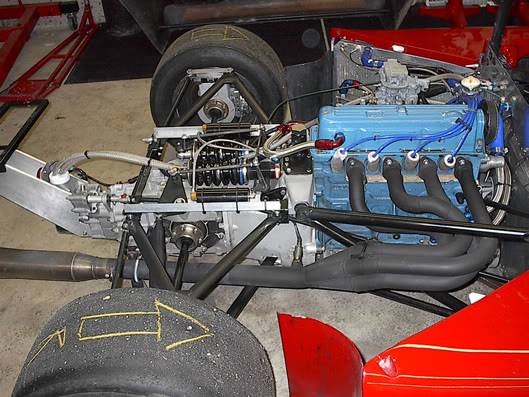

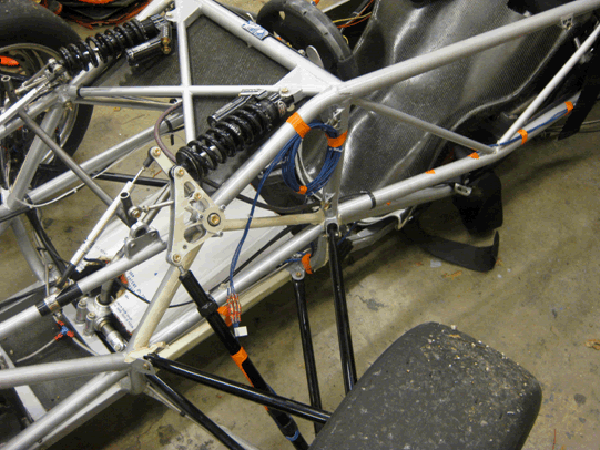
This one would be a little easier to mount to a framed car that needs more room for the engine and whatever else
http://www.mulsannescorner.com/ferrari333-5.htmlSteve
1968 Dodge Charger All Wheel Drive project Red Bull<script type="text/javascript" src="safari-extension://com.ebay.safari.myebaymanager-QYHMMGCMJR/5cce6da5/background/helpers/prefilterHelper.js"></script><script type="text/javascript" src="safari-extension://com.ebay.safari.myebaymanager-QYHMMGCMJR/85dc54c0/background/helpers/prefilterHelper.js"></script><script type="text/javascript" src="safari-extension://com.ebay.safari.myebaymanager-QYHMMGCMJR/85dc54c0/background/helpers/prefilterHelper.js"></script>
06-14-2012 #7 Registered User
- Join Date
- Oct 2009
- Location
- New Derry, PA
- Posts
- 1,265
Here's a look at a driver adjustable version. The actual anti-roll bar (part #5) is typically VERY stiff. As mentioned, the bar arm (blade in this case) can be rotated to create a stiffer or softer bending moment at the link mount.
The "Z" bar pictured in the "Volvo" (OP above) can also be used with rubber or various density plastic bushings to allow a small amount of roll compliance.
Ray Kaufman - Wyotech Chassis Fab and High Performance Instructor. Words of Wisdom from an old master... at Asylum Custom Interiors website
06-14-2012 #8
Registered User
- Join Date
- Nov 2009
- Location
- the dirty mitten
- Posts
- 1,217
Ray, is this something you could see on a road car? I do like that 2nd pic from the OP
Steve
1968 Dodge Charger All Wheel Drive project Red Bull<script type="text/javascript" src="safari-extension://com.ebay.safari.myebaymanager-QYHMMGCMJR/5cce6da5/background/helpers/prefilterHelper.js"></script><script type="text/javascript" src="safari-extension://com.ebay.safari.myebaymanager-QYHMMGCMJR/85dc54c0/background/helpers/prefilterHelper.js"></script><script type="text/javascript" src="safari-extension://com.ebay.safari.myebaymanager-QYHMMGCMJR/85dc54c0/background/helpers/prefilterHelper.js"></script>
06-14-2012 #9
Registered User
- Join Date
- Sep 2002
- Location
- So. Cal
- Posts
- 1,179
It's hard to see the top image but it looks like under the rod pivot point is the blade to allow the chassis to roll. Originally Posted by neki67
 Ron DeRaad
68 Camaro RSx
Darton Sleeved LS9 - 434ci (4.155x4.00)
AFR LSX245 Heads (12:1cr)
660hp/588tq
06-14-2012 #10
Registered User
- Join Date
- Sep 2002
- Location
- So. Cal
- Posts
- 1,179
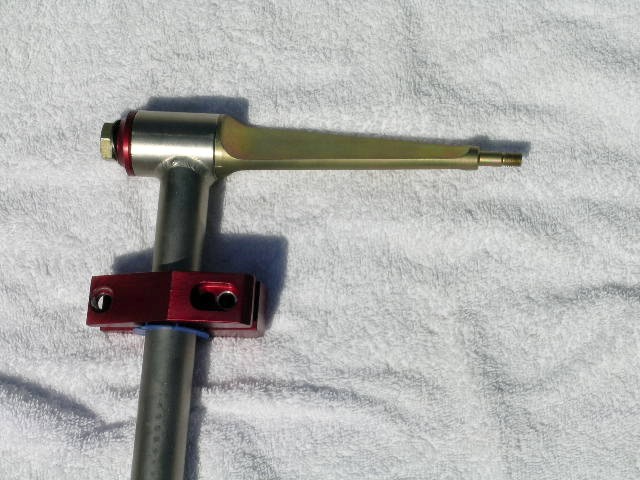
Here's a view of what you can do in a road car. I would love to do this to the rear as for a street car I think would give you the most benefit.
Things ain't cheap
http://www.hrpworld.com/index.cfm?tp...action=product

 Ron DeRaad
68 Camaro RSx
Darton Sleeved LS9 - 434ci (4.155x4.00)
AFR LSX245 Heads (12:1cr)
660hp/588tq
06-15-2012 #11
Registered User
- Join Date
- May 2007
- Location
- Las Vegas
- Posts
- 670
Proven Wicked... designed one for the 5th Gen camaro.
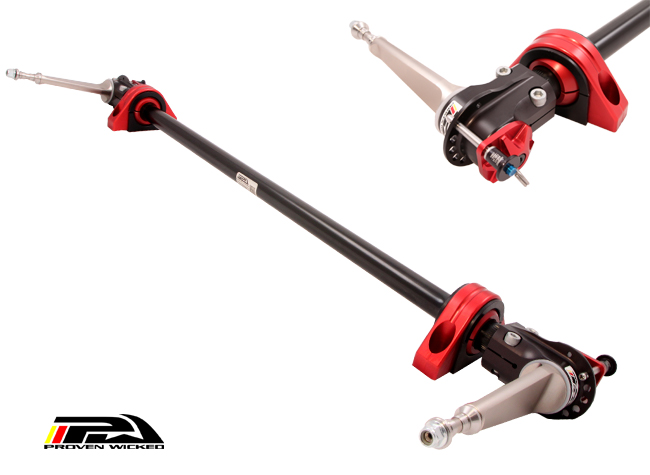
http://provenwicked.com/product_deta...&CID=OA==&VID=Rich
1969 Camaro (in hibernation)
1972 K5 Blazer - LQ9, 4L80e, NP205, D60, AAM 14BFF => http://67-72chevytrucks.com/vboard/s...d.php?t=423432
06-15-2012 #12
Registered User
- Join Date
- Sep 2002
- Location
- So. Cal
- Posts
- 1,179
That is seriously a nice piece. $975 ouch! Originally Posted by MCMLXIX
Ron DeRaad
68 Camaro RSx
Darton Sleeved LS9 - 434ci (4.155x4.00)
AFR LSX245 Heads (12:1cr)
660hp/588tq
06-17-2012 #13 Registered User
- Join Date
- Jul 2010
- Location
- Sacramento, CA
- Posts
- 1,214
Seeing this today made me think of this thread:
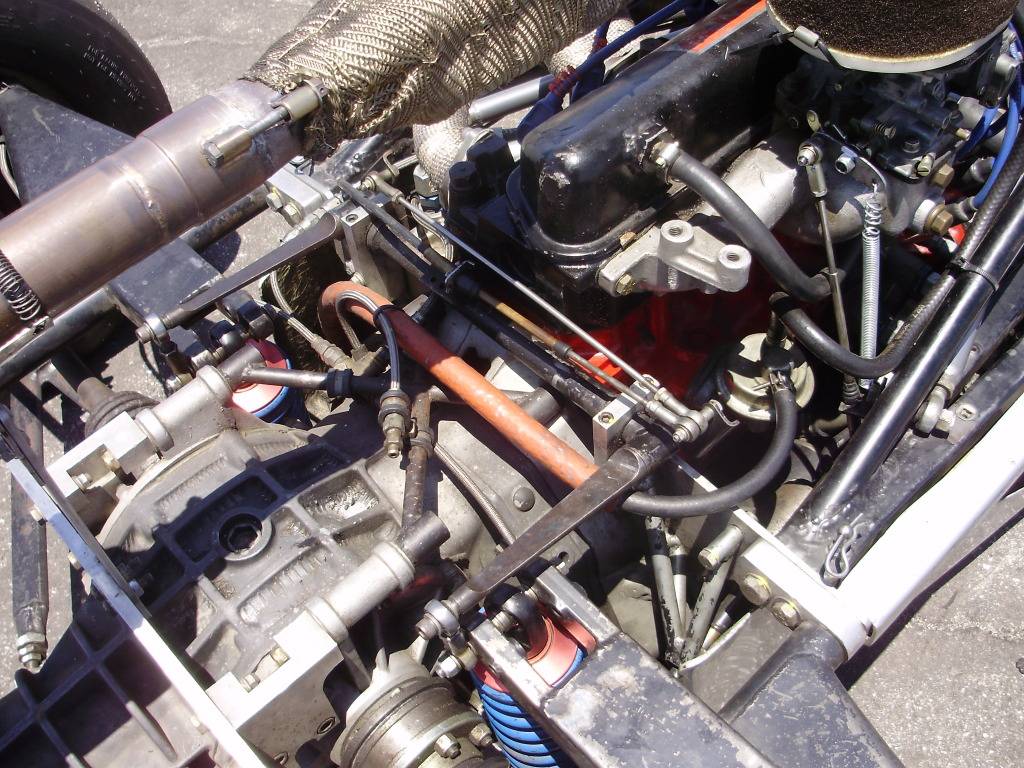
Check out the in car, on the fly adjustability! :
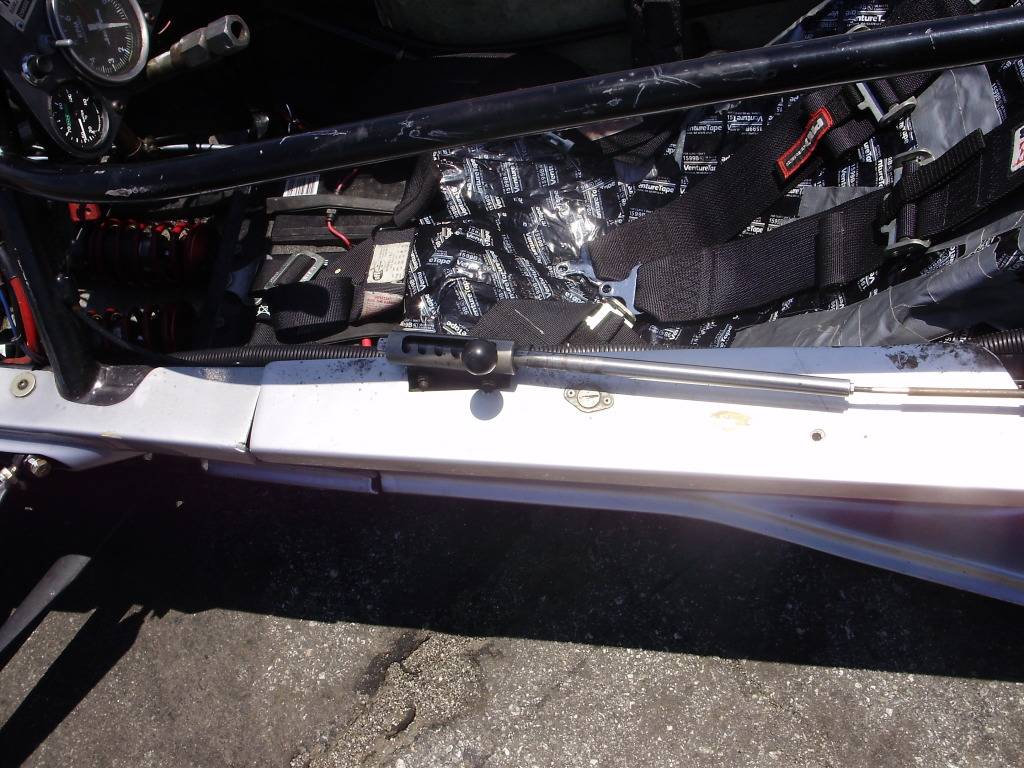
You can dial in or out the rear bar mid course.-James
1974 Z28 SCCA C Prepared
1990 Firebird NASA CMC
2005 Mustang GT SCCA F-Street (new for 2015)
1989 Civic Si SCCA STC
06-22-2012 #14
Registered User
- Join Date
- Nov 2010
- Location
- Novi Mi
- Posts
- 143
Looking at the sites that are listed about they seem to be mention for a sway bar. They have a long end sticking out. I was looking for the pivot being between the coilovers mounting like the original post's pictures. This is where I was thinking of going with it. Each side is separate, with the central block being machined for an axial locator and bearings. I still have to figure out how to get them to rotate without weakening the blade itself.
06-22-2012 #15 Registered User
- Join Date
- May 2002
- Location
- Northern California
- Posts
- 10,716
Correct me if im wrong but I believe the tension comes from the mechanism below this mounting. It was refered to as torsional rod.
Ron can you verify?
heres a better shot of a similar system.MrQuick ΜΟΛ'ΩΝ ΛΑΒ'Ε
06-23-2012 #16
Registered User
- Join Date
- Oct 2009
- Location
- New Derry, PA
- Posts
- 1,265
Tension is generated in 2 ways. The vertical rod in the picture does twist, but only after the blade is set beyond a certain angle. In this picture, the blades are at "full stiff" (LOL) and provide more resistance than the torsion rod. At "full soft", the blades are more flexible than the rod, so they bend in roll. Originally Posted by MrQuick
Keep in mind that on these inboard formula cars, there is VERY little relative motion at the A/R bar, so everything has to be pretty stiff. Kind of like running a 1000lb spring in the middle of an A arm, vs. a 500lb coilover mounted at the ball joint. Less motion requires more rate.
Ray Kaufman - Wyotech Chassis Fab and High Performance Instructor. Words of Wisdom from an old master... at Asylum Custom Interiors website

 Reply With Quote



