


Results 1 to 11 of 11
Thread: Stiff Clutch
-
06-28-2023 #1
 Registered User
- Join Date
- Aug 2012
- Posts
- 4

Stiff Clutch
Hey everyone looking for some help. Info on my vehicle. 1968 skylark with a 350 SBC recently swapped in a 4 speed saginaw with hydraulic setup. Hydraulic setup is a stock gm a body pedal, detroit speed master bracket with t56 LS1 master (3/4 bore) that goes to a howe racing throwout bearing and a perfection 11" HD clutch. I have the correct -4an supply line and remote bleeding line. All parts are brand new. The pedal is very tough to push in, Everything is doing what it needs to do however the force thats needed to push the pedal is extreme. I have adjusted the rod to be as straight as I can get it and I have bled to system for hours, and I dont think theres any air left in it. Doesd anyone have anything else for me to try?
-
06-29-2023 #2
 Registered User
- Join Date
- Apr 2001
- Location
- Rockford Illinois
- Posts
- 3,949

clutch geometry
There is a good possibility that you can move the hole in your pedal up a bit. Just moving it up 1/2 to 3/4 inch will change the pedal ratio. The pressure to operate most of the hydraulic throwout bearings is more than the stock setup. make sure you put in a pedal stop or you will eventually have problems with your pressure plate weakening and it can cause down shifting problems from the start.
GoodluckMay The Horsepower Be With You !!!
-
06-29-2023 #3
Registered User
- Join Date
- Aug 2012
- Posts
- 4
Thanks for the reply. When I bled the system the pedal moves very freely and moves alot of fluid without any effort, wouldent I see some binding and hard pedal while bleeding if the rod wasent straight to the master?
-
06-29-2023 #4
Registered User
- Join Date
- Apr 2001
- Location
- Rockford Illinois
- Posts
- 3,949
clutch geometry
You are correct about getting too much angle and getting bind. I had to go to a Wilwood master to get one that wouldn't leak at an angle. They can handle more angle with less problems. mine has outlasted 4 throwout bearings one of which was a Howe.
I had to make an angled mounting bracket when I did mine , now they make them. don't remember who ?
I now run a quartermaster 7.25 twin disc clutch and it has lasted the longest and added lots of power to the wheels and not a heavier flywheel and pressure plate.
I have never had my clutch have an easier pedal than stock no matter which hydraulic setup I used.
I am considering making a clevis that is L shaped and slotted to make it double shear and very strong. This will allow the hole to be higher for better pedal ratio and help with the angle,plus add some throw to an already sensitive and very short throw.
Were you making contact with a pressure plate when bleeding? Once you got the system bled and sealed is that when the hard pedal started or later when the engine is running ?May The Horsepower Be With You !!!
-
06-30-2023 #5
Registered User
- Join Date
- Aug 2012
- Posts
- 4
I was making contact with the pressure plate prior to bleed. The angle bracket I got from Detroit speed and I had to modify the angle slightly to work in my A body as it was meant for a F body. The hard pedal starts the second I close the bleeder. I moved the rod upwards close to half an inch lastnight and maybe it was just placebo but it felt a little better. If i move the rod up any higher on my pedal the angle looks very severe tho.
-
07-01-2023 #6 Registered User
- Join Date
- Oct 2008
- Location
- Toronto, Canada
- Posts
- 130
Gonna throw out a few ideas to possibly help, you're vehicle is a A body so it should be using the same components as a Chevelle. I used a kit from Mcleod for my 1st gen Camaro and noticed that they sell a kit for A bodies, check yo see if the parts you used look similar to the kit.
https://www.summitracing.com/parts/m...elle/year/1968
Make sure that you're bleeder line is on the top position on the throwout bearing, air gap for the bearing should be .150-.200".
Here is a link from Mcleod on the pedal geometry.
https://www.mcleodracing.com/blog/ho...ic-linkage/236
I used this procedure to bleed my master, to get all the air out and none in.
https://www.mcleodracing.com/video-g...bearing-/vgk10
07-01-2023 #7
Registered User
- Join Date
- Apr 2001
- Location
- Rockford Illinois
- Posts
- 3,949
clutch geometry
Do you feel the bearing hit the pressure plate? There should be a very small amount of freeplay which allows the pedal to move a bit before you start to feel pressure build. When I had the Howe in my pedal was extremely hard too. I went through 2 of them. The seal on the first one leaked and popped out and the second one lasted a bit longer but still popped the seal. I had a Centerforce pressure plate with the first version and a Hayes with the second. Both were hard to push. The design has some issues that didn't help it. Seems like simple Hydraulics but patents might be in the way for improvements? Originally Posted by pitfield

I am wondering just how hard , hard is ? I always am in confusion as to why a stock hydraulic clutch is so similar to the aftermarket stuff yet the pedal pressure is significantly different ? I have never checked the pedal ratio of the newer hydraulic stock setups to know what they are. The amount of throw to disengage the clutch is so short that it takes a good heavy steady foot to take off smoothly. My clutch has always been hard to slip no matter which brand I have used. I even tried a different master to see if it would help, but it didn't.
Aside from being hard to push, does it work correctly? How does it feel when you shift?
I have driven a couple of other cars that also had very high pedal pressure with aftermarket systems.
I have always wanted to try a Mcleod set up but they are so pricey. I went with the Quartermaster because for the money you get more performance to the tires and they are close to me for service and parts.
My left leg has been telling me to make the L shaped clevis to see if it helps. My throw could benefit from having the hole up higher and pedal ratio increased. Having to move the pedal further for disengagement could make launching the car easier.
Are we having fun yet?May The Horsepower Be With You !!!
07-03-2023 #8
Registered User
- Join Date
- Aug 2012
- Posts
- 4
Oh I am having fun that's for sure haha. So his morning I went back up and moved the pedal to the highest it would go before hitting the pedal bracket. The new hole I made it almost 1.250" higher than the stock location. The pedal feels much better, I still think it could go up a little bit but I am out of room. The rod now looks to be at about a 5-10 degree angle upwards however it seems to works a lot better so I am not going to touch it again until winter or until something fails. After not driving the car or making really any headway the past month I am finally going to take it out this week. Thanks so much for all the help!!
07-06-2023 #9
Registered User
- Join Date
- Apr 2001
- Location
- Rockford Illinois
- Posts
- 3,949
clutch geometry
Glad to hear you got it working. I have closer to 15 degrees of angle which was more than the Tilton master could handle and not leak, the Wilwood has always worked at the angle. I am in the process of rebuilding my Richmond 6spd and will be messing with the clutch again and I might get time to try modifying my geometry with the offset clevis Idea and see if it works in the real world like I see it working on paper it will make my left leg sooo much happier. I actually drilled a hole higher than the high one that was there. There are 2 holes in the pedal, 1 for power brakes and the other for manual I was once told. I think going up another inch will make the pedal pressure go down considerably and make the throw a lot less sensitive.
Time to go drive it!May The Horsepower Be With You !!!
07-07-2023 #10 Registered User
- Join Date
- Sep 2009
- Posts
- 3,007
I had a Tilton 3/4" bore MC on my Camaro, and when I upgraded to the McLeod dual disk clutch it was much stiffer than the LS7 I had. I swapped out the MC to a 7/8" bore and it had a slightly longer stroke, but much lighter. Not only was it lighter, but the pedal had a longer stroke so it actually made the car easier to drive. That was one of the best upgrades that I did to the car. Much more fun to drive.
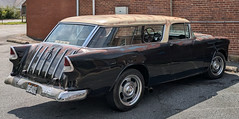
1955 Nomad project LC9, 4L80e, C5 brakes, Vision wheels
1968 Camaro 6.2 w/ LSA, TR6060-Magnum hybrid and etc SOLD
1976 T/A LS1 6 Speed, and etc. SOLD
Follow me on Instagram: ryeguy2006a
07-18-2023 #11 Registered User
- Join Date
- Sep 2004
- Location
- Santa Barbara, Ca
- Posts
- 1,174
Maybe it’s just early and my brain isn’t working, but shouldn’t a smaller bore master give you an easier pedal with a longer stroke? That’s how it is with a brake master cylinder. Originally Posted by ryeguy2006a
I can’t remember the bore size, but I have the McLeod master setup with a stock GM slave and LS7 clutch in my Firebird. The pedal effort is very similar to the C6 Corvettes I owned. Very nice for street driving.Andy
1967 Camaro RS
Magnacharged LS1/T56
543 rwhp, 516 rwtq
Sold
1968 Firebird
LS427/570 and T56 Magnum
Tags for this Thread

 Reply With Quote




