


Results 1 to 8 of 8
Thread: Underhood bracing
-
05-10-2010 #1

 Registered User
- Join Date
- Aug 2004
- Posts
- 548
Underhood bracing
Helo all...I was thinking of removing the bracing under the hood to be able to cut the top and make some air extraction vents. Would it be ok to run the hood without the brace? I would also remove the hood latch and put pins instead.
Manuel Scettri
------------------------------------------------
1973 Firebird - Pontiac 455
1990 2 Door 4Runner - byebye
1990 2 Door 4Runner - byebye
2016 KIA Sportage diesel - The Daily Driver
-
05-10-2010 #2 Registered User
- Join Date
- Aug 2008
- Location
- Pgh, PA
- Posts
- 2,177
You're likely to get a bunch of flex if you remove all the bracing.
 '66 GTO Vert Project "Red Ink", 462ci of stroked pontiac power, TKO600, SC&C Stg II+, Tubular lowers, Currectrac Rear suspension, Moser 12bolt w/Truetrack, Wilwood Master and discs all around, too much fun for words...
05-10-2010 #3 Registered User
- Join Date
- Mar 2007
- Location
- Florida
- Posts
- 2,391

I've removed the inner structure of 2nd gen hoods before and they become very flexible. It was done to reduce weight for drag racing and bolt on hood scoops were used that added rigity to the sheetmetal.
Depending where you put the "vents" you may be forcing air in and not out. Anything in the higher pressure area near the base of the windshield will force air in not out. This is why the rear facing Shaker hood scoop works. I believe this is also part of the reason GM used a cowl to hood gasket and a gasket on the shaker scoops.
If the vents are placed in the high pressure area and allow air to be forced underhood the cooling capabilities of your radiator may be affected because you are changing the pressure differential between the air in front and behind the radiator.
05-10-2010 #4 Registered User
- Join Date
- Dec 2006
- Location
- Nothern California
- Posts
- 259
Charley removed the structure under the hood of the Mule
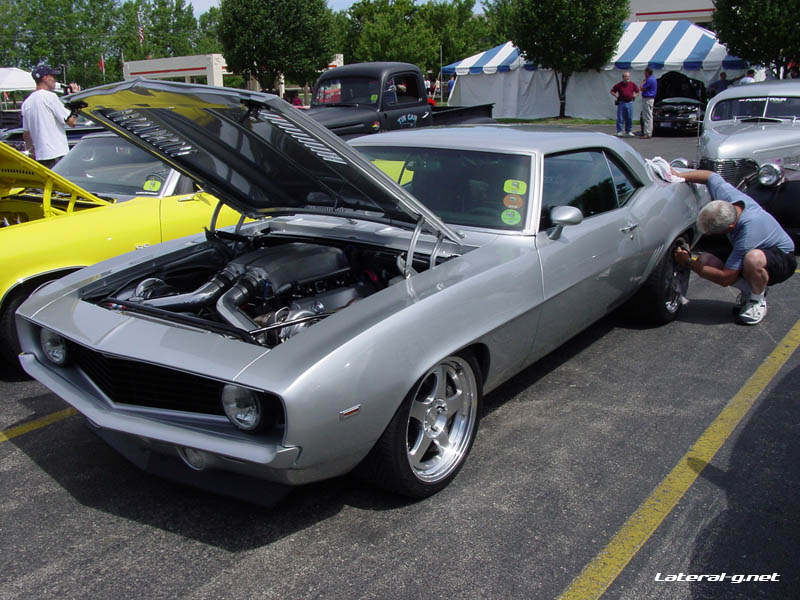 Guy S.
68 Camaro LS1, T56, Forgeline WC3
69 El Camino BBC 4spd A/C Cruise SOLD
2012 Dodge Crewcab Diesel 4x4
05-11-2010 #5
Registered User
- Join Date
- Aug 2004
- Posts
- 548
Guy: Yes, I had seen that which is why I was wondering how bad the flex gets.
John: I'm aware of those facts, thanks for bringing them up though. The vent I'm thinking about would be towards the front, basically right behind the radiator like this, maybe even closer.

Might just have to make a carbon hood with vents and maybe even an intake! Manuel Scettri
------------------------------------------------
1973 Firebird - Pontiac 455
1990 2 Door 4Runner - byebye
1990 2 Door 4Runner - byebye
2016 KIA Sportage diesel - The Daily Driver
05-11-2010 #6
Registered User
- Join Date
- Aug 2008
- Location
- Pgh, PA
- Posts
- 2,177
I would be very careful about that. It's not just the fore/aft location of the voids in the hood. It's also the pressure boundary and how the airflow transitions along the hood. Even though you're moving the vents forward (right behind the rad) you are very possibly going to reduce the efficiency of your rad. There's a reason why there is a cowl seal, etc as well as a shroud. The rad is designed to move air in from the front and then have it exhaust along the sides and down. Vents forward on the hood can do 3 things. One good - and two bad. If it's exactly right, just maybe it'll help evacuate hot air AFTER moving through the rad out the top, reducing airflow under the car. Or, it could due to a likely barrier zone simply create a buffer that might possible slightly vent, but would also create a buffer zone inside the engine compartment, resulting in a slight loss of cooling efficiency. Worst case is that it'll kill rad flow at higher speeds, resulting in overheat conditions. My guess is that the chances for bad outcomes outweigh the good, but that's just my guess.
'66 GTO Vert Project "Red Ink", 462ci of stroked pontiac power, TKO600, SC&C Stg II+, Tubular lowers, Currectrac Rear suspension, Moser 12bolt w/Truetrack, Wilwood Master and discs all around, too much fun for words...
05-11-2010 #7
Registered User
- Join Date
- Aug 2008
- Location
- Pgh, PA
- Posts
- 2,177
BTW, I'm neither smart enough or experienced enough to have thought this stuff up. While determining how to design my cooling system, I spent time talking with guys like Ron Davis and Rodney Red. They're the experts that were kind enough to help me understand the best way to cool a potentially hot running motor.
'66 GTO Vert Project "Red Ink", 462ci of stroked pontiac power, TKO600, SC&C Stg II+, Tubular lowers, Currectrac Rear suspension, Moser 12bolt w/Truetrack, Wilwood Master and discs all around, too much fun for words...
05-11-2010 #8
Registered User
- Join Date
- Aug 2004
- Posts
- 548
Those are actually all very valid points, and I have them in mind. I design race cars/GT cars for a living so all that is accounted for in my mind. This is just the beggining of the thought process so first I wanted to know if doing this on a metal hood was even possible. If not I won't even consider it. What I would give to have a graph like this of our cars!!
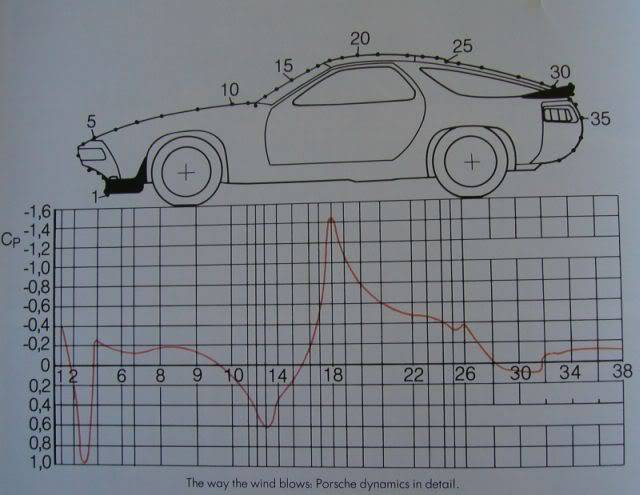
mmm...maybe I can do a little CFD. Damn...gotta love how these things always snowball like this! Since I'm doing A might as well do B...heck, since I'm doing B, C is right there! Manuel Scettri
------------------------------------------------
1973 Firebird - Pontiac 455
1990 2 Door 4Runner - byebye
1990 2 Door 4Runner - byebye
2016 KIA Sportage diesel - The Daily Driver

 Reply With Quote



