


Results 1 to 6 of 6
-
11-23-2009 #1

 Registered User
- Join Date
- Dec 2007
- Location
- British Columbia, Canada
- Posts
- 723

question about installing pilot bushing
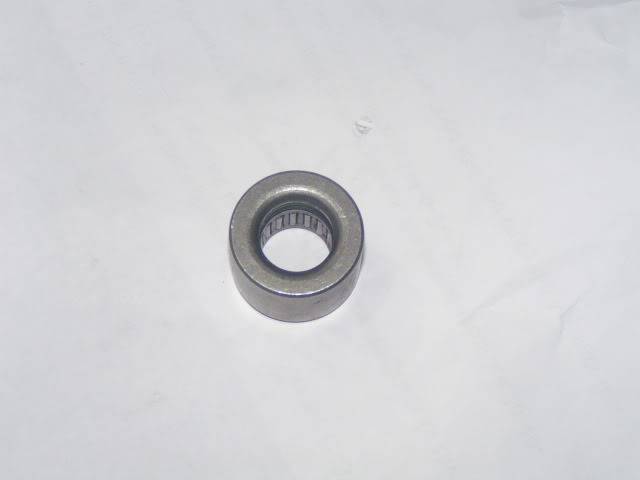
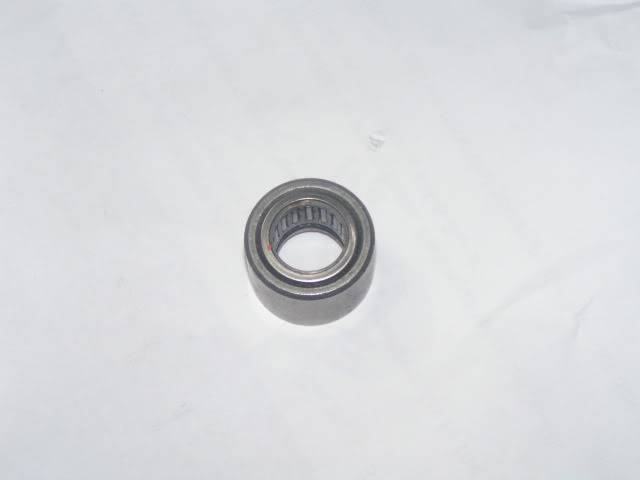
I know this is going to sound like a stupid question, but which way does the pilot bushing go in. I'm assuming like pic 1 so everything is facing inward and can't come apart. Thanks in advance.
pic 1
or pic 2
-
11-23-2009 #2
Registered User
- Join Date
- May 2007
- Location
- Las Vegas
- Posts
- 670

I'd like to know too...
And how much force is needed to seat it...
And should it bottom out or just be flush...Rich
1969 Camaro (in hibernation)
1972 K5 Blazer - LQ9, 4L80e, NP205, D60, AAM 14BFF => http://67-72chevytrucks.com/vboard/s...d.php?t=423432
11-23-2009 #3 Registered User
- Join Date
- Dec 2006
- Location
- So Cal
- Posts
- 920
I would say pic #1 shows the side facing out.
I think there should be a rubber or felt seal on that side to help keep the grease in.
It doesn't need to go in any further than flush with the surface, or just as deep as the bearing length itself.Bart F.

'64 Tempest - LS3/4L70E - Grandma's Poor-Touring car '64 GTO - 455 HO/TH400 - Ex-bracket racer, street bruiser'02 WS6 convert - LS1/4L60E - Pure stock, pure pleasure
11-23-2009 #4
Registered User
- Join Date
- Aug 2007
- Posts
- 271
Pic 1 is how the bearing looks when installed into the crank.
Tom Koontz
11-24-2009 #5
Starting The Transformation
- Join Date
- Nov 2006
- Posts
- 103
Pic 1 is facing the transmission when the bearing is seated into the crank. Pic 2 is the side that gets inserted into the crank.
Notice in pic 1, the smooth, rolled over edge leading into the bearing. That is there is help assist the tip of the input shaft go into the bearing.
Before installing, measure the I.D. of the crank against the O.D. of the bearing. At most, you want the bearing to be .0015" larger than the I.D. of the crank for an interference fit. Anything more than .0015" and you run the risk of collapsing the walls of the bearing.
Richard
Tech Support
11-24-2009 #6
Registered User
- Join Date
- Dec 2007
- Location
- British Columbia, Canada
- Posts
- 723
Thanks guys. Got it in today. Went in pretty easy.


 Reply With Quote



