


Results 1 to 20 of 72
Hybrid View


-
02-28-2022 #1
 Registered User
- Join Date
- Apr 2009
- Location
- Michigan
- Posts
- 334

Good post Sleeper68.
@jetmech442 - Here's a good short explanation of tire dynamics with some nice, simple figures that are worth a thousand words: http://racingcardynamics.com/racing-...lateral-force/. It's no substitute for a whole book/chapter on the subject, but it's a good high level summary to get started.
One key point that really helped me when I started learning about tires is that the rate of grip increase trails off as vertical load increases. It's not linear like they taught us in basic physics. This validates the "common sense" rule of thumb that, all other things equal, a car with a lower center of gravity, wider track width, or lower weight will be faster.
.
- Ryan
-
02-28-2022 #2 Registered User
- Join Date
- Nov 2014
- Location
- East Tennessee
- Posts
- 163
Thank you Ryan. Originally Posted by stab6902

Just read through this. Exceptional primer to tires. I am going to explore this publication in its entirety now. Thank you for sharing. Originally Posted by stab6902
Yes, and this is the exact reason why more weight transfer over a pair of tires hurts their tractive capacity. This is also why the generalized, and in my experience, underexplained statement "softer suspensions have more mechanical grip" is true; although is misleading to some degree. A softer end of the car will transfer less weight and thus have more mechanical grip, at the expense of the other end of the car. The end of the statement is the part that is often not explained. Originally Posted by stab6902
To expand: A pair of tires have the most tractive capacity (aka potential for grip) when they are equally loaded. As weight is transferred from one tire to the other, the total capacity of the pair is reduced. Since wider track, lower center of gravity (CG), and less weight reduce WEIGHT TRANSFER, the pair (or set of 4) tires have more tractive capacity and thus the car has the ability to be faster through any given corner. This is why aerodynamic downforce is known as free weight since it increases tire load, does not really affect weight transfer, and does not have to be accelerated.
So to relate all of this to the original discussion: The Magic Number, which Milliken covers and calls Total Lateral Weight Transfer Distribution, is the ratio of roll stiffness (aka roll gradient in °/g) of the front to the rear. The roll couple is the moment exerted on the sprung mass while cornering and is what loads the outside suspension, unloads the inside suspension, and makes the car roll. The car as a whole has a roll couple but one can break it down into front and rear. The Magic Number and split between the front and rear roll couple is the greatest influencer of a car's propensity to understeer or oversteer (aka the car's balance).
I was having a lot of issues with balance, namely excessive understeer. After reading a lot to understand the mechanism by which anti-roll bars (aka sway bars) worked and how they changed a car's balance I came upon the magic number. What I learned was that, all else being equal, a car will transfer more weight on the front and less on the rear if the front roll stiffness is increased. More front weight transfer = more likely to understeer. One can increase weight transfer of one end of the car by increasing roll rate (sway bars or ride springs), lowering the CG (lowering the car), or by raising the roll center.Electrical/Mechanical Engineer
1968 Camaro RS - Flat Black
03-08-2022 #3
Registered User
- Join Date
- Jun 2012
- Location
- Chicago burbs
- Posts
- 247
I took a while to respond to this. My first reaction to this aggressive take was to dismiss it as another woke/partisan/conservative/liberal(choose your insult) freakout. But I figured it was a strong reaction to have on a forum amongst car guys talking about tires..so I gave it time tried to read up. You have to go a ways down on google to find an article by Johnathan Jerry who shows that the effect can be seen in large scale random generated scenarios and thus the effect might not be part of the human psychi afterall, and I agree with that now. I don't think any literature should be used to dismiss someones opinion outright, but I do still find the graph a useful reflection of where I might evaluate my knowledge on a subject. Heat transfer and thermal radiation...I've got a solid, successful career and feel confident I can speak and teach it...tire camber curves, I still feel like I am sliding down Mt stoopid. Originally Posted by iadr
So thanks iadr for alerting me that the D-K effect is not fully accepted by the science community( in fact it seems more studies are being done to try and eliminate it's regression to the mean issue). I think we, as a country, need to get back to presenting differing views in a way that doesn't alienate the other side immediately and force them to dig in.
Speaking of camber curves and traction...
Originally Posted by Sleeper68
I'm on board with this concept. I read an article that explained the traction curve becomes more non-linear the closer you get to the tires load index. Originally Posted by stab6902
So for a Hankook RS4, a 225/40R19 has a load index of 1279 lbs. a tire with more width, but a 235/35R19(slightly more width, but slightly less sidewall) has a lower index by ~70 lbs. In general, the slightly narrower tire would "fall off" less quickly than the 235 as more lateral load is transferred to it. But perhaps the 235 has slightly more traction due to its width so the fall off is a wash. Open to thoughts/criticism of this train of thought....
Thanks again for everyones response to me just jumping in and asking a question. Discussions like these are what continues to make this forum so great.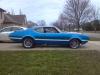
1969 442 6.0L LQ9 T56
Fab9 w/ custom 3 Link conversion
FAYS2 Watts link
Thanks to Mark at SC&C for his honesty and passion for the sport, and Ron Sutton for the wealth of knowledge that has helped shape so many of the cars on this site.
02-08-2023 #4
Registered User
- Join Date
- Nov 2014
- Location
- East Tennessee
- Posts
- 163
This post is provide an update as to how the car and myself have been performing since the last post.
List of events since last post:
HSSC 03 OCT 2021, BFG Rival S 1.5, Setup 5: https://youtu.be/L6FEjmYwQUY Very cold. Tires were about out of life here.
TRSCCA OctoberFAST Day 1 31 OCT 2021, Wet, RT660, Setup 6: https://youtu.be/Iv36rB08GYQ Falkens worked great. Alot of turn-in understeer but it was wet.
TRSCCA OctoberFAST Day 2 01 NOV 2021, Dry, RT660, Setup 6: https://youtu.be/H83PK4gJ9JI Love how fast the RT660s heat up. Great for a one driver car.
ETRSCCA Points #1 06 MAR 2022 BRISTOL, Setup 7: https://youtu.be/P1UkFrvwsqs First event post-spindle failure. First time and bristol (high speed courses) with the new tires.
ETRSCCA POINTS #2 03 APR 2022 SMOKIES STADIUM: https://youtu.be/ahyv41IntUs Starting to learn how the car drives with the new Falkens. They are more precise and provide far more feedback than the BFGs.
ETRSCCA POINTS #3 15 MAY 2022 BRISTOL: https://youtu.be/h5ZU228ThRs
ETRSCCA POINTS #4 29 MAY 2022 SMOKIES STADIUM: https://youtu.be/G0QG2SxoYRw
ETRSCCA POINTS #5 12 JUN 2022 BRISTOL: https://youtu.be/zXOY9T7Akzc The falkens can certainly get greasy when it is super hot outside, especially in the rear when applying power at the end of the run. Setup 7 is definitely working the outside rear tire more than before based on temps. Could also be driving improvement.
ETRSCCA POINTS #6 10 JUL 2022 SMOKIES STADIUM: https://youtu.be/gWhB4XF6apg
ETRSCCA POINTS #8B 24 JUL 2022 BRISTOL: https://youtu.be/ERG2jg3YfOk
ETRSCCA POINTS #9 21 AUG 2022 BRISTOL: https://youtu.be/gnW6uy7s5L8
ETRSCCA POINTS #10 09 OCT BRISTOL: https://youtu.be/sAUohwkN96A
As you can see from these videos, the car understeers far less and generally rotates better; however, it still understeers in steady state cornering. I think the balance (TLLTD) is still off, but I think there is another contributing factor. More on that later.
Thanks to contributions from members here at pro-touring.com and some driver improvements, I have been able to win the 2021 and 2022 ETRSCCA points championship for CAMT. I want to take this opportunity to thank everyone who has contributed to this thread. Public discourse, in my opinion, is very good for improving all of our understanding of vehicle dynamics.
My next area of focus for the car is fixing the steering geometry and the excessive steering arm flex the car has. The steering arms are made by Chassisworks of 7075-T73 Aluminum https://www.cachassisworks.com/p-295...-aluminum.aspx. The fact the steering arm is aluminum and because of the very low position of the outer tie rod end (approx 0.2" from the wheel inner lip), the steering arm flexes. This excessive flex (approx 0.2" of movement of the outer tie rod before the wheel moves when car is static on the ground) makes the car very hard to place while racing on the limit.
So, my plan currently is to use a higher inner tie rod pivot to allow the outer tie rod to move up. Currently, I want to use the ridetech TruTurn centerlink/draglink instead of modifying a factory one or making my own. This will reduce the cantilever distance to the outer tie rod from the spindle. Additionally, I will need new steering arms to accommodate this so I will be making my own steering arms from steel with very similar Ackermann geometry to the Chassisworks units. The combination of the fact that steel is stiffer than the aluminum and the reduced cantilever should make for a much stiffer steering system.
Now, back to why I think the car is understeering in steady state: It could be the balance is still biased to understeer due to weight transfer, and shock settings are improving turn-in and transient balance; hiding the steady state balance issue. There could be another issue though, one related to the known steering arm flex. It COULD be that once the car is cornering hard and virtually steady, the steering arms (especially the outside steering arm) are flexing so much that the dynamic toe has changed to be very toe-ed in. Maybe this is part of the steady state understeer issue? Maybe I should return the inner upper control arm pivot point to the OEM holes and maintain the 0.5" tall or 0.9" tall UBJ?
What do our fine members at pro-touring.com think?
I think we all will agree that the steering arm flex should be reduced as much as possible.
The suspension tuning progression:
SETUP 1: The first significant front RC change I did was achieved by going to a 0.9" tall upper ball joint from a factory one on otherwise stock geometry (raised roll center ~ 1.25" and made camber gain negative instead of positive - 0.3°/in). This was in 2015. -3.0° camber , +6.0° castor , 0.0" toe
SETUP 2: The second front RC change was done in 2020 by lowering the inner pivot of the upper control arm about 1/2" rear hole 5/8" front hole (raised front roll center ~1.1" and made camber gain more aggressive 0.8°/in). This also had the effect of reducing front anti-dive since it is fairly excessive in first gen camaros. The reason for the second change was because I found I had to run alot of front camber (2.7°-3.0° neg) to keep the front tires happy but this came at the cost of poor front end grip in braking. I attributed this poor braking performance to the excessive static camber after playing with brake pressure proportion (ended up with full bias to rear tires in braking, still locked up front tires with even small amounts of trail brake). The idea was to increase camber gain and thus reduce the need for static camber. The inadvertent effect was a stiffer front end due to the higher front roll center. -1.5° camber , +6.5° castor , 0.0" toe.
SETUP 2.5: Rear RC moved up to 13.5" from 12.5". Rear ARB endlinks changed to rod end style from polyurethane-bushed style. -2.0° camber , +6.5° castor , 1/8" total toe out
SETUP 3: The third front RC change was performed in 2021 by going to a 0.5" tall upper ball joint from 0.9" tall (lowered front roll center ~0.5" and made camber gain less aggressive - 0.6°/in). This change was made in an attempt to "split the difference" between change one and two. -2.1° camber , +6.7° castor , 1/8" total toe out.
SETUP 4: Change to softer front jounce bumpers. Increased front damper bump travel (reduced rebound travel) by moving the lower damper mount down in relation to the lower control arm. -2.1° camber , +6.7° castor , 1/8" total toe out
SETUP 5: Front eyelet bushing of leaf springs changed to aluminum/delrin/steel bushing with thrust washers from steel/rubber/steel bushing. This eliminated any appreciable compliance in the bushing and forced the rear leaf springs to comply with roll, effectively increasing the rear roll rate. -2.1° camber , +6.7° castor , 1/8" total toe out.
SETUP 6: Switched from BFG Rival S 1.5 to Falken RT660 tires (same size 275/35R18). Reduced toe out to zero. -2.1° camber , +6.7° castor , 0" total toe out. This change occurred just before an event at NCM Racetrack in Bowling Green, KY in OCT of 2021.
SETUP 7: Post-spindle failure. -2.25° Camber, +6.75° Castor, 0" total toe.Electrical/Mechanical Engineer
1968 Camaro RS - Flat Black

 Reply With Quote



