


Results 1 to 20 of 86
Hybrid View


-
02-12-2016 #1

 Starting The Transformation
- Join Date
- Feb 2010
- Location
- El Segundo, CA
- Posts
- 268
 Having given this subject a lot of thought over the years, there is one more mode of frame deflection besides bending and torsion. I call it "shear" for lack of a better name. This would be where the left frame member moves forward while the right frame member moves backwards (or visa versa).
 Originally Posted by RobNoLimit

I find it interesting to look at early 60's Impalas on the Chassis Cam during Barrett Jackson auctions. They have what is termed an X-frame. Seen here:
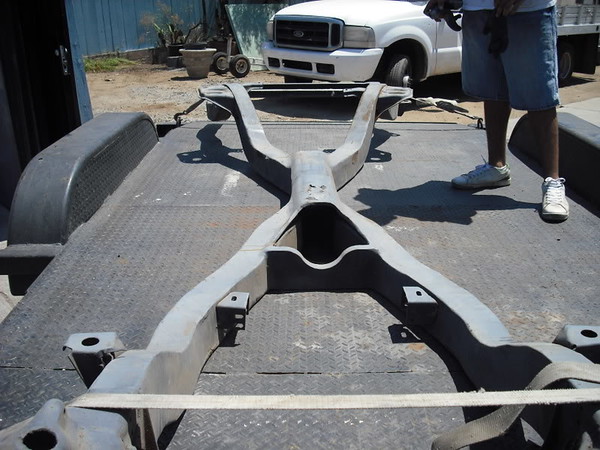
Such a frame would be good at resisting shear forces, ok at resisting bending forces and horrible at resisting torsional (twisting) forces. And since shear deflection is not as likely as bending and torsion, I would not really want an "X-frame" under my F100.
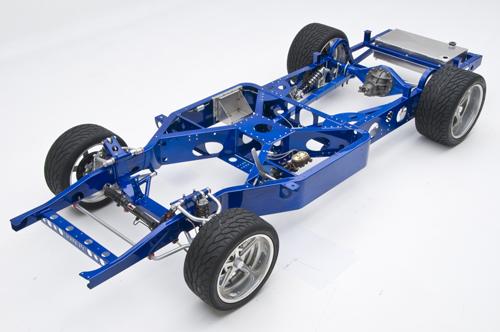
The best way to stiffen up a car or truck is to install a well thought out roll cage. With a car it is about the only thing you can do. But with trucks you can do a lot more to stiffen the frame without resorting to a cage. There is a lot of room under the floor and bed of a truck, allowing for a tall frame, which as Rob points out is a good way to stiffen said frame in bending and torsion. I reckon on my 1956 F100 there is a good 10-11 vertical inches available between the bottom of the cab and the lowest part of the truck. Hence perhaps the No Limit Big-10 frame (10 inches tall).
Gustave
-

 Reply With Quote



