

Enter your username:
Do you want to login or register?
  • Forgot your password?

    Login / Register


    Page 1 of 2 1 2 LastLast
    Results 1 to 20 of 39
    1. #1
      Join Date
      Jan 2009
      Posts
      197

      What rate leaf spring for my Mopar?

      What would be a good leaf spring rate for a 67 Belvedere? I am interested in composite leaf springs from hyperco. I am running a panhard bar and a sway bar also.

      The hotchkiss springs are rated at 160lbs/in, so I was thinking that the 175 lbs/inch composites might be a good route.


      Any input will be appreciated, Thanks


    2. #2
      Join Date
      Jun 2007
      Location
      Greenwood, SC
      Posts
      1,611
      Country Flag: United States
      Your swaybar rate might help answer this too.... you can get the "best" of everything, but if you don't plan it out, it wont turn out well.


      Taken from another forum:
      Quote Originally Posted by Another Forum View Post
      The Math

      The formula for calculating the resistance of a solid sway bar, according to Fred Puhn, is:

      Code:
      500,000 D^4
      K (lbs/in) = -------------------------------------
      (0.4244 x A^2 x B) + (0.2264 x C^3)


      B
      _________________
      A| / \ C
      | / \

      A - Length of end perpendicular to B (torque arm - inches)
      B - Length of center section (inches)
      C - Length of end (inches)
      D - Diameter bar (inches)
      This formula does not take into account the flex of the bushings used to mount the sway bar, which can be significant. It also doesn't account for when the lever arms are physically longer than the actual lever arm they form (a bent bar, like the front sway), but that affect is pretty minor. I've measured the stock STI sway bars (roughly, not precisely) at:

      Stock STI Front sway:
      A: 5 in
      B: 32 in
      C: 7 in
      D: 0.79 in
      hence, K = 467lb/in

      Stock STI Rear sway:
      A: 7 in
      B: 42 in
      C: 7 in
      D: 0.79 in
      hence, K = 205lb/in

      Now, what matters isn't the spring rate of the bar, but the spring rate at the wheels. The motion ratios front and rear in the STI are about 0.75 and 0.875, respectively. To get the wheel rate of the sway bar, we multiply by the spring rate (K from above) by the square of the motion ratio.

      WHEEL RATE = K * Mr ^ 2

      Thus, the final wheel rates from just your sway bars are:

      Front: 267lb/in
      Rear: 157lb/in

      Add this to your coil spring rates to get your total wheel rate. The stock front springs are 224lb/in with a motion ratio of 0.97 (=210lb/in at the wheels), and the rear springs are 194lb/in with a motion ratio of 0.98 (=190lb/in at the wheels). A stock STI rides on its bump stops up front, which causes these spring rates to hike tremendously, but I'm going to ignore that for this conversation and assume a suspension with adequate suspension travel.

      Final Stock STI Wheel Rates:

      477lb/in front (267lb/in from sway bar, 210lb/in from coil spring)
      347lb/in rear (157lb/in from sway bar, 190lb/in from coil spring)

      The distribution of these total spring rates match the car's weight distribution almost exactly.

      Anybody want to measure the Whiteline sway bars? If they're the same as stock, except for the diameter, you'd get spring rates (not wheel rates) of:

      Whiteline Front:
      24mm: 955lb/in
      27mm: 1877lb/in *this is not accurate because this bar reduces to 24mm prior to the bushings

      Whiteline Rear:
      24mm: 419lb/in
      27mm: 671lb/in *this is not accurate because this bar reduces to 24mm prior to the bushings

      You can see that just minor bumps in sway diameter increase resistance quite a bit- it actually goes up by a power of four! So, the question I'm arriving at: is a 24mm sway bar too big? What about a 27mm sway bar?

      Javid (of 6gun Racing) has said his car, which uses high spring rates and big Whiteline sway bars, is slower than the competition running without sway bars (but having more body roll). This actually makes a lot of theoretical sense. Quite simply, the car's spring frequency becomes too high for optimal use of the car's tires, which most racing literature suggests takes place around 2.0 to 2.5hz. (Further reading about how to determine your spring frequency based on your wheel rate.)


      What is your spring frequency?

      It's the number by which you should measure your car's spring rate.
      http://www.smithees-racetech.com.au/...cefactors.html

      Quote:
      The most usefull measure of suspension stiffness is the spring frequency. It is directly comparable between all race cars. We can take our experience with one race car and use it to help choose spring stiffness for another. For instance, we find that small sedans and production sports cars around 1000kgs, without aero devices, will work best around 120 to 130 cycles per minute, running on Dot racing tyres. This is a lot stiffer than road car springs, where spring frequencies might be around 80 to 100 cpm. Other considerations might require us to run stiffer again. But 120 to 130 is what we'd like to run for maximum grip. If we can run quality racing shocks, we tend towards softer springs and more shock compression.
      My guess is the weight of the car does not matter much so long as it is proportional to the load rating of the tire (heavier cars use tires with a higher load rating). The two variables seem to be amount of downforce and type of tires. Street tires would have a lower resonance frequency and thus I bet work better at lower spring frequencies.

      Dennis Grant recommends a little higher spring frequency: http://www.wincom.net/trog/autocross_secrets5.html
      Quote:
      A spring change to a stiffer spring limits the amount of motion that the suspension undergoes in reaction to a particular acceleration (so does a change in CG height and track/wheelbase, but those are much harder to change than springs and for most practical purposes less effective too)

      But there are upper limits on how stiff we can go with the springs, so we need a measure of "stiffness" to set the boundaries.

      That number is the natural frequency of the suspension.... Rule of thumb is rear NF slightly higher than front (by a tenth of a Hz or two) Street car: 0.8 Hz. Occasional autocrosser: 1-1.5 Hz. Full-bore autocrosser: 2.2-2.5 Hz.

      Yes, it really is that simple. Measure your corner weights, unsprung masses, and motion ratios, and then pick springs that put the front NF at 2.2 Hz and the rear at 2.5 Hz.

      If you look at a completely stock STI with total wheel rates of 477lb/in and 347lb/in (as calculated above), it already has a spring frequency of about 2.25 front and rear. (Actually your bump stops increase this while your soft strut tops and sway bushings decrease this, so the actual spring frequency is quite dynamic.) So, you're already pretty high on a stock suspension. Again, that's already in the optimal range for use on racing compound tires.

      I know a stock STI feels mushy and has a lot of body roll, but I think that is due to the car's low roll center (also debatably a good thing). Body roll isn't necessarily bad so long as you have enough negative camber, but for sure the STI has more body roll than most similar cars with a multilink rear suspension. Another thing to consider is that a stock car rides on its bump stops, creating horrible corner entry understeer and a jacking effect on turn-in. There are a host of problems on a stock car that get fixed by adding a large sway bar even if it's not technically ideal. Adding a large sway bar can be three steps forward even if it's one step back. In other words, your choice of sway bar will depend on what other problems you haven't yet fixed.

      I think Prodrive might have the right idea with their RB320 suspension. They keep the stock front sway bar and bump up the spring rates what I assume is a mild to moderate amount. Once you've increased your stock spring rates, I'm not sure a larger sway is desirable anymore so long as you have enough camber. Prodrive uses a slightly larger rear sway bar to aid rotation, which is understandable given the car's weight distribution.

      So, I think that big 27mm sway bars are useful on cars with soft springs to reduce body roll, but on cars with firm springs (400lb/in front, 350lb/in rear or higher), smaller (22mm or stock) sway bar sizes should be used for optimal grip. Again, this assumes the car has sufficient camber and enough suspension travel- in other words, no other pre-existing, more significant problems. Therein lies the dilemma- do you gain more grip than you lose when increasing body roll? You might be taking one step forward but two steps back.


      Compromises and Design Decisions

      Consider that if you go back to the stock sway bar (from a 27mm bar), you're going to have about twice as much roll due to body movement since your spring rate will have been reduced by about two thirds. While mathematically you're spring rate will be close to ideal, I'm not convinced this is the best solution. You'll have a lot of body roll and that in itself can cause problems. At minimum, you'll probably need to double up on your negative camber to compensate for this. This is probably the most important thing to consider. Do you want to run 3.5 degrees of static negative camber? A roll center adjuster (ball joint extension) would probably be helpful too, this will cut down on body roll (potentially significantly). But, in theory, your mechanical grip would increase with the softer wheel rate.

      It's important when discussing this to remember that a significant amount of body roll comes from tire deflection and will exist regardless of how high your spring rates are. Put more weight on a tire and the rolling radius of the tire will shrink, just like a tire that's low on air. So, when discussing body roll, it's important to realize that on a very stiff car, body roll due to spring compression and extension may be less than half of your actual total body roll.

      So, you may see a car on racing tires rolling three degrees and wonder how that happens on such stiff springs. With most track cars running over 1000lb/in wheel rates, the car could be on two wheels (100% weight transfer) and still have only compressed the outside wheel 3/4 of an inch. That's about a degree and a half of body roll. The rest of the roll you see is from tire deflection and would happen even if you welded your struts solid. Cutting your spring rate in half will double body roll due to your roll resistance (springs), but it will not affect roll from tire deflection. Tire deflection should happen less on wider, larger tires.

      Said differently, doubling your spring rate will not cut body roll in half because your tire deflection remains the same. You may only be adding 50% more body roll (4.5 degrees instead of 3). But since you're using double the stroke in the suspension, you're also gaining more dynamic camber (assuming you're still in the correct part of the curve) in the turns, too. The point here is that having body roll is just a fact of life, and you just need to make sure your car is set up for it. You'll need lots of suspension stroke and lots of camber. Again, there's lots of variables to consider here- in the end, I think the best thing to do is bring a lot of tools to a test-and-tune autocross day and experiment. Driver feel comes into play too.

      And now we get into that gray area I know little about. Is it possible to properly dampen a car with big sway bars? You're either underdamped in turns or overdamped on the straights.

      I'm certain this is why race cars tend to use smaller sway bars: because sways make damper valving a compromise. However, on a street car, we make that sacrifice to reduce body roll while still being able to run soft, comfortable springs for a good highway ride.


      Closing Thoughts:

      I don't mean to say that such-and-such is best, only that it's worth trying. I haven't actually tested all this in the real world, and I'm not preaching from experience. Hell, I don't even have an opinion on what an optimal spring frequency is- I'm just regurgitating that information. My experience says larger sway bars can be 3 steps forward and only one step back. So, I absolutely am not saying big sway bars are bad- they're one of the best modifications for an otherwise stock car. On the other hand, my theory says that you should ditch them once you've prepped the rest of the car. I know opinions are like buttholes- everybody has one. However, at least Javid of 6gun racing has written some anecdotal evidence- from actual data- suggesting the theory is correct. It was actually one of his posts that got me started on this.

      I hope this helps some of you make suspension decisions. Comments are appreciated (and inevitable)!


      EDIT: I spoke with an engineer who assured me my numbers (from Puhn's book) were wrong in regards to body roll. Since you have twice as much bar flex in a body roll situation (inside and outside wheel move roughly equal amounts in opposite directions), the sway bar rates I calculated should be DOUBLE what I originally said.

      In other words, take the number from the original equation and double it.

      My original equation only works for a one wheel bump. I thought the doubled force was divided among the two wheels (thus you wouldn't double the rate), but it isn't. That's where I was wrong. The sway bar force is equally applied to both wheels.

      So, again- as extreme as the sway bars sounded earlier, double that.[/i]
      JC Scott


    3. #3
      Join Date
      Apr 2009
      Location
      san diego
      Posts
      5,101
      Country Flag: United States

    4. #4
      Join Date
      Jan 2009
      Posts
      197
      cheapthrillz can you elaborate on this?

      C - Length of end (inches) What is the length of end?

    5. #5
      Join Date
      Nov 2007
      Posts
      111
      Quote Originally Posted by mrn2obelvedere View Post
      What would be a good leaf spring rate for a 67 Belvedere? I am interested in composite leaf springs from hyperco. I am running a panhard bar and a sway bar also.

      The hotchkiss springs are rated at 160lbs/in, so I was thinking that the 175 lbs/inch composites might be a good route.

      Any input will be appreciated, Thanks
      That sounds about right. 160 to 180. Run an adjustable rear sway bar from Hotchkis to fine tune the balance. What front Torsion bar or springs are you running. The bigger the T-bars the more toward 180.

      Please tell us how the Hyperco composite leafs work out. I know some people running Flex A Form composites and they are happy. But one guy took two times to get the rate right.

      I just wonder how stiff the front segment is on the composite compared to a well built steel leaf to resist wrap up???
      SPRING FLING XXV
      April 16 & 17, 2011
      Woodley Park, Van Nuys CA
      800+ Mopars, 300+ swap, 40+midways
      Speed Festival Track Event
      5th annual, Thursday, Willow Springs, 40+ Mopars
      Track Video

    6. #6
      Join Date
      Jun 2007
      Location
      Greenwood, SC
      Posts
      1,611
      Country Flag: United States
      Quote Originally Posted by mrn2obelvedere View Post
      cheapthrillz can you elaborate on this?

      C - Length of end (inches) What is the length of end?
      Sorry, for some reason I couldn't fix the formatting of the quote. Here is the link to the other forum: http://forums.nasioc.com/forums/show....php?t=1279944
      JC Scott


    7. #7
      Join Date
      Apr 2005
      Location
      Colorado Springs
      Posts
      760
      To calculate it, I'd say we need to know front weight amount or %, t-bar size, front sway bar size and any differences in the stock mounting points, proposed rear sway bar size and its mount point locations, and whether the leafs have been moved inboard and if so, how much.

      As an example, my Dodge with 1.22 t-bars, 1.125 front sway bar, a 1.0 rear bar cna use a 120# leaf spring and still be neuteral with 55% of its weight on the nose. Without a rear sway bar, I need 180# leafs. The other option is swapping to a stock mounted .75 rear bar with 180# leafs and stepping up to a 1.25 front bar. So you see there can be several ways to get to the right answer.

    8. #8
      Join Date
      Jan 2009
      Posts
      197
      What I don't understand is this:

      We know that the sway bar is in a neutral state unless you are in a turn. If you are going straight along and hit a bump, or start going uphill, launch hard from a stop, etc, the sway bar will have little effect on at the wheel spring rates. With this in mind it seems that there would be an ideal spring rate from which to start, and then optimize your sway system around the spring rate, depending on what handling characteristics you prefer.

      Stated another way, If I needed an effective rate of 200lbs at the wheel, I could get there with a 10 lb leaf spring, and a 190lb sway bar, but as we all obviously know, this would not be the right answer, as the rear would drag the ground, so there is definitely a right answer.

      My options are fairly limited anyway. The (non ridiculous) rates offered are 150, 175, 200, and 225. They also offer 35 and 50 lb variants, but I feel pretty confident those are off the table.

      By the way I currently have an Addco 7/8" rear sway bar, and 1-1/8" front sway bar. Unfortunately I am having to do this piecemeal (money), and I still have stock front torsion bars.

    9. #9
      Join Date
      Apr 2005
      Location
      Colorado Springs
      Posts
      760
      Quote Originally Posted by mrn2obelvedere View Post
      What I don't understand is this:

      We know that the sway bar is in a neutral state unless you are in a turn. If you are going straight along and hit a bump, or start going uphill, launch hard from a stop, etc, the sway bar will have little effect on at the wheel spring rates. With this in mind it seems that there would be an ideal spring rate from which to start, and then optimize your sway system around the spring rate, depending on what handling characteristics you prefer.
      You can do that, it just requires more fabrication and more $$. You CAN have a custom rate leaf made by Landrum, Afco, and several others. You then have to fabricate the sway bar set up to deliver the rate you want to compliment it with adjustment points to compensate for tire, climate, track, etc changes. Not impossible, but not easy. If you are going to deal with off the shelf, bolt on items, then the choices become much more limited, that's all.


      Quote Originally Posted by mrn2obelvedere View Post
      What I don't understand is this:
      Stated another way, If I needed an effective rate of 200lbs at the wheel, I could get there with a 10 lb leaf spring, and a 190lb sway bar, but as we all obviously know, this would not be the right answer, as the rear would drag the ground, so there is definitely a right answer.

      My options are fairly limited anyway. The (non ridiculous) rates offered are 150, 175, 200, and 225. They also offer 35 and 50 lb variants, but I feel pretty confident those are off the table.

      By the way I currently have an Addco 7/8" rear sway bar, and 1-1/8" front sway bar. Unfortunately I am having to do this piecemeal (money), and I still have stock front torsion bars.
      Yes, you could theoretically get there with a 10# leaf and 190# sway bar. However, you also need the suspension to provide enough support for the rest of the chassis so it doesn't bottom out or develop frequency problems against the front rates. There is a way to start out with a decent rate from the get go, but that gets in to mroe detail than I have in my head and more knowing people than I have written entire chapters of books about it.

      In my '67 with a small block and fiberglass hood, 3210#, I ran .96 t-bars, 1.125 front s-bar, and XHD rear leafs with no rear s-bar. It was fairly neuteral most the time with a slight amount of understeer when pushed hard, so I needed a little bit more rear rate. The XHD leafs are about 140#. I never tried a rear sway bar to see if it would even things up because I moved on to another project.

      Since you already have a large front and rear sway bar set up, stepping up the leaf springs to a higher rate will make your car noticeably oversteer, unless you leave the rear bar disconencted. Once you step up the rate in the front t-bars, you may be able to reconnect the rear s-bar.

      Are you running a LA, B, or RB engine?

    10. #10
      Join Date
      Jan 2009
      Posts
      197
      I am running a small block with aluminum heads.

      I think I will go with the 175 lb/inch variants and cross my fingers, based solely on the fact that the hotchkis leafs are similar in rate to this. Any input on this before I make the $600 plunge?

    11. #11
      Join Date
      Nov 2007
      Posts
      111
      Quote Originally Posted by mrn2obelvedere View Post
      I am running a small block with aluminum heads.

      I think I will go with the 175 lb/inch variants and cross my fingers, based solely on the fact that the hotchkis leafs are similar in rate to this. Any input on this before I make the $600 plunge?
      Save the $600 and buy 1.10 or larger front Torsion bars from Firm Feel and have fun driving your car. Buying expensive tricked out leafs now seems like you are running before you're walking.
      SPRING FLING XXV
      April 16 & 17, 2011
      Woodley Park, Van Nuys CA
      800+ Mopars, 300+ swap, 40+midways
      Speed Festival Track Event
      5th annual, Thursday, Willow Springs, 40+ Mopars
      Track Video

    12. #12
      Join Date
      Jan 2009
      Posts
      197
      Quote Originally Posted by autoxcuda View Post
      Save the $600 and buy 1.10 or larger front Torsion bars from Firm Feel and have fun driving your car. Buying expensive tricked out leafs now seems like you are running before you're walking.
      I realize that is how it sounds, but a bit more background right now I am rebuilding the rear end due to a gear upgrade and the rear suspension is completely torn down so it is a good time to do this while it is apart. I'll buy torsion bars soon enough to match whatever I do now.

    13. #13
      Join Date
      Apr 2005
      Location
      Colorado Springs
      Posts
      760
      I agree with autoxcuda, you may want to upgrade the front first. Since you have a lighter weight engine and large front and rear sway bars, you may be better served with a t-bar upgrade first. Plus you can do it for half the price of the rear. How does it all feel now? I'm assuming you have the stock 4.5 rear leaves in it currently that are worn down to around or less than a 100# rate.

      What front t-bars do you want to run? Unlike a ford or chevy that can choose a coil spring rate in 50# increments to match the rear, mopars have limited torsion bar and sway bar rates availability. Because of this limited t-bar selection and the broader range of leaf spring rates, mopar owners need to match the rear to the front instead of the opposite. I've got the rates for most off the shelf torsion bars and sway bars in a spreadsheet. Knowing those means we can zero in on the range of leaf springs that will work best. I can work up some numbers over the weekend to help with this.

      Also, verify the leaf dimensions with the manufacturer as you may need new front hangers. If I recall correctly, most aftermarket mopar oval track leaf springs are based off the original mopar oval track design, which has a sorter front segment, much like a super stock spring.

      As an interim, get it handling good approach, you can always add extra leaves to your current pack. Pick up an extra set at the salvage yard so you have a selection of leaves to choose from, then work them in one at a time to get it where you want. An addition benefit to this approach is once you get the car dialed in, you can alwys have a composite made to match the steel spring's rate and you retain the same handling while reducing weight.

    14. #14
      Join Date
      Apr 2001
      Location
      Central CA USA
      Posts
      6,114
      Country Flag: United States
      Multi-leaf springs are rising rate. A Hotchkis or other steel leaf at 175 is going to resist squat more than a mono leaf at the same rate. I would go with a 225 composite leaf. Look at what rates a car with your weight and rear coil conversion would use. A 3 link coil sprung first gen Camaro would be in the 250 to 275 range, assuming a fair amount of rear tire, horsepower, and traction. You could go lower on a lower HP car.

      What does the rear of your car weigh?
      Last edited by David Pozzi; 11-19-2009 at 09:55 AM.
      67 Camaro RS that will be faster than anything Mary owns.

    15. #15
      Join Date
      Nov 2002
      Location
      state of confusion
      Posts
      1,499
      Country Flag: United States
      Quote Originally Posted by mrn2obelvedere View Post
      I realize that is how it sounds, but a bit more background right now I am rebuilding the rear end due to a gear upgrade and the rear suspension is completely torn down so it is a good time to do this while it is apart. I'll buy torsion bars soon enough to match whatever I do now.
      Just where within Dennis Grant's range of values are you shooting for? That'll let you set the springs first, and balance the handling with bars afterward. That at least gives the analytical procedure a sense of direction whether or not the actual construction sequence follows it step for step.

      That number is the natural frequency of the suspension.... Rule of thumb is rear NF slightly higher than front (by a tenth of a Hz or two) Street car: 0.8 Hz. Occasional autocrosser: 1-1.5 Hz. Full-bore autocrosser: 2.2-2.5 Hz.
      FWIW, 0.8 Hz is decidedly on the soft side for an OE car even on the base suspension. Within the GM G-body world (~3500 lbs, 56% or so front weight) even the base springs are good for nearly 1.0 Hz. A front ride frequency of ~1.25 Hz is daily-driveable nearly anywhere.

      A related question is can you define a range of speeds that represents the majority of the driving that the car will experience? That could narrow down the spring choices a little, or make picking between two options a little easier. The "flat ride" situation that matching the front and rear ride frequencies goes into comes up with a specific speed number, but it seems that there is more room above that speed than below it for a given amount of degradation. As an example only, a 45 mph flat ride speed may well be equally acceptable at 38 mph as it is at 90 mph, so it doesn't hurt to shoot for setting this parameter to a value that seems a little low.


      Norm
      '08 GT coupe, 5M, suspension unstockish (the occasional track toy)
      '19 WRX, Turbo-H4/6M (the family sedan . . . seriously)
      Gone but not forgotten dep't:
      '01 Maxima 20AE 5M, '10 LGT 6M, '95 626, V6/5M; '79 Malibu, V8/4M-5M; '87 Maxima, V6/5M; '72 Pinto, I4/4M; '64 Dodge V8/3A

    16. #16
      Join Date
      Jan 2009
      Posts
      197
      Ok, here's what I have decided to do for now. I am going to run the stock leafs for the time being and try to focus on other aspects of the suspension first. I am going to replace the shackle bushings with solid units, and I will replace the front spring bushings with these nifty Afco pivots that I purchased. These give a solid connection but still allow the spring to twist (if the spring can't twist then it binds and affects the spring rate). Unfortunately these pivots only come in 1.5" diameter, and my stock springs have a 2" diameter front leaf bushing, so I made adapters to mate the parts together. You can see some pics I made below. Also, someone discussed adding leafs to the spring packs. How would one go about doing this?

      Afco spring pivot assembly:
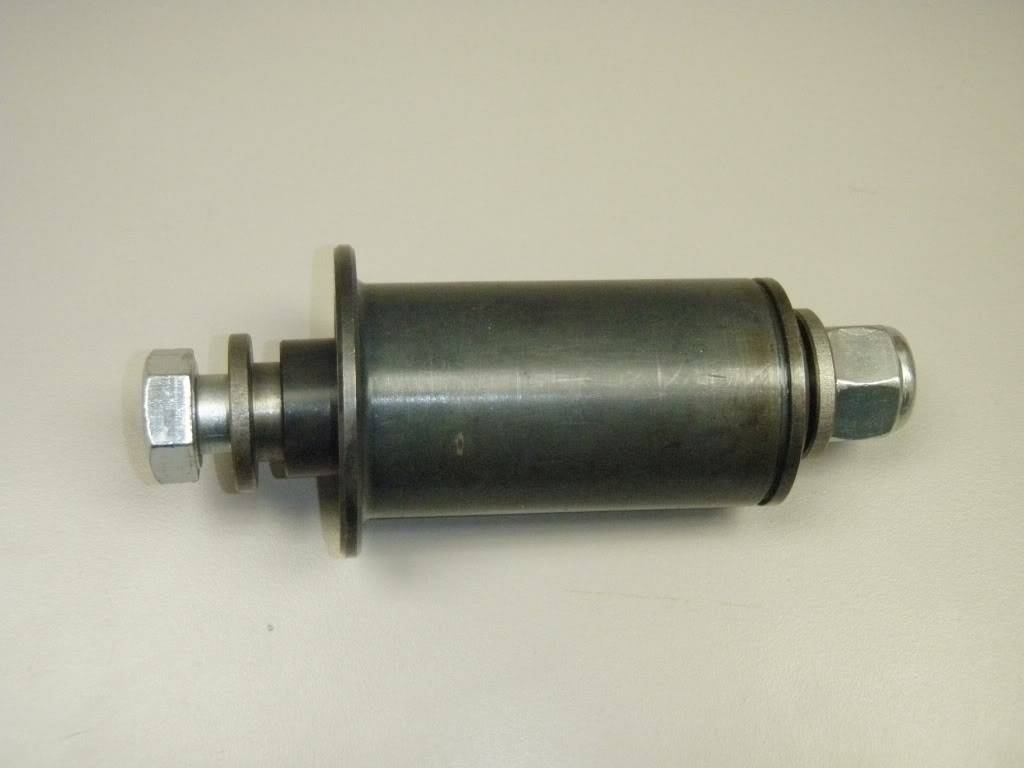

      Afco spring pivot assembly (view 2):
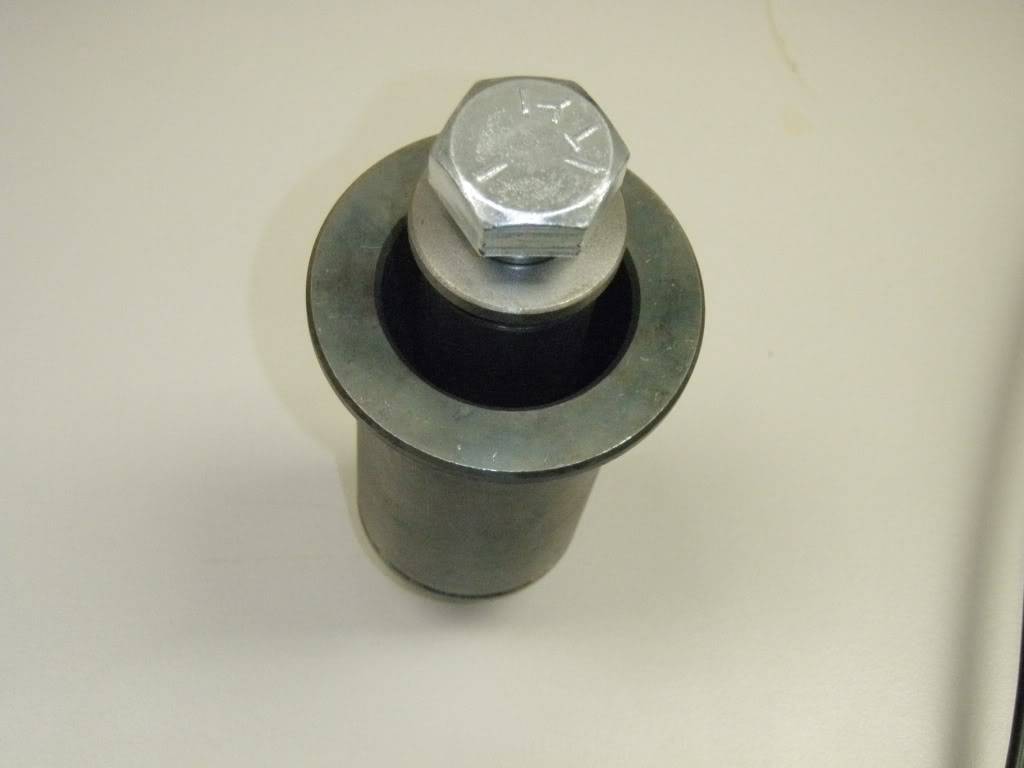

      View inside pivot race:
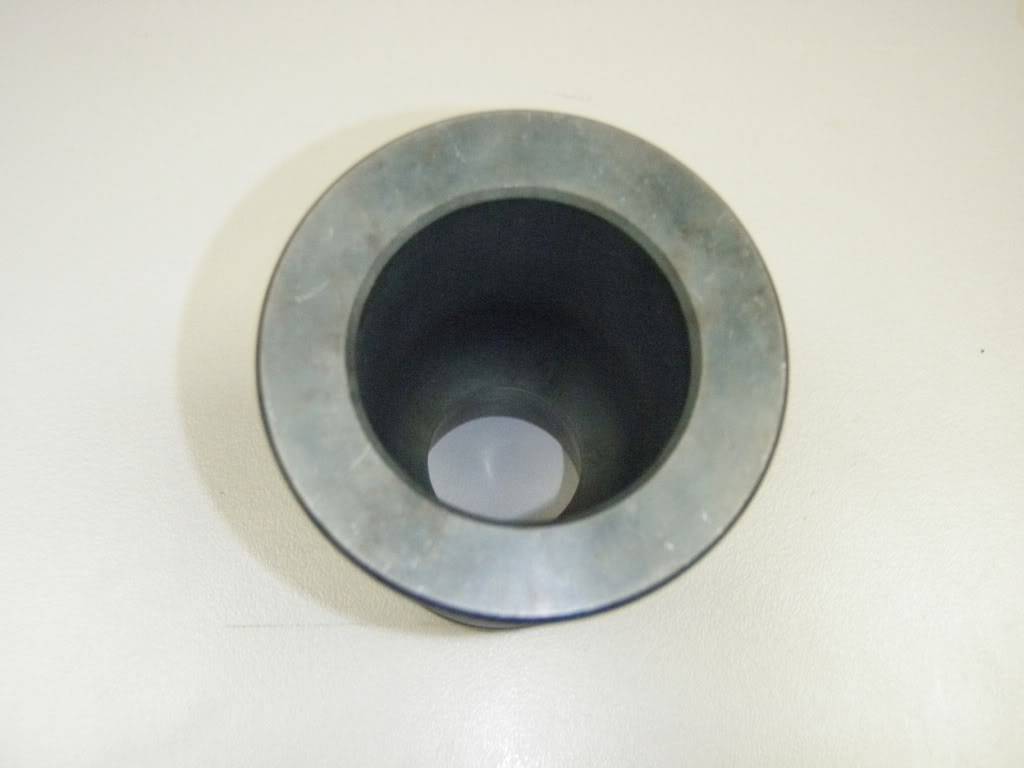

      View of pivot bearing:
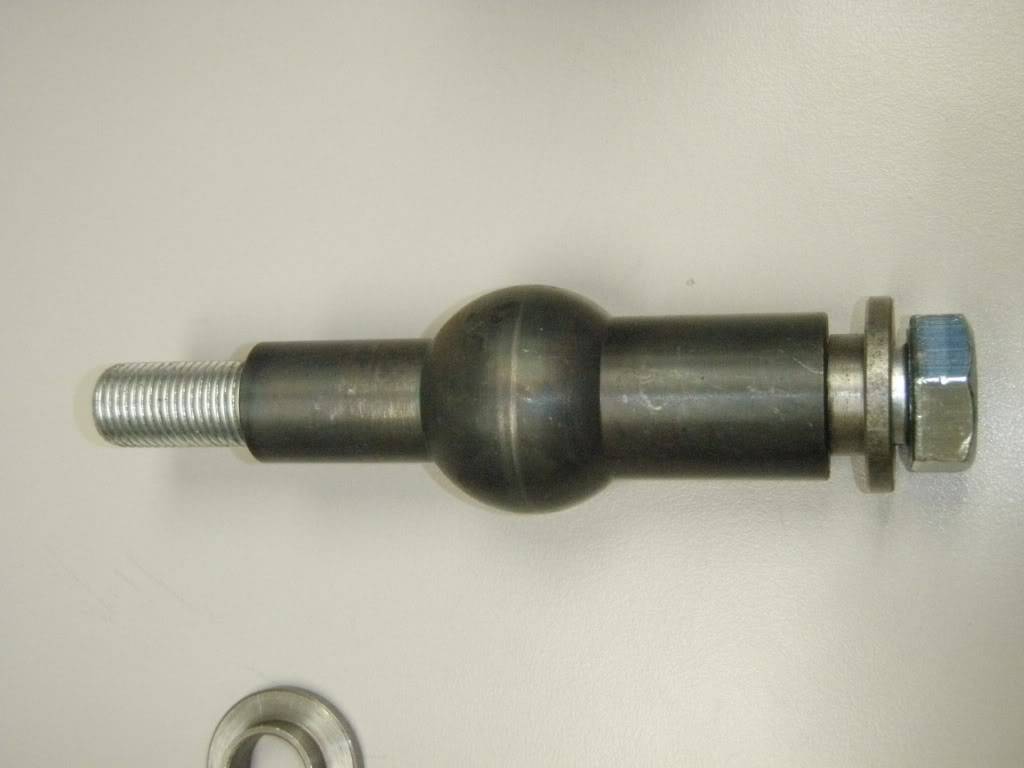

      View of pivot race/bushing with the adapter that I made:
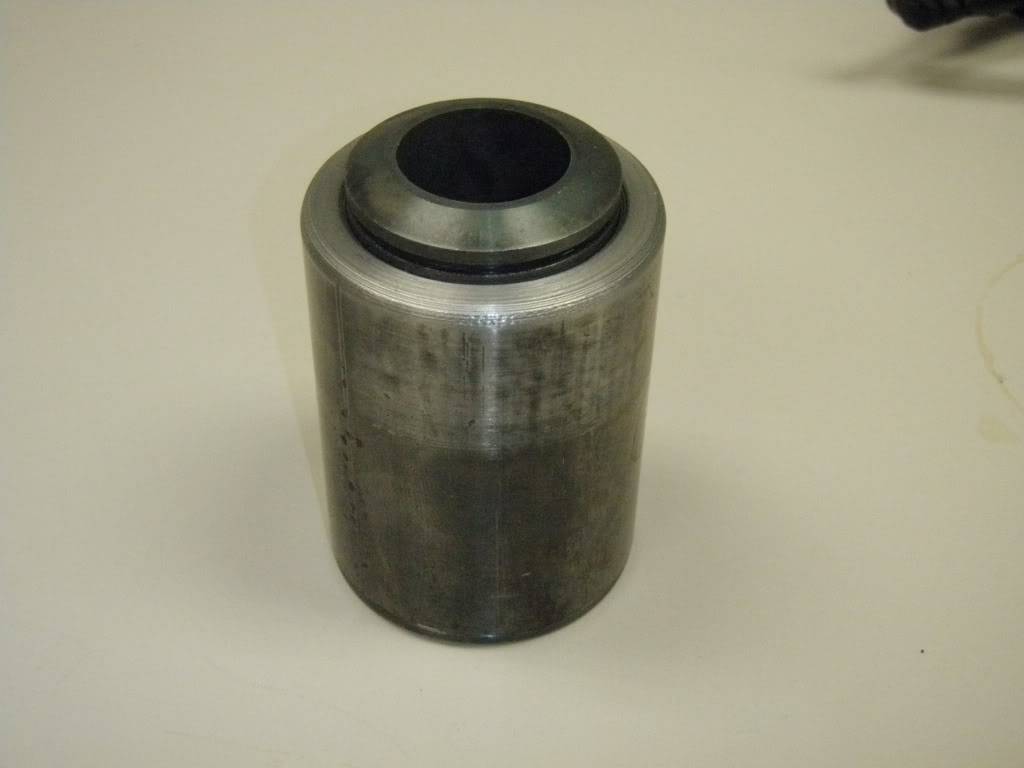
    17. #17
      Join Date
      Jun 2009
      Posts
      651
      Country Flag: United States
      what I would like to know, is when is stiff too stiff, especially for the front. Especially with unibody cars that aren't caged. At what point does the front become so stiff that it transmits the flex from the suspension to the body?

    18. #18
      Join Date
      Apr 2005
      Location
      Colorado Springs
      Posts
      760
      According to the XV video of body flex, the stock set up is enough to begin making the body an active participant in the suspension. Anything more than that simply amplifies the problem.

      As far as adding leaves, you simply need to pick up another set of spring packs from somewhere. You'll need to disassemble your original pack and the extra pack to get all the leafs laid out. I'd start by adding an additional second leaf because it will support the whole pack. If you want to add rate from there, then an additional third leaf and so on. Since your working on a B body, it shouldn't be to hard to find another used set for cheap, so the mounting stud holes will all line up properly out of the gate. Otherwise, you'll have to drill new holes through spring steel, which eats up drill bits. To estimate your rate, there is the old stand on it and measure deflection divided by your weight trick, although, if there are any oval track builders in your area, they may be able to rate them for you.

    19. #19
      Join Date
      Jan 2009
      Posts
      197
      I notice on my springs that there are collars that surround the springs, holding them together. If I add springs to the stack I will obviously need larger collars. Where do I get these?

    20. #20
      Join Date
      Apr 2009
      Location
      san diego
      Posts
      5,101
      Country Flag: United States
      You can make them pretty easily. Just some flat stock of 1/4" by 3/4" wide. Drill two holes and bolt together. When i did this I used stainless bar and stainless fasteners. Just make sure it is a tight fit on the bolts. the bolt spacing (not hole spacing) should be the same width of the spring. I used 5/16" socket head cap screws.

    Page 1 of 2 1 2 LastLast


    Advertise on Pro-Touring.com