


Results 1 to 20 of 22
Thread: Red Loctite 271 Scares Me
-
10-28-2012 #1
 Registered User
- Join Date
- Sep 2010
- Location
- Santa Clara, CA
- Posts
- 622

Red Loctite 271 Scares Me
I might be seeing that my Wilwood front discs are almost ready to be checked off as "done" on my build, but that also means that, theoretically, the final time that they go together, all of the bolts and nuts should be hit with some red Loctite 271.... But anything that says that you have to hit it with a torch for X minutes and disassemble while still hot smacks of being a pretty permanent situation to me, and at this point in my build, how can you know with certainty that there isn't some silly reason that things will have to come apart again? Is it really that permanent of a solution? Besides not owning a torch, I couldn't imagine that heating up the nuts that are nestled right up against the front calipers could possibly be good for any of the parts in that vicinity.... Any one have any practical experience with having to in-do nuts and bolts secured with this stuff? Thanks.
Steve
-
10-28-2012 #2
Registered User
- Join Date
- Sep 2010
- Location
- Santa Clara, CA
- Posts
- 622
Red Loctite 271 Scares Me
OK, reading is fundamental. It is only the caliper bracket mounting bolts that get the Red Loctite treatment, so I am more comfortable with the concept....
Steve
10-28-2012 #3
Registered User
- Join Date
- Feb 2011
- Posts
- 295
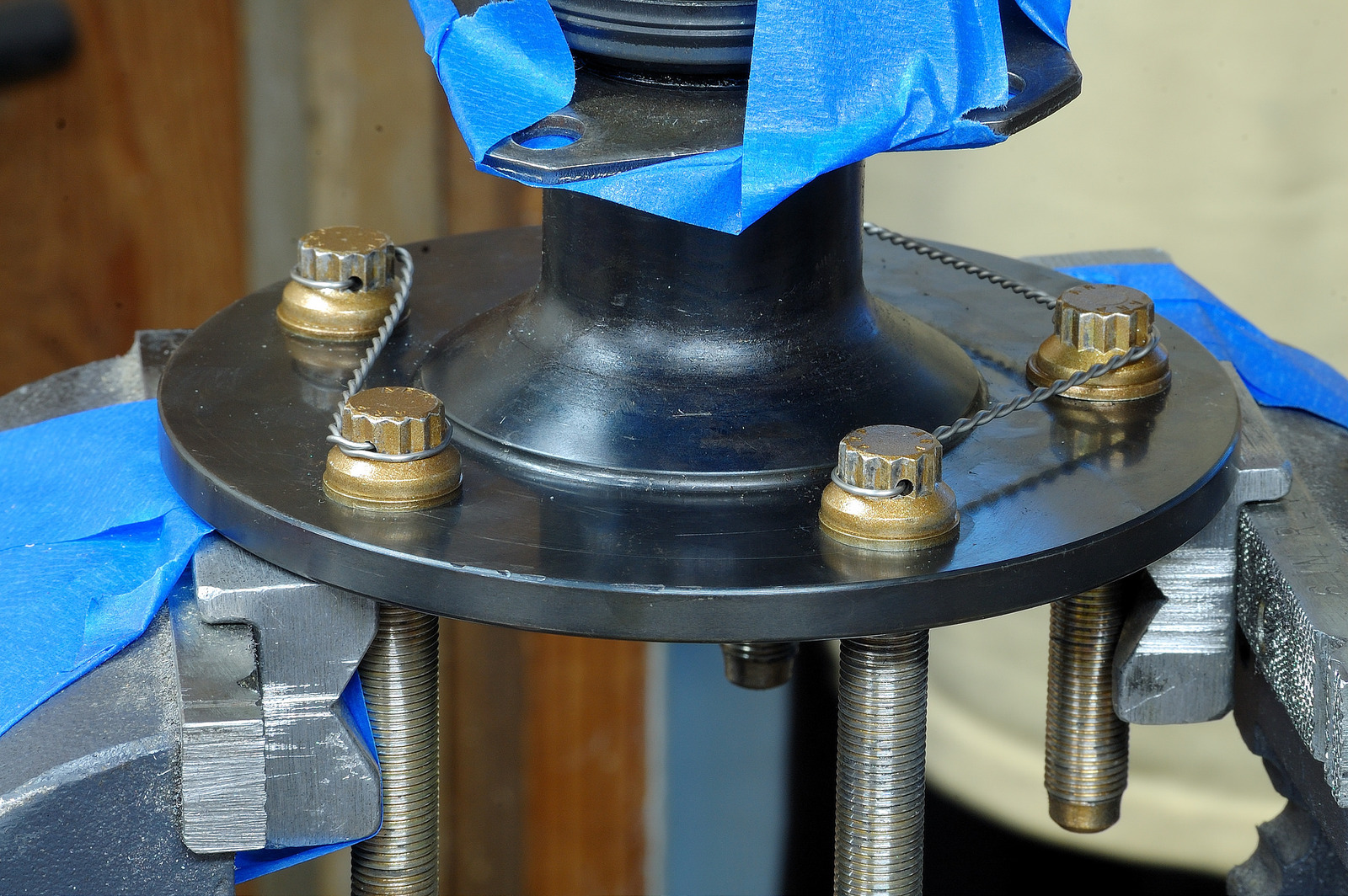
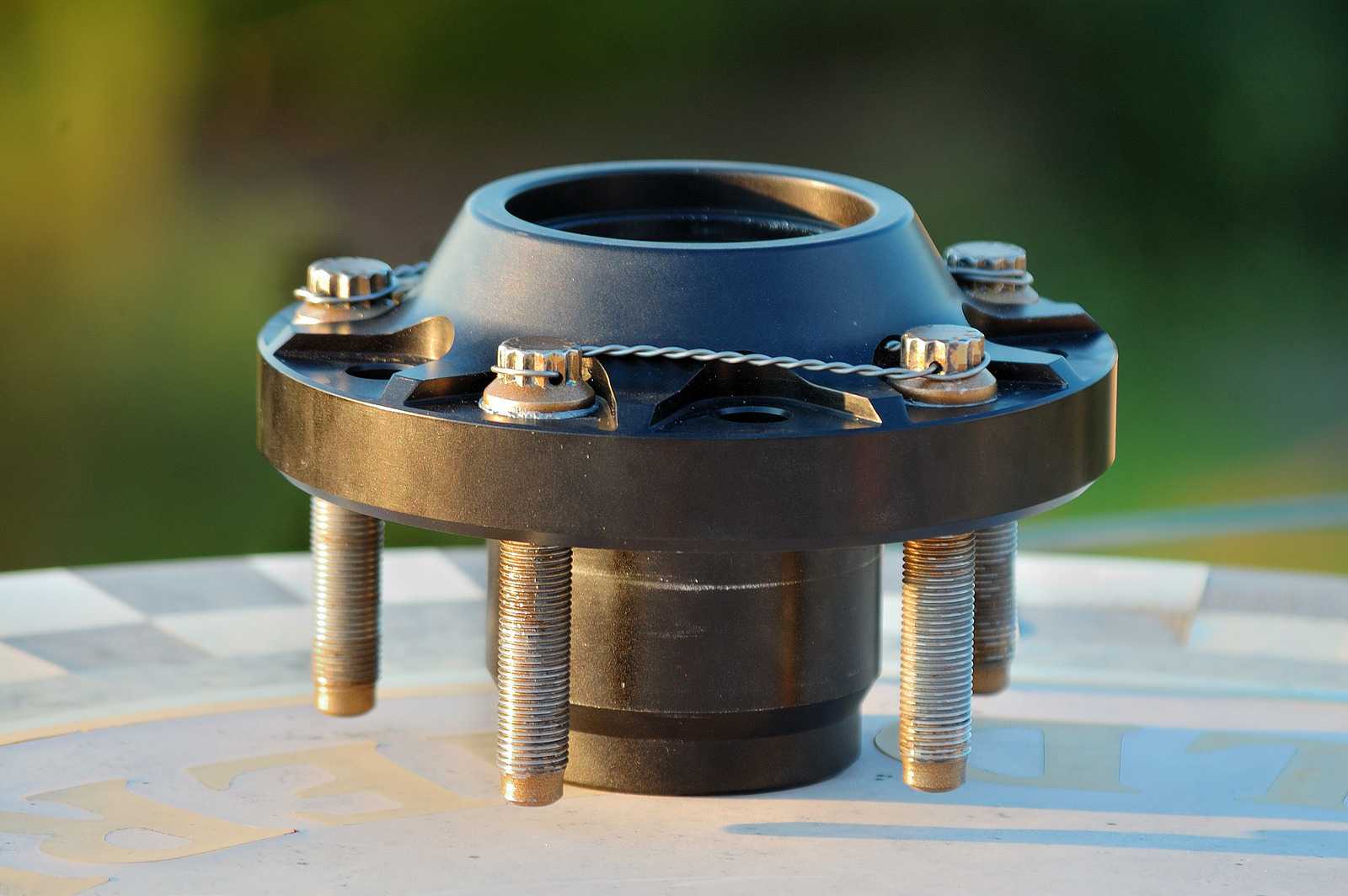
A better solution would be to lock wire them. It assures a safer connection. And no mess.

10-29-2012 #4
Registered User
- Join Date
- Sep 2010
- Location
- Santa Clara, CA
- Posts
- 622
Yeah, but you are safety-wire loco! :-) Originally Posted by jpgolf14
 Steve
Steve
10-31-2012 #5
Registered User
- Join Date
- Feb 2011
- Posts
- 295
That is quite true. My last project below. What did you decide to do? Originally Posted by sjaroslo
10-31-2012 #6
Registered User
- Join Date
- Sep 2010
- Location
- Santa Clara, CA
- Posts
- 622
That is some beautiful work!
For my first attempt at this ever I'm pretty pleased....
Since I re-read the instructions and realized that it was only the caliper bracket mounting bolts that they wanted hit with the Red, I felt more comfortable, thinking that there isn't a very good reason that those puppies should be coming off of the car again, so I went ahead and applied it. No going back now!Steve
10-31-2012 #7 Registered User
- Join Date
- Sep 2006
- Location
- Southern Indiana
- Posts
- 4,709
first of all it doesnt mean an acetylene torch and get them red hot, heck a heat gun on high would get it hot enough to release. Also remember that difficulty also pertains to amount of loctite vs size of fastener. Do not fear red lock tight unless its a fasten like a torx or hex/allen socekt that very small. ALSO keep in mind that if your dealing with anything stainless, loctite loses about 20% to 25% of its hold.
ALSO loctite is NOT a replacement for TORQUE, its meant to eliminate the possibility of VIBRATION loosening it down the road.
Also if installing a caliper bracket I like red, most times my impact will break them loose without heat, Caliper bolts I like to use blue loctite.
Now general rule of thumb, larger like over 3/8 or 7/16 course thread can use red, most smaller bolts blue suffices and if you have a larger fine thread bolt and torque it, blue will most times suffice.
Also in a pinch, put a line of yello/black weather strip down side of bolt, it can work in a pinch.Lee Abel
AFTERMARKET PERFORMANCE
1977 Chevy Monza 2+2:Project "Cheap Trick"
1978 C10 Long bed , On air and trailer puller
2006 Buell Blast ,Just a bike to ride and for mileage
1966 Caprice 4dr Sports Roof fact.327/now 350/SOON 454???? Project "II Old,,,ZERO BUDGET OR LESS CAPRICE!"
10-31-2012 #8
Registered User
- Join Date
- Feb 2011
- Posts
- 295
Agreed. But I don't think anyone is arguing its a replacement for the proper torque spec. I am not a big fan of loctite in a brake application because of the heat. The heat in the brakes acts just like your heat gun and makes the loctite not as effective. For critical systems, I like positive locking mechanisms. But it has already been pointed out that I am lock wire mad. Originally Posted by MonzaRacer
10-31-2012 #9
Registered User
- Join Date
- Feb 2011
- Posts
- 295
Looks good to me. It only gets easier with experience. Originally Posted by sjaroslo
11-01-2012 #10 Registered User
- Join Date
- Aug 2004
- Location
- Ontario, Canada
- Posts
- 2,314
 I would be doing good to get past drilling the bolt head or nuts. Originally Posted by jpgolf14
KenIf there is a hard way to do something, I'll find it!
My other car is a Vega.
11-01-2012 #11
Registered User
- Join Date
- Sep 2010
- Location
- Santa Clara, CA
- Posts
- 622
Luckily the rotor bolts came that way for me from Wilwood but I think that there are jigs out there that let you drill non-pre-drilled bolt heads for safety wire.... Originally Posted by Kenova
Steve
11-01-2012 #12
Registered User
- Join Date
- Feb 2011
- Posts
- 295
The jigs are terrible. They don't let the chips escape, so the bits break easily.
As for bits. I have tried many kinds. I have settled on McMaster Carr part number 8882A13. They are expensive at $13 each but I get about 10x the life out of them compared to a "standard" hard material bit. A drill press is also highly recommended. The beauty of those bits is they are very short and stiff so they don't walk like normal bits. Then I countersink the hole with McMaster 2724A111.
I don't bother looking for predrilled bolts anymore.
11-02-2012 #13 Registered User
- Join Date
- Mar 2006
- Location
- Lowell, MI
- Posts
- 403
I've never had to use heat to get 271 apart. I use it all the time on caliper mount bolts.
Turbo Charged LS1/T56
11-02-2012 #14 Registered User
- Join Date
- Dec 2006
- Location
- Out of the Burbs of Detroit to SoCal, then onto my ancestral homeland, the woods of Cascadia
- Posts
- 1,753
Sorry for hijacking the thread, but how do you hold the bolt while drilling if not a jig? Originally Posted by jpgolf14
Greg Fast
(yes, the last name is spelled correctly)
1970 Camaro RS Clone
1984 el Camino
1973 MGB vintage E/Prod race car
(Soon to be an SCCA H/Prod limited prep)
11-02-2012 #15
Registered User
- Join Date
- Feb 2011
- Posts
- 295
The most ideal way would be to use a drill press vise. But I typically just hand hold them. Originally Posted by Twentyover
11-02-2012 #16 Registered User
- Join Date
- Jun 2006
- Location
- Katy,TX
- Posts
- 1,678
"The most ideal way would be to use a drill press vise. But I typically just hand hold them. "
That would be a drilled finger for me!
I have some OLD Wilwood hubs that used Allen heads that are pretty darned Loctited-weren't drilled for wire.1978 Black Trans Am 455 Edelbrock heads [email protected] through mufflers on pump gas
1981 Trans Am 400 stock type motor
79 Camaro getting a 500" 695 hp IA2 Pontiac motor
1965 GTO project car
470ci/Chevy dual quad 409 604 HP 64 Impala SS project
2004 Pulse Red GTO
11-02-2012 #17
Registered User
- Join Date
- Feb 2011
- Posts
- 295
Its a piece of cake. You don't hold the head with your fingers, you hold the end of the threads. Fingers should be no closer than 1" to the bit. Originally Posted by Skip Fix
11-02-2012 #18
Registered User
- Join Date
- Dec 2006
- Location
- Out of the Burbs of Detroit to SoCal, then onto my ancestral homeland, the woods of Cascadia
- Posts
- 1,753
How do you keep the bit from walking? regular enter punch? Originally Posted by jpgolf14
Greg Fast
(yes, the last name is spelled correctly)
1970 Camaro RS Clone
1984 el Camino
1973 MGB vintage E/Prod race car
(Soon to be an SCCA H/Prod limited prep)
11-02-2012 #19
Registered User
- Join Date
- Feb 2011
- Posts
- 295
A center punch works fine. The bit I mentioned has a very short drilling depth. 0.6" IIRC. So I only center punch the head when I need to drill on both sides and meet in the middle. Otherwise, as mentioned the design of the bit makes it very walk resistant and I have no problems drilling even without a center punch starting point. Originally Posted by Twentyover
11-03-2012 #20
Registered User
- Join Date
- Dec 2006
- Location
- Out of the Burbs of Detroit to SoCal, then onto my ancestral homeland, the woods of Cascadia
- Posts
- 1,753
Hey jpgolf-
Thanks for the informationGreg Fast
(yes, the last name is spelled correctly)
1970 Camaro RS Clone
1984 el Camino
1973 MGB vintage E/Prod race car
(Soon to be an SCCA H/Prod limited prep)

 Reply With Quote