


Results 1 to 20 of 28
Hybrid View


-
05-13-2011 #1

 Registered User
- Join Date
- Mar 2010
- Location
- Clovis NM, 88101
- Posts
- 329
Where can I find a COMPLETE crimp tool?
I am looking for a crimp tool that just about does it all. Stock style dual crimps, battery cable crimps, spark plug wires, etc. Is there a tool out there like this? Or maybe one that does most of the above? Any help would be appreciated thanks.
73 Camaro
Gene
-
05-13-2011 #2 Registered User
- Join Date
- Aug 2008
- Location
- Pgh, PA
- Posts
- 2,177
I am not aware of any such tool that does everything.
 '66 GTO Vert Project "Red Ink", 462ci of stroked pontiac power, TKO600, SC&C Stg II+, Tubular lowers, Currectrac Rear suspension, Moser 12bolt w/Truetrack, Wilwood Master and discs all around, too much fun for words...
05-13-2011 #3 Registered User
- Join Date
- Feb 2011
- Location
- Where the hosers are.
- Posts
- 201
To get quality crimps on the various connections, you will need a few different tools. There isn't a single tool that does them all, especially when talking about going from 18 AWG cramps to 4 or 2 AWG battery cable crimps.
05-13-2011 #4
Registered User
- Join Date
- Mar 2010
- Location
- Clovis NM, 88101
- Posts
- 329
okay, any suggestions? I heard of a crimp tool that has dies to do spark plug wires and awg crimps? any direction would help, thanks
73 Camaro
Gene
05-13-2011 #5 -Moderator/Sponsor-
- Join Date
- Jun 2001
- Location
- Orlando, FL
- Posts
- 10,604

Gene, you're chasing a pot of gold. On a quest for the holy grail. Wanting to swim in the fountain of youth.

I own about 10 different crimping tools, and that's just for Molex, Delphi, and standard "barrel" connectors. You need to tell us what kind of connectors you want to crimp. AAW has a nice crimper (reasonably priced), and you can get lots of good ones at Waytek. For standard barrel connectors, have a look around at your local big box home improvement store, and look for Klein tools.John Parsons
UnRivaled Rides -- Modern upgrades for your ride.
UnRivaled Rides recent project -- LS9-powered 69 Camaro
05-13-2011 #6
Registered User
- Join Date
- Mar 2010
- Location
- Clovis NM, 88101
- Posts
- 329
Bill, I can never seem to get you to tell me how it really is. You always beat around the bush! Just give it to me straight man. LOL!! Originally Posted by parsonsj

I have an AAW kit I am about to install and have plug wires and run battery cables. basicly completely wire my car. From the posts it seems I will be investing more in the tool box. Thanks for the tips on crimpers and if you guys have any good experience with any other brands please let me know so I can put the best in my tool box, thanks. Bill, thanks for the good laugh and I AM looking to skinny dip in the fountain of youth!! HA!
73 Camaro
Gene
05-13-2011 #7
Registered User
- Join Date
- Feb 2011
- Location
- Where the hosers are.
- Posts
- 201
For a majority of my crimps I sue a Klein style crimper. http://www.service.kleintools.com/To...N/Product/1005
For spark plugs I have saved a few of the dies that used to come with MSD spark plug wire custom sets. For larger than 8 AWG, I either use a die style crimper that you hit with a hammer, or use some custom made crimpers.
05-13-2011 #8
Registered User
- Join Date
- Aug 2008
- Location
- Pgh, PA
- Posts
- 2,177
I did go ahead and splurge on a set of the MSD plug wire crimpers. Great and well built tool. Probably didn't really need it but I'm a tool junky sometimes. For other stuff I have a few crimpers which all seem to be a little better than another for one unique purpose. Somebody more skilled than I could certainly do with less but I don't think just one.
'66 GTO Vert Project "Red Ink", 462ci of stroked pontiac power, TKO600, SC&C Stg II+, Tubular lowers, Currectrac Rear suspension, Moser 12bolt w/Truetrack, Wilwood Master and discs all around, too much fun for words...
05-13-2011 #9 Registered User
- Join Date
- Jul 2007
- Location
- Los Angeles, CA
- Posts
- 1,303
Kind of expensive but I ended up buying the American Autowire single

http://shop.americanautowire.com/cri...pliceclip.aspx
and double crimpers:
http://shop.americanautowire.com/crimper-double.aspx
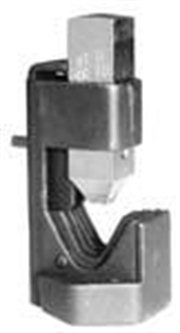
They will do most Type-F and Weatherpack crimps from 8 to 20 gauge. As far as battery cable I bought one of the hammer style bench crimpers that will do anything from about 10 gauge to 0000 gauge:
http://shop.genuinedealz.com/Items/g...20Crimp%20Tool
The only other alternative I could find when I was looking was a 300-400 tool with dies to crimp the battery cable. Probably better than the hammer bench style but I find it makes a good strong crimp.
I have one of the Klein Crimpers too they are nice for the regular insulated and uninsulated terminals. With these 4 I think you can cover most stuff unless you are doing some new fangled terminals.
05-14-2011 #10
Registered User
- Join Date
- Mar 2010
- Location
- Clovis NM, 88101
- Posts
- 329
Ed, Thanks for the detailed post. Exactly what I needed. Thanks!! And thanks to the rest of you guys for posting. Once again PT.com members come through in flying colors.
73 Camaro
Gene
05-14-2011 #11
Registered User
- Join Date
- Aug 2008
- Location
- Pgh, PA
- Posts
- 2,177
BTW, I don't have a battery crimp tool because I no longer crimp battery terminals. Instead, I've started using the "screw on" terminals from Taylor like these http://www.summitracing.com/parts/TAY-21414/?rtype=10
They're a little pricey, but they have a huge advantage in that they are easy to install with no tools at all, and can be used over again. They tighten up incredibly well and I've never had an issue whatsoever with them.'66 GTO Vert Project "Red Ink", 462ci of stroked pontiac power, TKO600, SC&C Stg II+, Tubular lowers, Currectrac Rear suspension, Moser 12bolt w/Truetrack, Wilwood Master and discs all around, too much fun for words...
05-14-2011 #12
Registered User
- Join Date
- Mar 2010
- Location
- Clovis NM, 88101
- Posts
- 329
Wmhjr, Now that's what I am talking about!! This will be the way I go for the battery cables, thanks.
73 Camaro
Gene
05-14-2011 #13 Registered User
- Join Date
- Dec 2002
- Location
- Lost Wages, Nevada
- Posts
- 2,684
The mythical tool... that doesn't exsist. As JP stated... it takes about ten individual tools to do everything, but only about five to do most 'normal' automotive electrical assembly. However...
The "hammer" crimpers = FAIL. They are mediocre at best... even if you use them in a vice (or a hyd. press, which I would recommend over actually hammering it.)
Screw together type suck even worse. There is no actual compression and oxidization and corrosion will be the biggest issue with them... and it's not a question of "if" it will happen, but more to "when" it will happen.
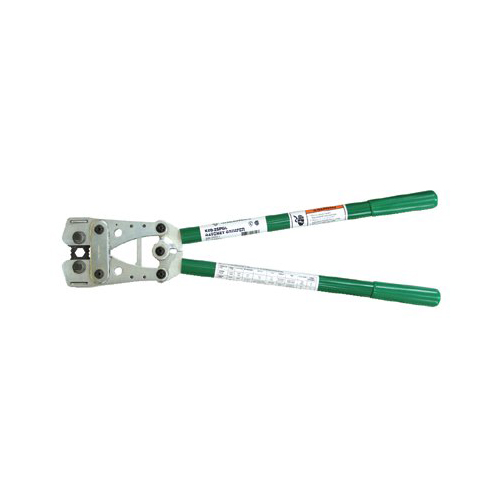
The best connection is from a tool with a full cycle crimping mechinism. The idea on battery connections, or any crimp type terminal for that matter, is to minimize any possible air gap between the individual wire strand conductors. That requires TONs of compression by mechanical leverage. So... in an easier term... to mash the terminal and individual strands together, displacing any possibility of air between the strands. No air, no oxidization, no corrosion... no gremlin.
The best tool for for 8ga to 4/0... is this. It's the only tool to use in my opinion.
05-15-2011 #14
Registered User
- Join Date
- Aug 2008
- Location
- Pgh, PA
- Posts
- 2,177
We'll just have to disagree. I was skeptical of the Taylor connections myself at first. Time has proven them to be far more than adequate for many purposes. In my case I have yet to see a single connection display any oxidation or corrosion, and to correct - they do in fact involve actual compression. I'm wondering if you've actually used these models - no disrespect. Honest question. Originally Posted by chicane67
BTW, I've had these on and taken them apart after 2 yrs. The cable is every bit as clean and free of oxidation as any other wire or cable in the vehicles.
I would also disagree about having to "mash" the cable so that no air gap exists. The cable between the connections is not "mashed". Frankly, to achieve a solid connection one only needs to make sure that internally the strands are no less "compressed" than anywhere else on the cable strand, and that the outer strands are in tight contact with the connector. In the past 40 yrs or so, I've found that to be true on a consistent basis without exception.
To be even more clear, those "screw in" connections are valid choices for aircraft - approved for use in such applications. That says a lot to me.'66 GTO Vert Project "Red Ink", 462ci of stroked pontiac power, TKO600, SC&C Stg II+, Tubular lowers, Currectrac Rear suspension, Moser 12bolt w/Truetrack, Wilwood Master and discs all around, too much fun for words...
05-14-2011 #15
Registered User
- Join Date
- Feb 2011
- Location
- Where the hosers are.
- Posts
- 201
I have had no issues using a hammer crimper, when used for the terminals it is designed for. FWIW, I've used them for about 18 years. ;)
05-14-2011 #16
Registered User
- Join Date
- Dec 2002
- Location
- Lost Wages, Nevada
- Posts
- 2,684
I used hammer crimpers 20+ years ago... until I learned how to do things better. As I stated, if you do use one... use it in a press, and for most here it should work ok. However, I live and work in a ZERO failure envirnment... I am merely providing information about a 'certified' method.
Cheers
05-15-2011 #17
Registered User
- Join Date
- Dec 2002
- Location
- Lost Wages, Nevada
- Posts
- 2,684
No... I've never used them before... I made it a point to lie to you earlier when I said that I have used them.

Sure, we can agree to disagree. However, if you disagree about the 'figure of speech,' and the implied meaning of "mash"... then the "hammer" crimper is some what the holy grail of an oxymoron then... isn't it ? Because that is exactly what you are doing when using said device in the first place. Hence my additional and initial commentary about using the device in a hydraulic press to begin with.
Proper crimping and cleaning of the wire is essential for optimizing connector service. A proper crimp that is performed on oxidized wire may have high resistance and could result in excess heat. Not to mention that it suggests these specifics for maintaining and extending the performance life of connectors. As a rule, following them can result in lower connector operating costs as well as greater efficiency and productivity. READ: it costs less and lasts longer... not to forget to mention, that it will better deny the possibility of your vehicle setting fire to itself.
The pictorial reference below shows an example of both the two types that we have agreed to disagree upon. It should give those of you out there that are 'visual'... a better understanding of what we argued our respective points about thus far. The hammer crimper is a single impact point that doesn't evenly compress the conductor. The tool that I suggest is a mechanically ratcheting system that produces a compression crimp that is mechanically and electrically superior. Most tools of this design provide a round, oval or hexagonal impression... and from the picture, you can visualize how it supports the obvious tech:
You are correct about the use of specific types being used in airfcraft... but what you did not elude to (so that the audience can better understand the actual difference in this arguement...) is that the wire used in the screw type connectors for aircraft use... is silver plated... nor is the conductor of copper construction either. That instance, in it self... is a whole 'nother discussion all together.
I only have a strong 'opinion' of this subject matter, due to the fact that I am an electrical/electronic engineer working in the two specific theaters of applications being discussed. Race cars and aircraft. In one of them, I have USCAR, IPC, NEC, UL, SAE and CSA standards crammed down my throat in one manner, yet the FAA and other equally scrutineering bodies that will take me out back and put a bullet in my head, merely for the lack of attention to detail when a multi-hundred million dollar platform doesn't perform for a critical test, or god forbid, it lawn-darts (crashes.) Both applications have mortal repercussions.
Overly drammatic... yes, some what. We are not building cars to go into space. The theory however... equally applies to both. If it's worth doing... it's worth doing right the first time around.
(duce-out)
05-16-2011 #18
Registered User
- Join Date
- Aug 2008
- Location
- Pgh, PA
- Posts
- 2,177
Í'll accept your credentials but simply have to disagree with you. Here's the argument that I'll make.
Let's discuss camber, caster, and toe for alignment. Now, if I add a negative 2 degrees of camber and set toe to slightly out on my car, it's going to have a remarkably different performance and may not yield what I want. Yet, if I do the exact same thing to my John Deere or Farmall tractor, the "theory" may remain the same, but the practical experience will not. I will not be able to measure the difference. I feel the same thing is happening here. I appreciate your safety focus but wonder if perhaps we're not taking things to an extreme.
I asked if you had specifically used the Taylor type screw in fittings because you mention that they do not use compression. Yet, they clearly do use compression and do factually compress the wire strands. Furthermore, they compress those strands in a "round" manner - exactly as you demonstrate is the ideal method above. AND - on top of that, while the connector is silver in appearance, it is ALSO cast of copper, reducing risk. So, my question was sincere and I wondered if perhaps you were speaking of a different type connector since you had not accurately described these.
What I'd like is this. As mentioned, I've used these screw in type (compression) connections (which I typically also heat shrink) for years and have yet to see a single solitary failure. I've taken them back apart and have observed zero corrosion or defect. I've never seen, or heard of a failure of these when properly used. I've never ever heard of a cable failure or a fire being started by one. Before we casually dismiss what I honestly feel is a pretty nice option for people building cars - and who don't wish to spend $320 for a single crimper, I'd like to ask if anyone has any factual evidence of these terminals failing.
BTW: Aircraft battery cable is not silver plated. It's just plain old copper. http://www.aircraftspruce.com/catalo...battcables.php . Same exact SAE spec as for automotive.'66 GTO Vert Project "Red Ink", 462ci of stroked pontiac power, TKO600, SC&C Stg II+, Tubular lowers, Currectrac Rear suspension, Moser 12bolt w/Truetrack, Wilwood Master and discs all around, too much fun for words...
05-16-2011 #19
Registered User
- Join Date
- Dec 2002
- Location
- Lost Wages, Nevada
- Posts
- 2,684
Ahhh... in the spirit of debate. I applaud you sir. Because this is where the audience gets the most from the exchange of information.
Although, in rebuke to the 'alignment' scenario... kinematically, it is exactly the same... and just because you don't autocross your John Deere, doesn't make it any different. The driven surface is so much more forgiving then a paved surface all together. And no, I don't... however entertaining it would be, see to many cats wearing helmets on tractors.
Now, talking about the Taylor products... your original statement was of 'aircraft screw type' components. The Taylor products are NOT aircraft type... even in the slightest attribute, other than they 'screw' together. I didn't accurately describe these as the main argument was toward the 'hammer' crimp device. In my use of the automotive screw type, dating back to the mid eighties in 'car audio's infancy, we used them quiet a bit... only due to the fact that I was not aware, nor had the knowledge of, the available tools specifically for this. Not to mention, the client... as well as of product suppliers, wanted to use all the shiny blingly stuff.
I will add to your defense... that the preparation of the components and the attention to its specific assembly (like throughly cleaning the components; the use of shrink; integral glue sealers available in some shrink, etc) is critical... to making these connections live. Yes, I too have dis-assembled these after being in service for a few years as a preventative maintence practice, but due to my experience in their assembly in my own process... is what I attribute to them being in such good condition. However, most end users won't wash their parts in MEK before assembly. Most users, just takes things out of their respective packaging and screw it onto the car and then stand back... in all of its shiny glory.
You and I may just be the exceptions to this practice. But I find it very common to take apart other peoples work, only to find the connection to be corroded and electrically and/or mechanically questionable... mainly due to improper assembly, improper maintenance and in the presence of improper or to few grounding circuits.
Even though the crimper is $250... it works for 8 thru 4/0, with the included dies. Yeah, its a larger tool... but when you use it as often as I, its priceless at $250. Hell, after the first $150k in tools... what's another $250.00 !?!
Lastly... the 'Spruce cable, is what they have to offer as an affordable alternative in the "experimental" constructors market. In the real world, it's not used in production airframes... nor should it be.
05-16-2011 #20
Registered User
- Join Date
- Aug 2008
- Location
- Pgh, PA
- Posts
- 2,177
This is a good discussion. My point about the tractors was that it's all well and good to engineer something to the nth degree (as I am often accused of) only to also acknowledge that the extra time and effort have resulted in such dramatically insignificant advantages that it simply can't be justified. I did not call the Taylor units "aircraft" but I did later refer to "screw in" connectors being used for aircraft so I could see where I caused confusion that way. Originally Posted by chicane67
I'll also say that I don't believe that the current cast copper compression screw terminals I'm speaking of existing in the 80s. If they did, I am certainly not aware of it. I'm certainly not a fan of the "clamp" type connectors - though I've had to use them in emergencies from time to time. These are far different. I was very active in the 70s and 80s and I would have loved to have these available, but like I said - if they existed they must have been REAL hard to find.
The crimper you mention is over $300 everyplace I've seen it. However more to the point, most of us probably don't use it äs often as (you)" which makes it a very dubious investment. If, as I suspect and believe, the Taylor compression cast copper screw in connectors are acceptable there is really no point. Even for somebody as ridiculous as me
BTW, the Aircraft Spruce cable is used for more than the experimental market. I am a pilot, and own my own non-experimental SEL aircraft - or at least more accurately, I own a 25% share of mine. That being said, many of the newer "experimental" aircraft are superior in both performance and quality to what I've been flying. Take a Vans RV for example. Great little aircraft! Great quality. I'm impressed every time I see one at the level of quality in their materials. And it's copper. Just saying.'66 GTO Vert Project "Red Ink", 462ci of stroked pontiac power, TKO600, SC&C Stg II+, Tubular lowers, Currectrac Rear suspension, Moser 12bolt w/Truetrack, Wilwood Master and discs all around, too much fun for words...

 Reply With Quote



