

Results 1 to 12 of 12
-
09-07-2010 #1

 Registered User
- Join Date
- Aug 2005
- Location
- Hamilton, NJ
- Posts
- 4,317

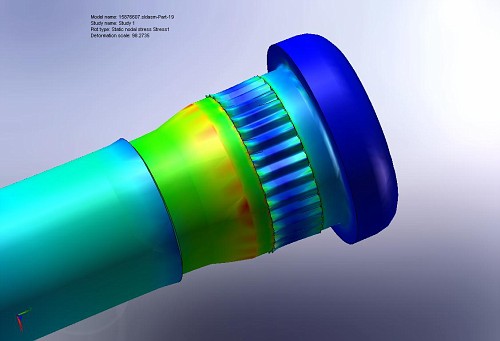
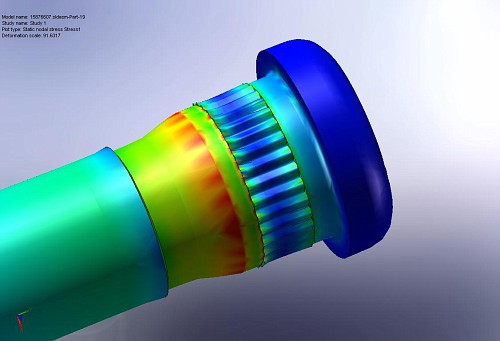
Educate me on wheel stud failure.
Local guys are discussing wheel stud failure because one of the younger guys lost a wheel and it got me to thinking about reasons why. I put this together based on my experience and what I think is common sense. Can any of you smarter types tell me where I am wrong/right? Considering the safety aspect I figure it is a proper discussion here.
*Lugs not tightened enough (I bet the #1 reason)
*Lugs overtighted/studs previously stressed (I bet a very close 2nd). I'd think this will also over stress the head (flange) of the stud, weakening it.
*Lugs not tightened in proper pattern
*Lug nut wrong seat (common with replacement wheels, esp aftermarket)
*Wrong lugs (ie metric nuts on SAE threaded stud)
*Not enough thread engagement (common with replacement wheels, esp aftermarket)
*Previous rim damage (nut seat damage, non-hub centric makes it worse)
*New aluminum rims not re-torqued after a few 100 mile cycles. (seen that)
*Wheel not properly seated at time of mounting, perhaps due to corrosion on wheel and/or mounting surface preventing proper seating. And aluminum wheels corrode too, or wheel not fitting properly over hub (esp w/aftermarket wheels)
*Improper installation of stud (ie with impact gun instead of a press)
*Hub/flange failure due to improper/oversized studs being installed
*bolt pattern mis match (ie BMW wheels on a Camaro)
*Cyclic, fluctuating loading - why the drag guys running such grossly oversized wheel studs to compensate for the shock loading at launch. Under-torqued lug nuts will almost immediately see fluctuating loads and lead to premature failure
*Too much HP
*manufacturing defect (poor hardening, etc)
Scott from NJ.
Vent Windows Forever! ...
Feather-light suspension, Konis just couldn't hold
I'm so glad I took a look inside your showroom doors
-
09-07-2010 #2 Registered User
- Join Date
- Dec 2004
- Location
- Midwest
- Posts
- 2,263
Improper lug nut depth... I've seen people tighten nuts, only to be tightening the cap of the nut on the stud, and the wheel isn't even squeezed! Always measure the depth of the nut on cap styles and make sure the stud length allows the nut to tighten on the wheel!
Good post, BTW!Kevin Oeste
V8 Speed and Resto Shop
V8TV
Muscle Car Of The Week
V8 Radio Podcast
All about us:
https://www.v8speedshop.com

09-08-2010 #3
Registered User
- Join Date
- Jan 2006
- Location
- Oregon
- Posts
- 1,773
You rattled off most of what I could think of and I agree that under-torqued lug nuts (whatever the cause) are probably the number one reason for failures. The wheel studs never see any additional load or stress other than the preload stress set by the lug nut torque unless those preloads are actually exceeded by the external loading. That means that your wheel studs should have a fixed loading scenario 99% of time if sized properly. Cyclic, fluctuating loading scenarios don't make for happy wheel studs, hence the drag guys running such grossly oversized wheel studs to compensate for the shock loading at launch. Under-torqued lug nuts will almost immediately see fluctuating loads and lead to premature failure.
Wrong wheel pattern is another one, i.e. 5x4.75 versus 5x120mm. Wheel studs are meant to be in pure tension...throw bending into the mix and you significantly reduce the factors of safety built into the wheel studs, especially if you like to torque to 90% yield as calculated by tension only.
Tobin
KORE3It's what I does.
09-08-2010 #4 Registered User
- Join Date
- May 2010
- Location
- Orange, CA
- Posts
- 456
One of the guys at work broke some studs and lost the wheel due to tire shake. They were Titanium Studs with Encapsulated Aluminum Nuts - and a 2700 HP SBC
 Life is not a journey to the grave with the intention of arriving safely in a pretty and well preserved body, but rather to skid in broadside, thoroughly used up, totally worn out, and loudly proclaiming 'WOW What a Ride!'
09-08-2010 #5
Registered User
- Join Date
- Aug 2005
- Location
- Hamilton, NJ
- Posts
- 4,317
Tobin, along these lines on bolt pattern:
 Originally Posted by silver69camaro
 Scott from NJ.
Vent Windows Forever! ...
Feather-light suspension, Konis just couldn't hold
I'm so glad I took a look inside your showroom doors
09-08-2010 #6 Registered User
- Join Date
- Dec 2007
- Location
- Salem, OR
- Posts
- 226
Not being hubcentric is probably a cause of a lot of failures because you are asking the lug nuts not only to center the wheel but hold it centered under incredible loads instead of just holding the wheel on the hub.
Mike R
'66 Olds Cutlass Convertible
'15 Challenger SRT 392 (DD)
'72 Pontiac LeMans (wife's toy)

09-09-2010 #7
Registered User
- Join Date
- Aug 2004
- Location
- San Antonio, Tx
- Posts
- 1,193
metric nuts on SAE threaded stud. i've seen that before come into the shop with loose wheels.
Instagram: CamaroAJ
09-09-2010 #8
Registered User
- Join Date
- Jan 2006
- Location
- Oregon
- Posts
- 1,773
Interestingly enough, hub-centricity probably isn't as big an issue as some might think. Regardless of hub-centric or lug-centric, the wheel studs are responsible for holding the wheel in place, they really only differ primarily in installation. Originally Posted by Mingus
There are plenty of factory applications that are not hub-centric as well as aftermarket wheels. Ideally, everything would be perfectly centered, however that is the purpose of tightening the wheels in a criss-cross pattern incrementally so that all of the lug nuts can seat properly, centering the wheel in the process within a few thousandths of an inch. I haven't done a comparison between the two methods specifically with respect to wheels, however with rotors it is easy to reduce the measured runnout by about half going to a snug hub-centric fit versus lug-centric keeping everything else the same. Thte same principles should apply to wheels.
Having a hub-centric wheel just means that the wheel is basically centered to begin with, minus whatever the radial clearance is for the slip fit. Once the wheel is clamped to the hub, the only way that the center hub-centric register will ever see any load is if the wheel studs/lug nuts are not doing their job and allow the wheel to move...which shouldn't happen except in extreme situations like described above with too much tire/HP/etc.
Oddly (to me anyway), heavier GVWR rigs like 3/4, 1-ton trucks are mostly lug-centric last I checked, as are my 1/2-ton axled rigs. This could be due to the fact that the unsprung weight on these rigs is so much higher that a little imbalance at the wheel doesn't negatively impact the handling of the vehicle like it could on a modern import or domestic car.
Tobin
KORE3It's what I does.
09-09-2010 #9 Registered User
- Join Date
- Aug 2006
- Location
- San Francisco, CA
- Posts
- 808
A classic:
I heard Metric vs SAE
09-09-2010 #10 Registered User
- Join Date
- Jun 2006
- Location
- Katy,TX
- Posts
- 1,678
Not being hubcentric is probably a cause of a lot of failures because you are asking the lug nuts not only to center the wheel but hold it centered under incredible loads instead of just holding the wheel on the hub.
Also having a short axle hub not to engage the wheel. Currently I have some factory hubcentric 81 Trans Am Turbowheels that are on Moser axles that barely protrude out the rotor. The correct lugnuts are not completely locating the wheel as I can see it move as I spin it when they are close to snug. It would cause shake as the wheel wouldn't be centered if I drove it-they are just on to push it around the shop. Hopefully the drag wheels an lug nuts will locate it better.
09-09-2010 #11
Registered User
- Join Date
- May 2010
- Location
- Orange, CA
- Posts
- 456
What me worry?Life is not a journey to the grave with the intention of arriving safely in a pretty and well preserved body, but rather to skid in broadside, thoroughly used up, totally worn out, and loudly proclaiming 'WOW What a Ride!'
09-15-2010 #12
Registered User
- Join Date
- Oct 2009
- Posts
- 35
What about running hub-centric and wheel-centric wheel spacers with longer studs?

 Reply With Quote