


Results 21 to 40 of 81
Thread: Hollow or Solid Sway Bar
-
06-17-2010 #21

 Registered User
- Join Date
- Aug 2008
- Location
- Pgh, PA
- Posts
- 2,177
This may well be the perfect summary. It's all about individual needs and the combination you're putting together. Wrong answer to concentrate on the sway bar and excluding the remainder of the suspension/chassis. Originally Posted by Norm Peterson

Norm - agreed. I should clarify, I meant that in terms of "Strength" or the "ability to resist deflection/flex" overkill provides no value. In terms of "performance", too much may well be a bad thing. Originally Posted by Norm Peterson
 '66 GTO Vert Project "Red Ink", 462ci of stroked pontiac power, TKO600, SC&C Stg II+, Tubular lowers, Currectrac Rear suspension, Moser 12bolt w/Truetrack, Wilwood Master and discs all around, too much fun for words...
-
06-17-2010 #22 Registered User
- Join Date
- Jun 2006
- Location
- Katy,TX
- Posts
- 1,678
I would bet my RARE billets are heavier than my stamped steel sure not dramatically lighter. Point was as one of the other guys said 8 lbs difference of non sprung weight is a little more than a gallon of gas in the tank. Probably more than that of sound deadener or jute in the carpet in most cars.
Interested now on the braided line, I might have to weigh on an accurate scale a steel fuel line vs a equal length of braid with hose ends on it. That said I like braided and use it over steel lines.
06-17-2010 #23
Registered User
- Join Date
- Aug 2008
- Location
- Pgh, PA
- Posts
- 2,177
I know my March non-air system is significantly lighter than steel pulleys and brackets - by a LONG shot. I've installed the RARE pulleys, and can't say for sure about them. They are great quality pieces, but I think there are pretty thick and heavy. Beyond that, I think we're arguing fractions, but frankly the entire gas in the tank argument further shows the value of decreasing the weight of front suspension components for many of us driving 60s/70s PT cars. Without starting a physics lesson, let's just say that the further forward in the car the weight, the more its effect on balance, OK? Because so many of our cars from the factory had heavy front ends and light rear ends, we like to move that balance point back, right? At the same time, as we drive, we LOSE weight (in fuel) in the fuel cell/tank. Meaning, that over every mile you're moving the "balance point" forward in the car due to less fuel (or ballast) in the back. So, at least from my perspective, I'm happy for every pound I can move back behind the drivers seat. MOVING weight (or percentage of mass) is more important to me than LOSING weight. Originally Posted by Skip Fix
'66 GTO Vert Project "Red Ink", 462ci of stroked pontiac power, TKO600, SC&C Stg II+, Tubular lowers, Currectrac Rear suspension, Moser 12bolt w/Truetrack, Wilwood Master and discs all around, too much fun for words...
06-18-2010 #24
Registered User
- Join Date
- Jun 2006
- Location
- Katy,TX
- Posts
- 1,678
I agree moving weight off the front end helps balance most cars better esp since most of our early cars are so nose heavy. I think some of it though is more a theoretical thing though. Even my current pump gas TA car at the drags ran identical times/mph with the 22lb sway bar added back on the front and hooked up. Two things that in theory should slow it down with weight and weight transfer.
Now light weight skinny front tires went faster than just the weight difference I assume form the decreased rolling resistance and being sprung weight.
I would still bet you if you had a close size solid sway bar to a hollow and did an autocross there would be more variables in your lap time than what the bar did weight wise or handling.
06-18-2010 #25
Registered User
- Join Date
- Aug 2008
- Location
- Pgh, PA
- Posts
- 2,177
First, no relationship whatsoever between 1/4 drag performance and road racing/autox performance. We're not talking about how much drag slicks improve drag performance so they should be applied to autox, right?
Second, the skinny tires and wheels are UNSPRUNG and not sprung weight. But your point is correct in that weight in the tire/wheel will have a greater effect due to the physics of rotational energy.
Most important, like I said - if you're replacing the bar anyway, no reason to NOT get a tubular bar as opposed to a solid bar. If you don't need to replace the bar, then it's probably not going to make a measurable difference.
Keep in mind, though - the really good builds are not the result of one or two really light or better components. They are the result of the COMBINATION of MANY good decisions and improvements. A pound here, an ounce there, right?'66 GTO Vert Project "Red Ink", 462ci of stroked pontiac power, TKO600, SC&C Stg II+, Tubular lowers, Currectrac Rear suspension, Moser 12bolt w/Truetrack, Wilwood Master and discs all around, too much fun for words...
06-18-2010 #26 Registered User
- Join Date
- Nov 2005
- Location
- Auburn, WA
- Posts
- 1,360
That's true. But we're just talking about one item here though. If you had that thought for each part you purchased when building a car, you'll be several hundred pounds heavier than what you could be. I understand there is a cost to benefit ratio to consider as well... Originally Posted by Skip Fix
Matt Jones
Mechanical Engineer
Art Morrison Enterprises
06-21-2010 #27
Registered User
- Join Date
- Nov 2004
- Location
- Gilbert, Arizona
- Posts
- 50
Well........I got my Hotchkis Sway bar from Summit on Friday and got it installed on Saturday. I didn't drive it much on Saturday, but I drove it into work today and it feels great. I took a hard corner this morning and the car felt very level and had no push in the corner. I didn't push it to the limit since it was the first hard corner that I have taken. My onboard "G-meter" in my kenwood deck said .92 Gs. The previous reading had been .85 Gs. So far I love it. There is one thing though, the clearance between the sway bar and the idler arm are incredibly close. There is a note about this on the installation instructions. I have the Moog Problem solver arm which is bigger then what Hotchkis says will fit. So far it seems fine. No rubbing, but I will keep an eye on it
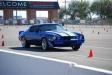 Z-28 has a built 383SBC. The heads are AFR 195 CNC ported with a 274 Solid Extreme Energy Cam. 1.6 rockers an Edelbrock RPM Air Gap intake and a 650 Holley carb. Turbo400 with a 10" ATI convertor 3200 Stall. 3.42 posi. Hotchkis springs/swaybar/UCA and Bilstein shocks.
06-22-2010 #28
Registered User
- Join Date
- Jun 2006
- Location
- Katy,TX
- Posts
- 1,678
"First, no relationship whatsoever between 1/4 drag performance and road racing/autox performance. We're not talking about how much drag slicks improve drag performance so they should be applied to autox, right?"
I'll diasagree-some of the concept is still the same -lighter wheels have less inertia effect to accelerate and stop be they drag or autocross. In drag racing it is much easier to quantitate exact weight vs performance based strictly on weight(done that class racing adding and subtracting weight . I would also bet going wider tires autocrossing/road racing than you need for traction would slow you down also. And I've autocrossed with light weight wheels and autocross compound DOT tires and heavier wheels(cheaper) and road race slicks. No comparison the slicks will kick the DOTs rear(CP vs ESP in SCCA). I've been a few laps around tracks as well as straight line. John Berget has lots of roadrace slicks in all sizes.
Of course in autocross or road race we generally are not looking for small tread to reduce rolling resistance as in drag racing, but going too big even if they fit(usually the limiting factor) will slow you down.
Matt I agree with you in part that every little bit adds up. I would bet though most of the guys here have more street touring cars with thing like stereos/amps, electric windows etc etc that eat up any little savings thing like 8lbs in a sway bar would save. Now a purpose built race car-different thing. Heck while painting my TA years ago while autocrossing it I thought man I'll take the torch to those front bumper supports and cut big holes every where. Spent all day and save a whole 12 lbs on the front and 9 on the rear!
And then I always joke to my bigger friends to put my skinny butt in their car if they need an all time faster time
06-22-2010 #29
Registered User
- Join Date
- Aug 2008
- Location
- Pgh, PA
- Posts
- 2,177
Sorry, but I couldn't disagree more with the previous post. There are SO few similarities between autox and drag performance that you may as well say there are none. Think about CoD, differences in camber, caster, effects on shock performance (ie, in drag racing, a softer front end goes faster - try that in autox once, OK?), the different effects of weight location and center of gravity, and the list goes on.
About the only thing I see is both would benefit from less weight in general, more power, and better traction. But HOW you get each of them is totally and completely different. Find me one single car setup properly for 1/4 mile slips that can go around a corner..... Just one. I mean one optimized for drag. Think of it another way. Take a 'Busa bike setup for drags and try to ride it fast on a road course. Make sure somebody has a camera first, though
Bottom line remains the same. Every little bit helps. It probably won't make a measurable difference in terms of weight by itself. If your sway bar is already performing well, probably not cost effective for most people to swap it. If you need a better sway bar anyway, no reason NOT to get tubular. It IS a better quality component. The difference between nice cars and REALLY nice cars is the combined attention to detail on the combination.'66 GTO Vert Project "Red Ink", 462ci of stroked pontiac power, TKO600, SC&C Stg II+, Tubular lowers, Currectrac Rear suspension, Moser 12bolt w/Truetrack, Wilwood Master and discs all around, too much fun for words...
06-22-2010 #30 Registered User
- Join Date
- May 2002
- Location
- Northern California
- Posts
- 10,716
 good stuff, glad you went with the hollow bar. Originally Posted by zbadone
Don't worry about the clearance, its by design. The bar wipes the grease off of the pitman.
VinceMrQuick ΜΟΛ'ΩΝ ΛΑΒ'Ε
06-22-2010 #31 Registered User
- Join Date
- Nov 2008
- Location
- So. Cal.
- Posts
- 1,240
Sweet!!! And close tolerances are not a problem. Till they are. So many times I have to run very tight tolerances and I think damm, shes gonna hit. But... After running it for abit I raise the car and look for shiny sections, like where metal on metal was a problem. Originally Posted by zbadone
I dont like ANY shiny parts. Even if its just rubbing the paint off. Paint is thin. If there is ANY bare metal. Metal on metal I wont let that go. Thats too close. Gonna be some hard rubbing. Not good. JRWhat I write is opinion, none of it is factual. 2010
Even though I'm conscious it doesn't mean I'm coherent. 2011
I'm getting better with age. Best thing about old age is I don't know any better. 2012
06-23-2010 #32 Registered User
- Join Date
- Nov 2002
- Location
- state of confusion
- Posts
- 1,499
The physics is the same for both types of cars (F=ma is still F=ma, etc.), so it's what you do with it that differs. One has to look at a much wider picture than just the nitty-gritty of every little detail that's different. That's how you optimize for one activity - by giving up performance that doesn't matter as much to get more of what does. Originally Posted by wmhjr
I suspect that it is possible to "over-tire" a car for autocross, though this is probably not as likely in PT-size/weight cars as it could be in cars that make Miatas look big and heavy. One problem specifically related to light cars, big tires, and autocross would involve the ability (or lack thereof) to get the tires up to optimum temperature quickly enough.
Norm'08 GT coupe, 5M, suspension unstockish (the occasional track toy)
'19 WRX, Turbo-H4/6M (the family sedan . . . seriously)
Gone but not forgotten dep't:
'01 Maxima 20AE 5M, '10 LGT 6M, '95 626, V6/5M; '79 Malibu, V8/4M-5M; '87 Maxima, V6/5M; '72 Pinto, I4/4M; '64 Dodge V8/3A
06-23-2010 #33
Full Blown G-Machiner
- Join Date
- Oct 2008
- Location
- Santa Fe Springs, CA
- Posts
- 625
It's good to see such knowledgeable conversation. This forum is full of very smart people.
It looks like zbadone is happy with the Hotchkis bar, and we (of course) are happy to hear that.
Still, this topic comes up a lot, and for future conversations, this is our take on sway bars in general and the hollow vs solid disscussion:
To start, let's think about how a sway bar controls body roll and control. The sway bar is attached to the left and right suspension and chassis. It controls body roll by twisting in torsion. Think torsion bars and you get the idea. The more the body wants to roll in heavy cornering, the more resistance, twist, the sway bar provides.
Since sway bars work off of torsional force (twisting motion), the material in the center of a solid bar plays little role in the resistance of torsional force. With this in mind, we have eliminated some of the center material and also moved some to the outside of the tube, where it is most effective. In turn, this produces a sway bar that is lighter in weight and just as stiff, if not stiffer than solid. For example, a 1'3/8" hollow bar is equivalent to a 1'1/4" solid. But the 1'3/8" hollow bar is 6% stiffer and 43% lighter than the 1'1/4" solid.
Years ago the feeling was that a car only needed a front sway bar. Back then the best tires were skinny with relatively soft sidewalls. Today people are packin' super sticky tires on the rear of their muscle cars. These tires produce some serious grip and are miles better than yesterday's race tires. Your car will be the quickest and most comfortable around a track or down your favorite twisty road with a neutral handling balance. This is achieved when the car is neither loose nor tight (excessive understeer or oversteer) but balanced with the front and rear tires doing equal work. Providing that the springs are of sufficient rate to keep the car from bottoming out, the handling balance is tuned with the front and rear sway bars. We generally engineer the largest front sway bar possible that doesn't overpower the front suspension and then tune (change roll stiffness) with an adjustable rear sway bar.
Some people recommend running a stiff rear spring combination without a rear sway bar. In this case the heavy spring rate keeps the chassis from rolling thereby eliminating the need for a rear sway bar. This is fine if the passengers wear kidney belts and interior rattles are no problem. For the rest of us we want a comfortable ride with great handling. Adding a rear sway bar solves the ride quality issue and creates an optimum handling balance. The rear spring rate can be softer for better ride quality and corner exit traction because the rear sway bar (not the springs) is controlling the rear body roll.
We have conducted extensive street/track testing over the past 15 years and continue to refine our suspension systems for the optimal balance of on-track handling and comfortable street driving. We find that our latest generation of lightweight strong, hollow sway bar packages with adjustable rear sway bars provides a full range of handling balance tunability for all types of performance driving.
Now you have some tuning options!
06-23-2010 #34 Registered User
- Join Date
- Oct 2004
- Location
- IL/TN
- Posts
- 908
as much as proponents of hollow bars want to avoid aswering the point that unless the sway bar is STRAIGHT you cannot use tortion bar equations to prove a point, because the forces applied to the sway bar not only twist but also bend the bar and in the case of a tube VS solid bar the solid bar will flex less than the tube.
https://www.protouringf-body.com "doing what they say can't be done"
06-23-2010 #35
Registered User
- Join Date
- Jun 2006
- Location
- Katy,TX
- Posts
- 1,678
So lighter wheels and reduced roll resistance only help a drag car??? As Norm said the physics are the same. I guess why the F1 guys use steel wheels and steel bolt no lightweight titanium stuff.
I'll agree there are different optimal chassis settings for strictly straight line vs corners. But again some is theory. As I said general drag theory get rid of the front sway bar for weight and to let the front end lift for weight transfer-my car ran identical times. Open headers/no exhaust system should go faster than adding an 80 lb system-my car ran identical 1/8 mile times.
Yes there are some differences -drag cars generally do better with a taller sidewal to absorb some of the shock and not blow the tires away. Why many of the street/strip LS guys I know hook better with a taller sticky DOT even a 275/60/15 than a 275/50/17.
It is generally a little easier to quantitate strictly weight changes on a drag car. In an autoX or open road course the longer time and course has more variables in driver(take a different line in a turn, brake at a different point etc etc) that can change lap time. vs adding 50 lbs. Most 11-13 second drag cars 100lbs is generally .1 seconds/1mph. I would bet on an autoX car that would be tough to measure.
I still go back to my original contention if you put the majority of folks here on a road or autoX course. Pull 8lbs, shoot I'd bet even 40 lbs, off the nose it would be hard to quantitate back to back run differences. I woud bet though lighter wheels with road race slicks they would go faster than heavy wheels and DOTs.
06-23-2010 #36
Registered User
- Join Date
- Nov 2005
- Location
- Auburn, WA
- Posts
- 1,360
That's why we have FEA: Originally Posted by 79T/Aman

Your statement is true that a bar will exhibit bending stress if it contains bends on different planes, but even then a hollow bar still shows a true advantage. The principle of the outer material "doing the work" still is valid in bending stress.
I think perhaps some people are missing the point here. If you were to compare the stiffness of a 1.125 x 0.156" hollow bar to a 1.125" solid, the solid will be stiffer. BUT, every manufacturer will bump the OD up 1/8" or so to compensate for the lack of inner material. The result is a lighter bar, with equal (usually more) stiffness, and the price is usually comparable. I don't see the benefits for a solid bar except for packaging requirements.Last edited by silver69camaro; 06-23-2010 at 10:31 AM.
Matt Jones
Mechanical Engineer
Art Morrison Enterprises
06-23-2010 #37
Registered User
- Join Date
- Nov 2002
- Location
- state of confusion
- Posts
- 1,499
You can still use the OD^4 - ID^4 equations as long as the bars being compared have essentially the same bent shape. Bending stiffness also follows the OD^4 - ID^4 rule. Some of the really little terms (you won't find them in Puhn's formula or most anybody else's online tech) follow an OD^2 - ID^2 rule, but they don't make for much difference. Originally Posted by 79T/Aman
Circle track bars built up from three pieces (two arms splined to a torsional center section) won't follow the OD^4 - ID^4 rule.
Norm'08 GT coupe, 5M, suspension unstockish (the occasional track toy)
'19 WRX, Turbo-H4/6M (the family sedan . . . seriously)
Gone but not forgotten dep't:
'01 Maxima 20AE 5M, '10 LGT 6M, '95 626, V6/5M; '79 Malibu, V8/4M-5M; '87 Maxima, V6/5M; '72 Pinto, I4/4M; '64 Dodge V8/3A
06-23-2010 #38
Registered User
- Join Date
- Nov 2002
- Location
- state of confusion
- Posts
- 1,499
If it helps any, lateral grip is about an 0.7 power function of weight. IOW, a 5% weight increase is worth about 3.5% more lateral grip. That's a loss of 1.5% in lateral acceleration when you compare the added grip to the added weight that it has to work against. SOTP you probably wouldn't feel it, but the 0.001 second clocks will find it every time assuming that you're sufficiently consistent. Originally Posted by Skip Fix
Wheel weight and rolling resistance is sort of off-topic here, but of course it matters everywhere that it is legal to tinker with, is sufficiently safe, and is productive to do so.
Norm'08 GT coupe, 5M, suspension unstockish (the occasional track toy)
'19 WRX, Turbo-H4/6M (the family sedan . . . seriously)
Gone but not forgotten dep't:
'01 Maxima 20AE 5M, '10 LGT 6M, '95 626, V6/5M; '79 Malibu, V8/4M-5M; '87 Maxima, V6/5M; '72 Pinto, I4/4M; '64 Dodge V8/3A
06-23-2010 #39
Registered User
- Join Date
- Jun 2006
- Location
- Katy,TX
- Posts
- 1,678
but the 0.001 second clocks will find it every time assuming that you're sufficiently consistent.
8 lbs on a 3600lbs car(so it has been on a diet and not 3800lbs anymore from all those 8 lbs adding up) I would bet the 0.001 clock would pick up more driver inconsistency than the weight reduction from that hollow vs solid bar.
"BUT, every manufacturer will bump the OD up 1/8" or so to compensate for the lack of inner material." I would bet though most folks brains are assuming that the hollow since it is "bigger" by 1/8 would act like a bigger solid bar. So they buy a bar that is bigger but get comparible stiffness to the smaller solid bar. So did the car handle better or they get the placebo effect from "bigger is better"?
06-23-2010 #40
Registered User
- Join Date
- Nov 2002
- Location
- state of confusion
- Posts
- 1,499
Probably true. But on balance, the average time could reasonably be expected to drop. 50.040 seconds ± 0.200 is still going to lose to 50.000 ± 0.200 more often than not. I think most years a couple to maybe a few National jackets are won by less than 0.040. Originally Posted by Skip Fix
If the stiffnesses are identical, the car with the tubular bar will still get the benefit of reduced weight at that end of the car with its potentially increased lateral-g capability, along with an equally small but beneficial effect on unsprung mass. True, in this example the weight effect is only on the order of an 0.3% increase in lat-g, but if you're serious about the competition you'd chase those kinds of things."BUT, every manufacturer will bump the OD up 1/8" or so to compensate for the lack of inner material." I would bet though most folks brains are assuming that the hollow since it is "bigger" by 1/8 would act like a bigger solid bar. So they buy a bar that is bigger but get comparible stiffness to the smaller solid bar. So did the car handle better or they get the placebo effect from "bigger is better"?
If the stiffness aren't quite equal and the tubular bar ends up giving a slightly inferior balance, the picture gets a bit cloudy even from a purely theoretical point of view.
Most of us probably wouldn't notice, and haven't picked all the low-hanging fruit anyway.
Norm'08 GT coupe, 5M, suspension unstockish (the occasional track toy)
'19 WRX, Turbo-H4/6M (the family sedan . . . seriously)
Gone but not forgotten dep't:
'01 Maxima 20AE 5M, '10 LGT 6M, '95 626, V6/5M; '79 Malibu, V8/4M-5M; '87 Maxima, V6/5M; '72 Pinto, I4/4M; '64 Dodge V8/3A

 Reply With Quote