


Results 1 to 4 of 4
-
06-20-2009 #1

 Registered User
- Join Date
- Feb 2007
- Location
- Tinley Park, IL
- Posts
- 1,220

Help me organize my brake components...
I'll be receiving my front and rear C5/C6 kit from KORE3 next week.
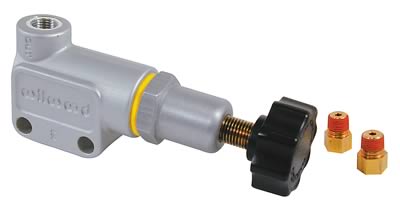
Going to install a manual master cylinder from 76-77 Malibu, adjustable proportioning valve, line lock, and all new hard lines at the same time.
I want to make sure we hook everything up in the proper order, as my car currently has a combination valve installed... this things will be different.
From front reservoir on MC (rear brakes) hard line down to the frame rail, install adjustable proportioning valve, hard line along frame rail to cross member above axle... and so on.
From rear reservoir on MC (front brakes) hard line to line lock, hard line to "T" fitting, then off to each front caliper...
Sound right?
- Do I need a residual valve anywhere? If so, why?
- Why do some brake systems have the hard line in a coil right after the MC? Should we do that?
- What type of brake fluid should I use?
Lastly, feel free to post pics of your install, I might want to copy it!
Thanks,
Nick


Nick ~ 1969 Cutlass
-
06-20-2009 #2
 Registered User
- Join Date
- Feb 2007
- Location
- Vancouver, WA
- Posts
- 183
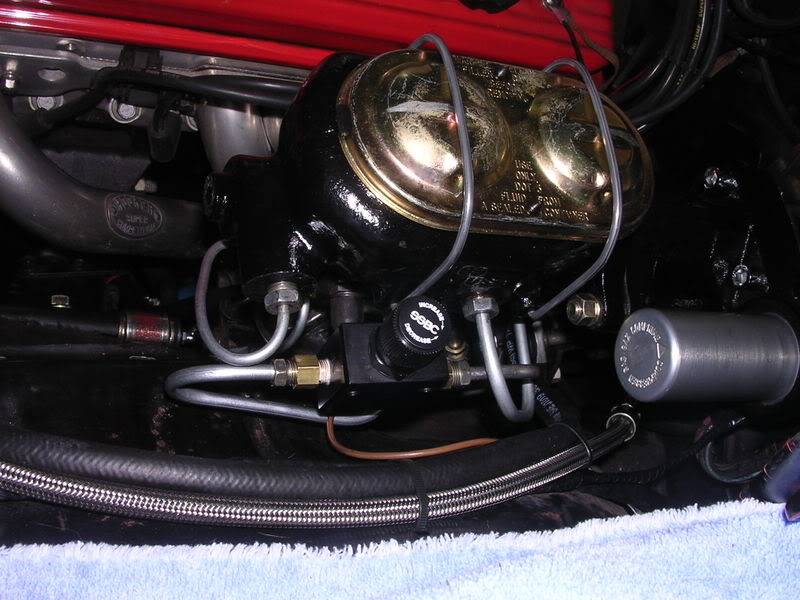
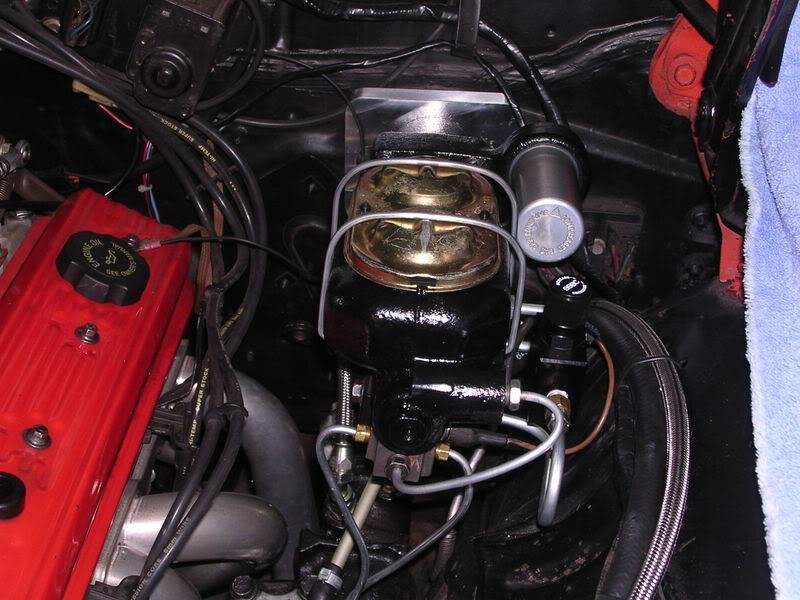
I installed my prop valve near the MC. Originally Posted by Mr Nick

06-29-2009 #3 Registered User
- Join Date
- Oct 2007
- Location
- Paducah, KY
- Posts
- 232
Originally Posted by Mr Nick
I just read the other day about why that is, and it's to offer flexibility in the system. It said it shouldn't be tight between one point to the other. A simple loop or coil should be sufficient and allow some flexibility. I read this in one of my magazines, actually I think it was in Camaro Performers and it was answered by a brake manufacturer. Don't know if this helps you out any.Darren
06-29-2009 #4
Registered User
- Join Date
- Jan 2006
- Location
- Oregon
- Posts
- 1,773
The coils act as strain reliefs for the rigid brake tubing. The (sub)frame and body are not typically rigidly mounted together and as such, move independently from one another with vibration and loading through the suspension. Even if you are running solid body mounts, things still move slightly when loaded, especially in performance environments like the track. No car is 100% rigid in any direction. The coils effectively increase the length of tubing thereby decreasing the amount of deflection per inch and minimizing the stresses at the fittings where the tubing is fully constrained and most likely to crack and fail.
From a bleeding standpoint, horizontal stacked coils are slightly better than side by side vertically oriented coils since air can't get trapped at the high point of each loop.
Tobin
KORE3It's what I does.

 Reply With Quote