


Results 1 to 14 of 14
Thread: Sucking Air?
-
01-12-2008 #1
 Registered User
- Join Date
- Jan 2008
- Posts
- 5
Sucking Air?
Hi all, I'm new here and hoping maybe someone has run into this problem I'm having. My friend recently did the Seville rear disc setup on his 71 Camaro. It is a simple 4WD system with a tee on the fronts and an adj. prop. valve on the rear. It loses pedal feel after 3-5 seconds of releasing the pedal. Once it's pumped up, the pedal feels nice. We've bled the Hates out of it. After doing a search on here, we decided he had the wrong m/c (1-1/8"). So, we installed a new 1" bore I had in the garage. The pedal feel improved; yet, still the same problem. I (and he) are at a total loss on the issue. It seems if it it could be sucking air, but not that rapidly. That would make it a hydraulic problem. Has anyone encountered this? What are we misssing?
-
01-12-2008 #2 Registered User
- Join Date
- Aug 2004
- Location
- CHICAGO SUBURBS
- Posts
- 761
Check for leaks. A few times I've seen small leaks that won't loose fluid, but will suck air. I had an adjustable valve leak at the fittings like that. Try retorquing all the fittings.
01-12-2008 #3
Registered User
- Join Date
- Oct 2007
- Location
- ridgefield ct
- Posts
- 876
did you bench bleed the master before installation?
 work in progress--for the next 10 years.
1987 monte carlo ss 383ci, 9.7:1, xe274 cam, vortec heads, 200r4, 3.73 posi.
01-13-2008 #4
Registered User
- Join Date
- Jan 2008
- Posts
- 5
I don't think it is air is because it happens so quickly and it is not cumulative. I'm thinking if air were to get in, it would build up, making the pedal spongy. In this case the pedal comes back to normal again and again.
Yes, the m/c was bench bled. we were brainstorming over some adult beverages last evening. Might try some far fetched stuff (take one of the rear pads out, then bleed it). I think it is something to do with the funky design of the Seville calipers. Ya know, the position of the bleed screw, or something.
It just doesn't act enough like air.
01-13-2008 #5 Registered User
- Join Date
- Aug 2005
- Location
- Patterson, NY
- Posts
- 784
Seville calipers need the parking brake mechanism to be cycled for them to self-adjust. You need to step on the brake, hold it, and then apply and release the parking brake. This should help keep the pistons close to the pads, like a standard caliper.
I'm thinking there is a possibility that the parking brake mechanism needs to be adjusted, so the pistons are retracting too far, making you use more pedal to get the rear pads to seat against the rotor.
01-13-2008 #6
Registered User
- Join Date
- Jan 2008
- Posts
- 5
Good call, GetMore! I was thinking along those lines, but didn't know the procedure. We'll give it a shot.
01-20-2008 #7
Registered User
- Join Date
- Jan 2008
- Posts
- 5
Ok, so, I went over yesterday and dikked with the Camaro again. First we pulled the outside pads out and sandwiched some cardboard in there to protect the rotor. We did this to allow the pistons to come out further. Reinstalled the calipers and did a conventional bleed. During the first couple of pumps I heard a clunk! But, otherwise, only got a little air out of the pass. side. We then removed the carboard and had a hell of a time getting the pistons back in. Then we did a pressure bleed with my Motive Products bleeder. We ran 3/4 of one of the big bottles through. Hooked up the e-brake and did another conventional bleed. Still the same results: no pedal on initial contact. Pump it up it's fine. Let it sit; no pedal on the first push. 2# Residuals are on order. Here are some pics:
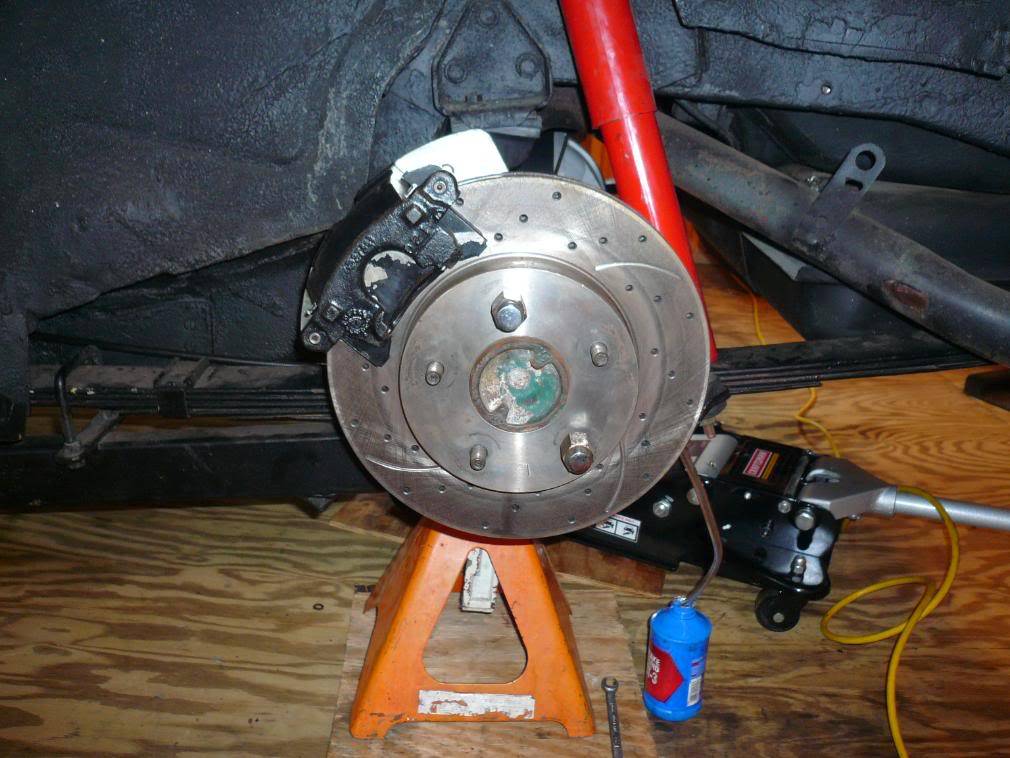
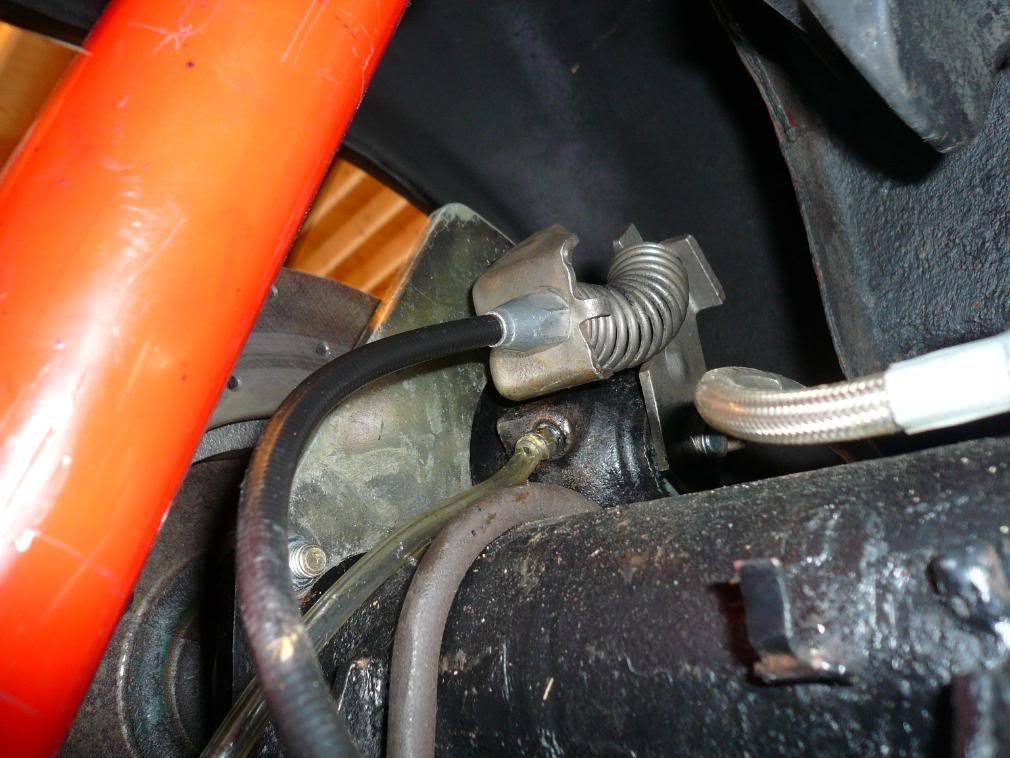
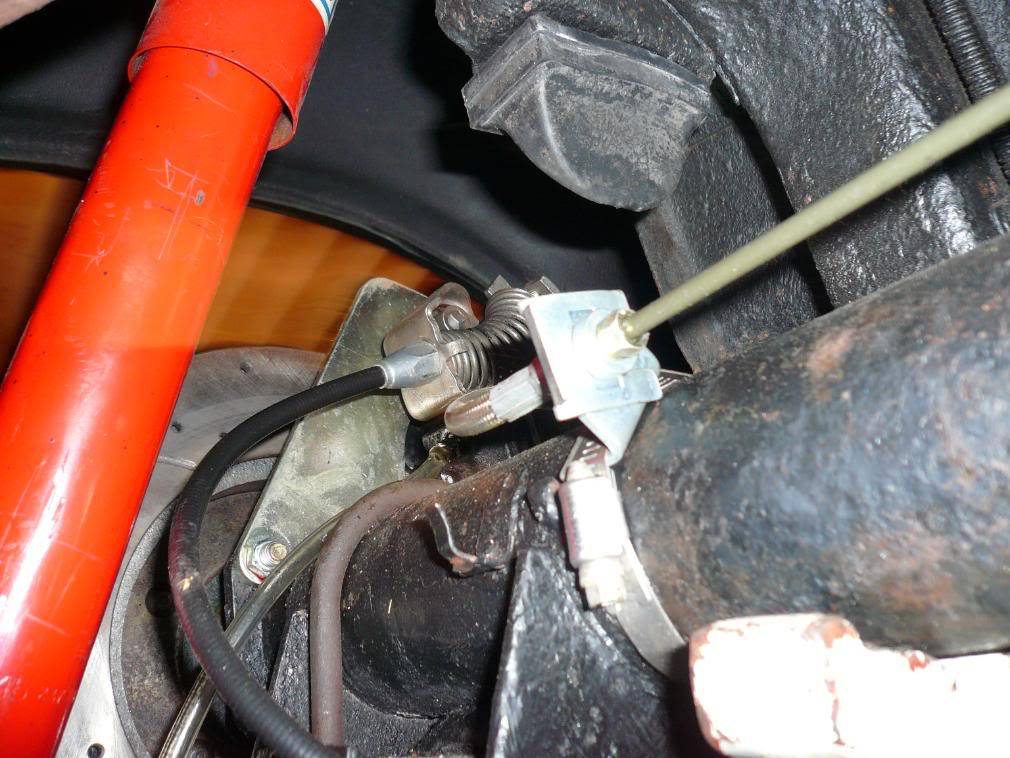
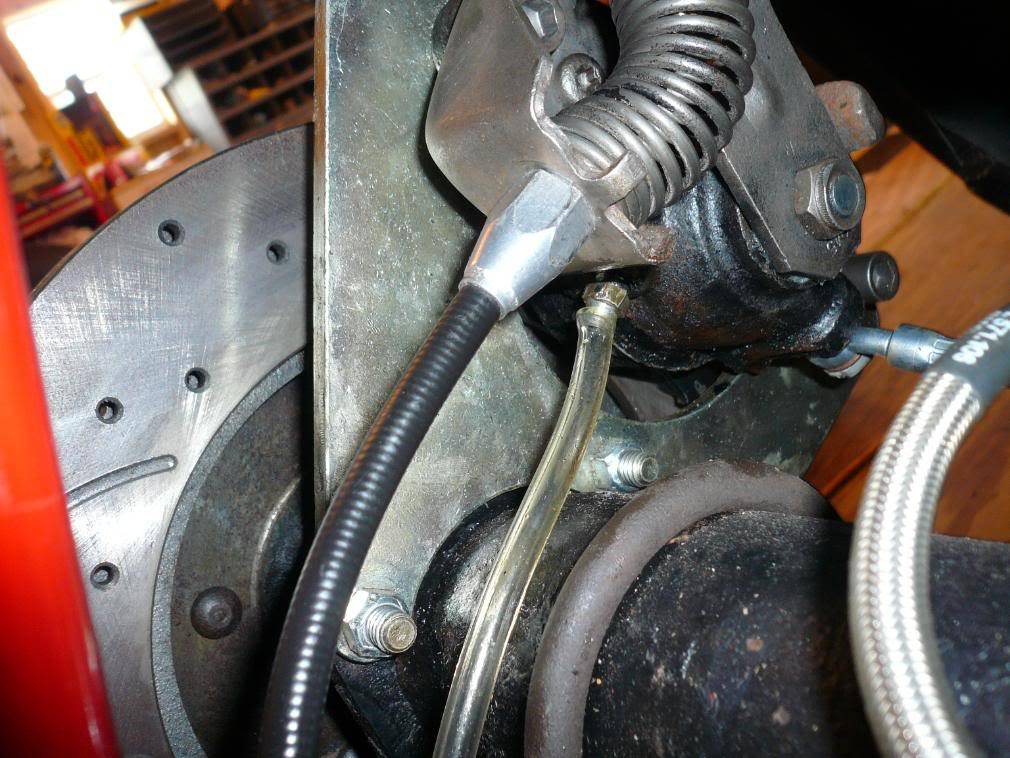
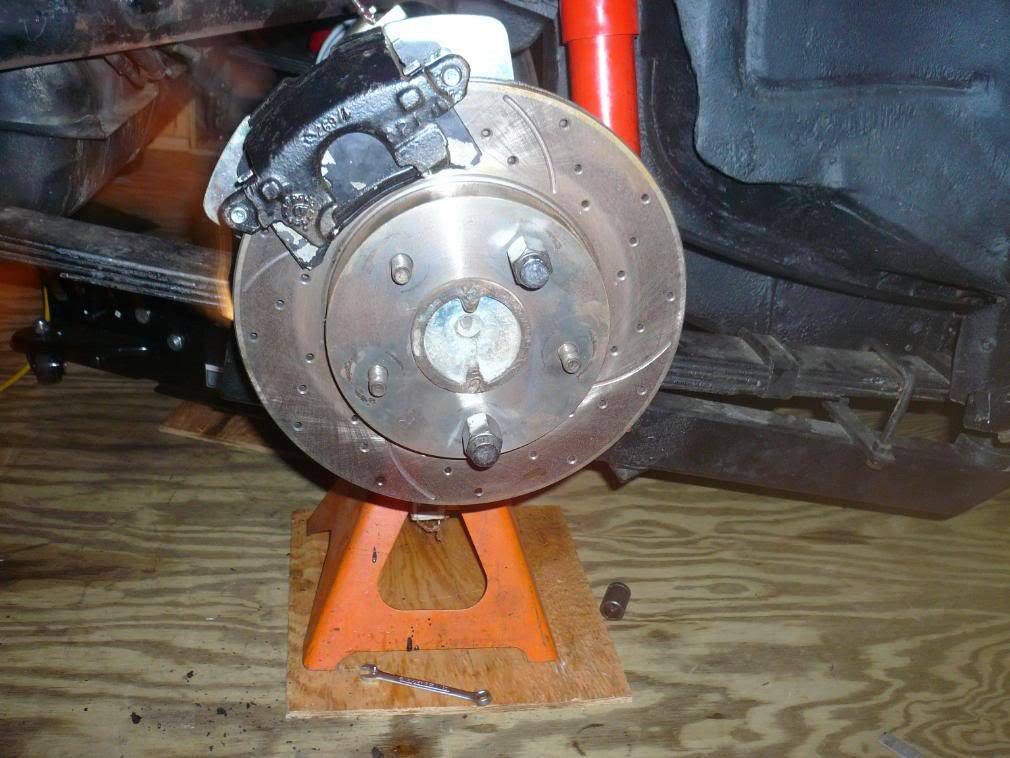
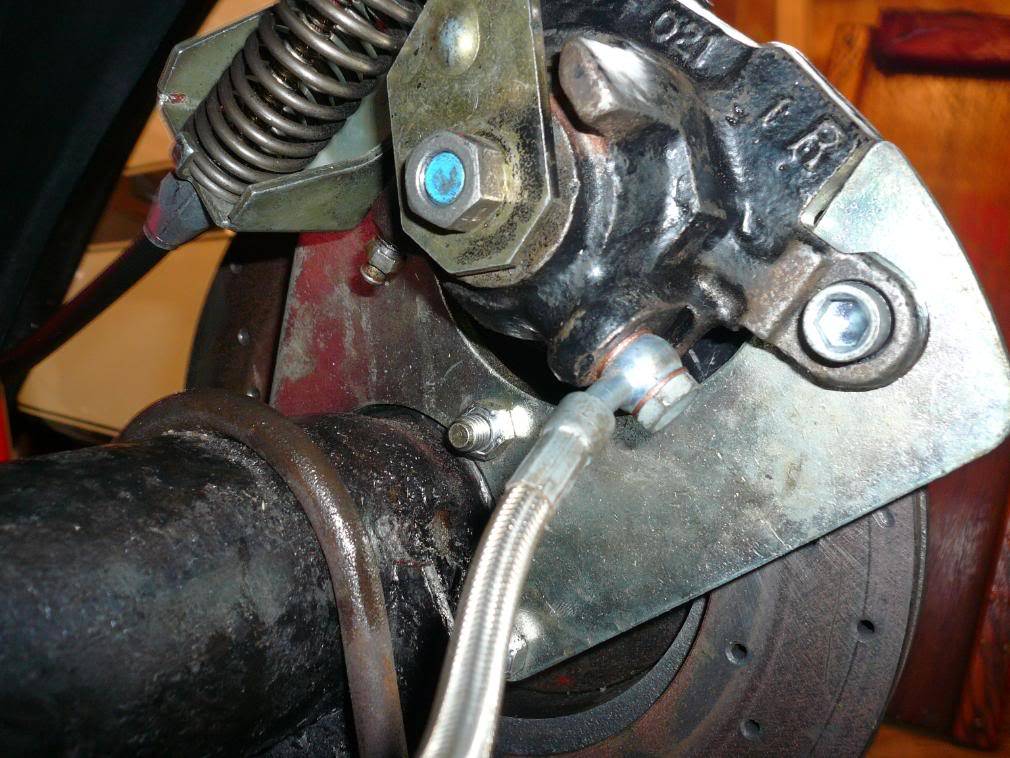
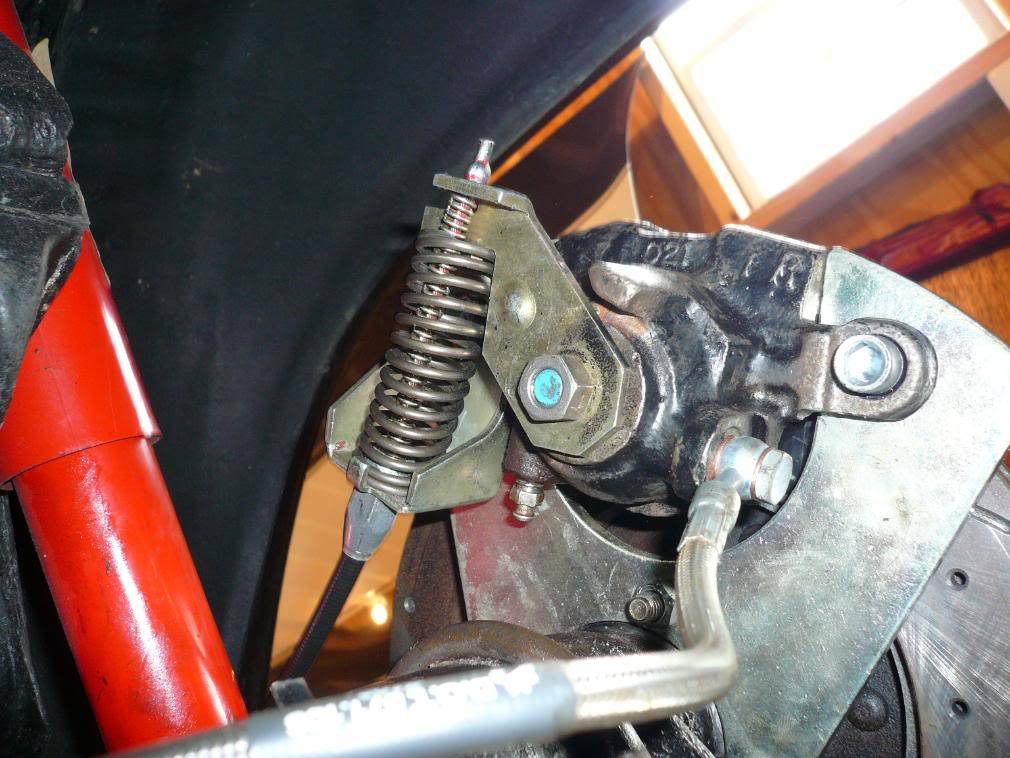
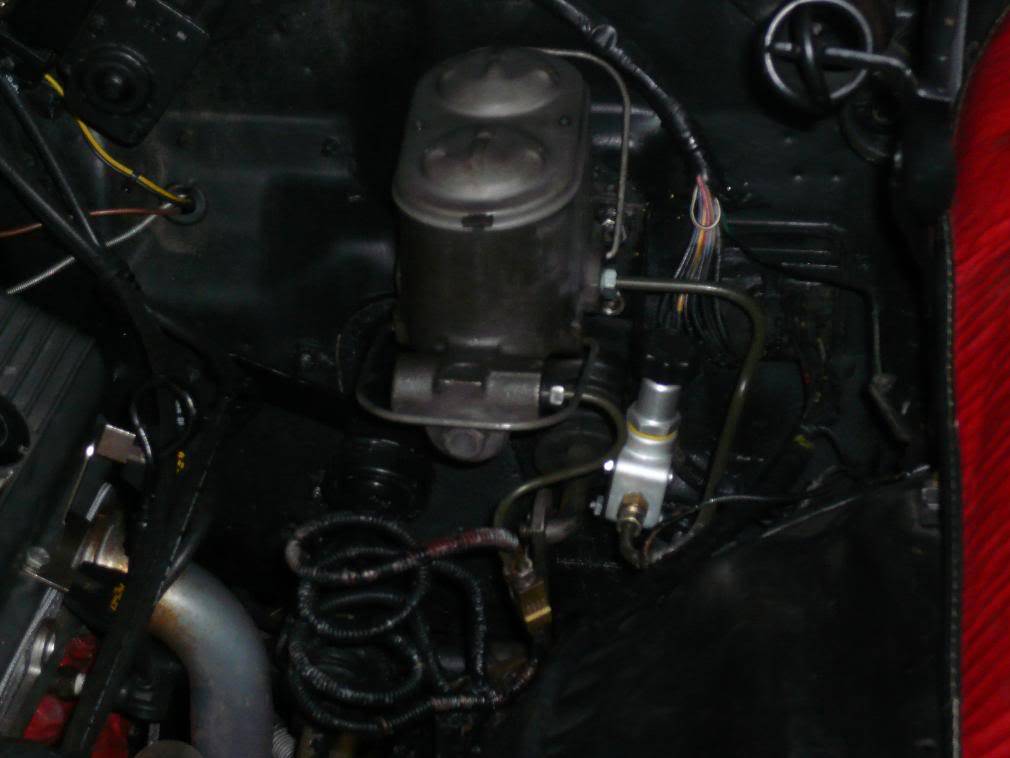
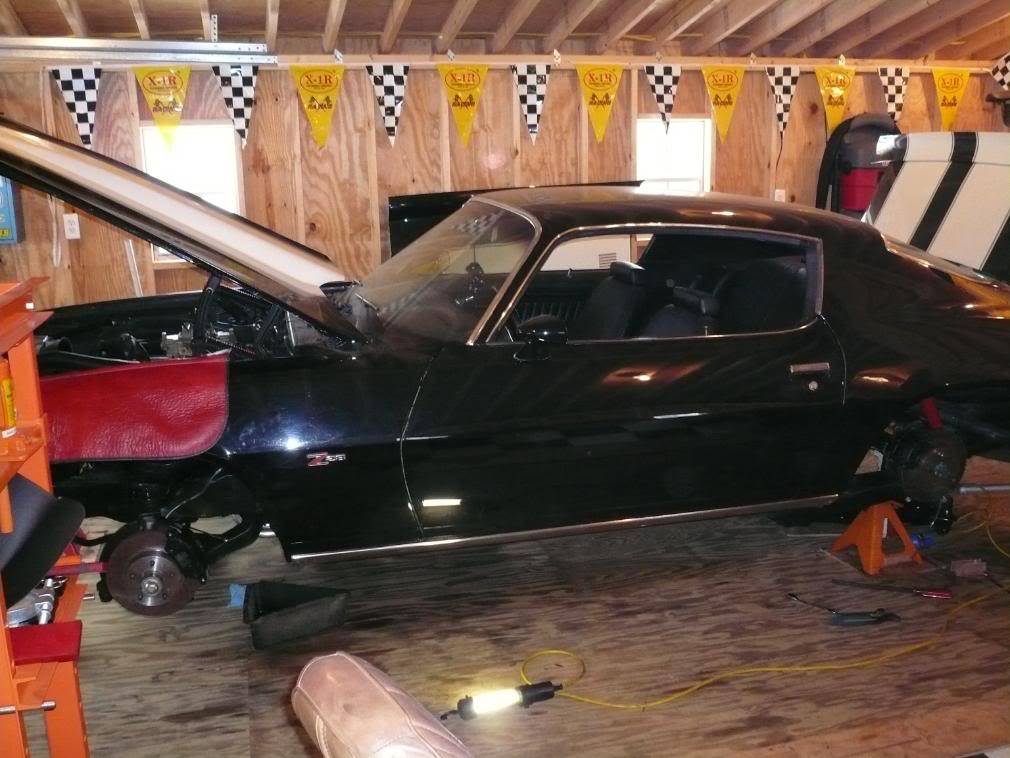
The calipers are 79-81 Sevilles (both right side?). The rotors are Summit cross drilled and slotted. The braided hoses and brackets are Kore3. Its a reman 1"bore m/c with a Wilwood adj. prop valve on the rear.
01-20-2008 #8
Registered User
- Join Date
- Jan 2006
- Location
- Oregon
- Posts
- 1,773

Have you tried pulling the calipers from the pins and rotating them around the rotor so that the bleed screws are at the highest point of the piston bore? Hanging the caliper with a wire works pretty well so you're not wishing you had 3 hands while bleeding, but it sounds like you've still got air in the system.
TobinIt's what I does.
01-20-2008 #9
Registered User
- Join Date
- Oct 2007
- Location
- ridgefield ct
- Posts
- 876
i've used vacuum bleeders a number of times and have found a couple of problems. the tube must go above the bleeder otherwise there is still some air. also pull the tube off while vacuum is applied and the fluid is moving and let it gravity bleed for a minute. when you do this have the bleeder pointing up and above the caliper. i've also found that sometimes brakes will not feel correct until you drive it. i never had to go far or fast but i had to be moving and brake a few times.
work in progress--for the next 10 years.
1987 monte carlo ss 383ci, 9.7:1, xe274 cam, vortec heads, 200r4, 3.73 posi.
01-20-2008 #10 Registered User
- Join Date
- May 2002
- Location
- Northern California
- Posts
- 10,716
I agree, you will never get the air out even with a tube. Don't forget to put a block of wood in place of the rotor space. Originally Posted by Apogee
MrQuick ΜΟΛ'ΩΝ ΛΑΒ'Ε
Originally Posted by Apogee
MrQuick ΜΟΛ'ΩΝ ΛΑΒ'Ε
01-20-2008 #11 Registered User
- Join Date
- Mar 2006
- Location
- OC CA
- Posts
- 470
Looks like this is your prob. Those bleeders are too low to get all the air out which is trapped above them. Looks to me they are designed to be installed in a different clock position on rotors. JMO, Mark Originally Posted by Apogee
Mark
LS1- T56
under construction
"Political Correctness is a doctrine, fostered by a delusional, illogical minority and rabidly promoted by an unscrupulous mainstream media, which holds forth the proposition that it is entirely possible to pick up a turd by the clean end."
01-20-2008 #12
Registered User
- Join Date
- Jan 2008
- Posts
- 5
Will give it a shot. It's kind of frustrating 'cause my buddy's kind of hard headed and he's doing the wrenching. I'm just trying to help, but I see your guys' point about the air.........
I hadn't had my head under there to see what the pictures show. I get it now.
01-20-2008 #13 Registered User
- Join Date
- Mar 2007
- Location
- L.A.
- Posts
- 179
Ditto on pulling the caliper to get the screw at the top, reclocking if possible would be grate too if they'll go.....
01-20-2008 #14 Registered User
- Join Date
- May 2006
- Posts
- 76
i have th esame setup on the rear oth my 70. the bleeders need to be higher, and the easiest way i have found to bleed those calipers is to ratchet the e brake until the pads touch the rotor. set the ebrake, then pressure bleed. with those bleeders you will have to take the caliper off and turn up so the bleeder is at the top. you need to make a spacer the same thickness of the rotor if you foot bleed the system.
hope this helps
robert

 Reply With Quote