


Results 1 to 20 of 31
-
08-18-2006 #1

 Registered User
- Join Date
- Mar 2006
- Posts
- 94
Aerodynamics and drag coefficient
Just wondering if anyone has any info on aerodynamics.Since I doubt any of us has access to a wind tunnel (although knowing the people on this board,I could be wrong),I was just wondering about a few things that apply to real world cars.I've read a bit about drag coefficient and most of them give formulas and scientifical explanations that do nothing more than give me a bloody migrane.I realize it's all about frontal area,but I was just wondering a few thing applying to not only fuel ecomomy,but handling as well...
1.Does the drag coefficient change much,if at all,by lowering the car?
2.How much is it affected by chopping the top,channeling the body over the framerails?
3.How much is it affected by raking the windshield? (I realize it is affected by this but how much and how much rake is required to gain a noticable difference)
4.How much does the rake of the body affect it?I've heard that a 1 degree rake and no rear spoiler seems to be best for a '69 Camaro for example
5.How much do brake cooling ducts affect it?
6.I realize the grill opening adds to the drag coefficient,but how would someone overcome this?
7.What kind of upgrades to the cooling system wound be required to cool the engine if the grille opening size was reduced?
8.How much does an underbody tray affect it?
9.Does tire width play into it at all since most people are going for wider,and wider wheel/tire combos
10.Don't you just hate people like me that ask so many questions in one post
 "There is no such thing as 'cheating'...it's called 'innovation'"
~Smokey Yunick
-
08-18-2006 #2
Registered User
- Join Date
- Aug 2004
- Location
- Maine
- Posts
- 594
Ooh! Fun topic!
I'm by no means an expert on such things, but I did a bit of reading up on this very subject during the design phase of my Datsun 240-Z project. The old Datsuns are anecdotally notorious for being bad aerodynamically. I found some old wind tunnel data on the 240-Z confirming this, indicating that the drag coefficient on a stock-bodied Z is .46!
1) I'm not sure if lowering the car in and of itself will change the drag coefficient much. However, since the underside of most cars is not flat, places such as the lower portion of the rear tail panel can act just like a parachute. If you can reduce the amount of air going into the parachute, you should be better off.
2&3) The Datsun data showed that one of the biggest culprits in that case was the high windshield placed at a high angle. There was a huge pressure system right at the cowl. This makes a cowl induction system work, but it is bad for purposes of drag. There was also a lower pressure system created right above the roof because the air hitting the windshield would separate from the car body as it went up and over the car, promoting lift. By lowering the roof and raking the windshield, you can make for a smoother transition with less drag and possibly reduce lift.
In fact, the lower pressure system over the roofline in the stock-bodied Z is enough to open and raise the rear hatch at highway speeds if it is un-latched!
4) Rake will help to create downforce by helping to create a lower pressure system under the car relative to that going over the top of the car. Not sure how much it would change drag... but it may help just like in your first question.
5) The wheel wells is another "parachute" type of place in the car. I don't know if putting "extra" air into them via a brake duct will increase this effect, but a common solution is to add a vent at the rear of the wheel well to allow the air to escape more easily (like the Corvette).
6&7) When discussing aerodynamics, I have heard it said that the Datsun has "an enormous gaping maw." All the air flowing in there is just getting stuck in the engine bay. The firewall is another parachute type of place. In fact, I've seen pictures of old Zs with fiberglass hoods at even moderate speeds (80) and you can literally see the hood bulging up!
You theoretically want your grill opening to let in just enough air for your cooling system, and then you want to vent that air out from under the hood. Really, I don't think that reducing the grill size some will limit airflow enough to cause problems on most cars. Think about it, if your puller electric fan can only move... say... 2000cfm while you are idling around with no breeze to assist it, you probably don't need a grill opening big enough to flow 20,000 cfm. If you notice, many new cars have incredibly small grill openings compared to older cars.
As for routing the air out after it goes through the radiator, I think the GT-40 hood nostril is probably the best way to do this. Build air-tight ductwork to channel the air so that it only goes through the radiator (lines for brake ducts and such included) and then build another duct to route the air out from under the hood after it goes through the radiator.
To assist airflow through the radiator from a smaller opening, it might help though to tilt the radiator forward.
8) Much like in question 1, there are tons of places where the parachute effect can occur on the underside of the car. Making a smooth belly pan can reduce this effect. I have read however that on a smoother surface the air will better adhere to that surface by friction because there is nothing to agitate the air. Some people seem to think this will cause drag as well, but it seems like a step in the right direction anyway. Some advocate devices (such as vortex generators) to promote agitation as well to reduce friction.
9) The wider the car, the more frontal area, the more drag.
10) I do it too... I can sympathize!
I've actually found out that there is a wind tunnel facility very close to me... if the price isn't too bad (I imagine it is though...), I hope to someday test the Datsun there to see how well (or poorly) I did.John

-
08-18-2006 #3
Registered User
- Join Date
- Mar 2006
- Posts
- 94
I've read that GM's wind tunnel measured a drag coefficient of .339 for the 1984 Z28,.299 for the Trans Am and .29 for the C5 Vette Originally Posted by boodlefoof
I find this a bit hard to believe though
.35 for the Scion xB"There is no such thing as 'cheating'...it's called 'innovation'"
~Smokey Yunick
-
08-18-2006 #4
Registered User
- Join Date
- Aug 2004
- Location
- Maine
- Posts
- 594
I don't believe that number for the Scion either... that thing is a brick!
The coefficient for a 1990-96 Nissan 300ZX is .31John
-
08-19-2006 #5
Registered User
- Join Date
- Aug 2004
- Location
- north central Iowa
- Posts
- 503

http://www.a2wt.com/info.html
here is a wind tunnel place that offers discounts to first timers.
I found this info in this thread over at lateral-g
http://www.lateral-g.net/forums/show...9&page=1&pp=1072 Nova SS, on the back burner for now.
current cruiser: "The green machine"
'70 Impala 4drht, 26K original miles, 2" drop springs and large swaybars, drives pretty good for a land yahct in the middle of an ls1 swap, but thinking about changing directions to a duramax diesel swap.
-
08-19-2006 #6
Registered User
- Join Date
- Aug 2004
- Location
- Maine
- Posts
- 594
Prices don't seem too bad. Hmmm... NC isn't too far either... :D
John
-
08-19-2006 #7
 Registered User
- Join Date
- Nov 2005
- Location
- Mesa, AZ
- Posts
- 133
I have done my share of testing of aerodynamics with my cavalier test mule. It has shown a sizeable increase in gas mileage since the modifications were done. Here is a pic for reference. You may not like the look but everything you see is in the name of aerodynamics.

I covered the grill first with cardboard to determine if it was worthwhile and if the cooling was needed. I found that it did help increase fuel mileage(hard to say how much exactly since I did a lot of things to it for that trip). It also gave the steering a stiffer feel on the freeway. I realize these findings are very unscientific but there was a noticably more solid steering feeling with the grill covered. It ran 20* warmer on the freeway with no increase in temperature on hills. It will heat up a lot in traffic but as soon as the electric fan kicks on its ok.
To comensate for the reduced cooling from having no grill, I decided I could redirect the air that was going under the car through the radiator with an extended and stiffened air dam. The air dam is about an inch and a half lower than it was before and is reinforced with plastic angle to prevent it from collapsing too easily at speed. It is also designed to scrape wherever it wants without falling off. This dropped the temperature 5* from the original operating temp, or 25* from the temp with the grill covered.
The weird looking flaps hanging down under the bumper were intended to direct air around the tires to avoid the turbulence associated with air hitting a spinning tire but I could not tell any difference in feel or gas mileage. I would tend to say its not worth the effort but this was the only configuration I tried and I didnt eliminate enough variables to be sure. They might be more worthwhile on tires bigger than 215s.
I then removed the plastic shields that went between the wheelwell and the engine compartment and the wheelwell to allow engine compartment air to exit the wheelwell. I didnt notice a huge improvement but I think there may have been a little. I did make an interesting observation though. I first removed a piece that blocked air from the front from going around the radiator and noticed a definite decrease in steering feel at speed. I figure this is from the air going through the ex fog light holes bunching up in the wheelwell/engine compartment causing lift. Pics would help you visualize this but I dont have any.
I removed my windshield wipers which improved the looks a little and when it rains the rain blows right off probably because of the smooth air flow without the turbulence produced by the wipers.
The goofy mirrors are from a yamaha R6. I looked at a bunch of different mirrors and found these to look the most aerodynamic. They are not ultimate but Im sure they are better than stock. The stalks are fairly long to keep the flow seperation away from the boundary layer of the body of the car. The stalks are also streamlined and angled towards the back of the car. The body of the mirror is also very smooth. My qualm with these is that the inside part of the mirror body angles towards the window which makes for more noise than if it angled away from the window.
I used to get about 30mpg at 80mph on flat ground and now Im up to 38 mpg so I would say that was a success. You opened a can of worms by starting a discussion on aerodynamics with me. I find it endlessly intriguing. On the list of future tests and experiments with meaningless results: Rear diffusers/venturis, belly pans, rear lips/spoilers, front splitter lengths, vortex generators, speed varying ground clearance and spoiler angle and height, and vents behind the wheelwells for letting out high pressure air from the engine compartment.-Dennis
56 DMAX GMC
http://www.cardomain.com/ride/2135587
1968 Firebird
http://www.cardomain.com/ride/2135556
1966 Suburban
http://www.cardomain.com/ride/2135589
-
08-20-2006 #8
Registered User
- Join Date
- Mar 2006
- Posts
- 94
I see nothing wrong with the looks.It's about 200% better looking than some of the modded Cav's I've seen on the road with thier goofy assed body kits,rear wings and 20 lbs of vinyl graphics.You do bring up a few points I had'nt htought of Originally Posted by hotroddr
The stalks are fairly long to keep the flow seperation away from the boundary layer of the body of the car. They remind me of the APR Formula GT3 mirrors
"There is no such thing as 'cheating'...it's called 'innovation'"
They remind me of the APR Formula GT3 mirrors
"There is no such thing as 'cheating'...it's called 'innovation'"
~Smokey Yunick
-
08-20-2006 #9
New to Pro-Touring
- Join Date
- Aug 2006
- Posts
- 46
Ok, I actually registered and wrote out a reply to this yesterday, but, when I hit submit, it timed me out and when I hit the back button, I lost everything I wrote, so this time I will copy it right before I submit just in case.
1.Does the drag coefficient change much,if at all,by lowering the car?
Yes, it will change depending on the amount it is lowered. Depending on the speeds you want to travel at, there is an ideal amount of ground clearance you want. You do not want to be too low at high speeds, as bottoming out can cause a huge change in aerodynamics of the vehicle causing an instant change in steering and traction.
2.How much is it affected by chopping the top,channeling the body over the framerails?
You are going to notice a re-occuring theme with my answers, "It depends on...". This one is, it depends on the make and model of the vehicle AND the amount that is chopped, Channeled. Of course chopping the top and channeling the body over the frame decreases the total frontal area, decreasing the amount of drag. It depends on how much is chopped, and what make and model the vehicle is.
3.How much is it affected by raking the windshield? (I realize it is affected by this but how much and how much rake is required to gain a noticable difference)
Yet again, it depends on the vehicle. Later model vehicles have laid back windshields, to create downforce. Earlier model vehicles had flat or nearly flat windshields, creating only Drag. But this is a good place to tell you, downforce is also Drag.
4.How much does the rake of the body affect it?I've heard that a 1 degree rake and no rear spoiler seems to be best for a '69 Camaro for example
Increasing the Rake on the vehicle often times increases the frontal profile, meaning it creates more drag. You will notice that the fastest Bonneville racers have no rake in them.
5.How much do brake cooling ducts affect it?
Cooling ducts on the front of the vehicle for the front brakes are usually placed in turbulant areas to help aerodynamics. Rear ones that protrude from the body increase drag. smaller ones like those on the new Z06 are small enough that the effect they have on the Cd are minimal.
6.I realize the grill opening adds to the drag coefficient,but how would someone overcome this?
Cover the Grille.
7.What kind of upgrades to the cooling system wound be required to cool the engine if the grille opening size was reduced?
You would need to make improved shrouding and an air intake to direct air into the Radiator, and run electric fans.
8.How much does an underbody tray affect it?
Again it really depends on what you want to do. Do you want to hit 200 mph? An underbody pan can be flat, or have aerodynamics worked into it. If it is flat, it simply makes the air travelling under the car move faster without turbulance. If it has aero worked into it (venturi effect) it will act as a spoiler in the front and rear and create downforce, how much depends on the design.
9.Does tire width play into it at all since most people are going for wider,and wider wheel/tire combos
At lower speeds, no. At high speeds, yes. Look at the fastest Bonneville racers again and the ones over 200 mph, most are running very narrow tires. It again decreases the frontal area, but this also decreases the turbulance around the tires and the rolling ressistance.
10.Don't you just hate people like me that ask so many questions in one post
More than anything, except I guess for when you write out a long well thought out reply and then lose it because your session logged out, DOH !!!
Basically, it really depends on what you are trying to do. You can increse your aerodynamics enough to make a healthy improvement in your fuel consumption. Teamed with proper tuning for efficiency, larger gains can be had. Or, you can make your 1972 Nova run 200 mph.
If you are not sure, and plan on modifiying a vehicle for one purpose or another, I would recommend talking to a designer (hey, that's what I do!). There are still a few of us out there who will work for nothing, or next to nothing.
Hotroddr, I would like to offer some tips if you don't mind. I really like the look of the Cav you got there, and up to 38 mpg from 30 is really respectable. I might have to get me one of those and do some work on it.
I am sorry if this being my first post makes me look like a know-it-all or something, Really I am doing design work for someone on the board who is hopefully building a 200mph car (I say hopefully because projects fall apart all the time) and he directed me to the thread asking what my imput was on it. I just thought I'd throw my 2 cents in.
- Brian
-
08-20-2006 #10
Registered User
- Join Date
- Aug 2004
- Location
- Maine
- Posts
- 594
Glad to have you aboard Brian! I'm trying to build my Datsun to hit 200mph, so extra input is always welcome from me!
hotroddr, I think your Cavalier looks much better than most I've seen!John
-
08-20-2006 #11
 Registered User
- Join Date
- Aug 2004
- Location
- Harriman, Tennessee
- Posts
- 1,306
Wow, cool thread! I was looking at the Cavalier, I think it looks better than stock, and way better than most of the modded ones I see.
I have a thought, which becomes a question. On the cooling issues, I wonder what would happen if you opened the area under the chin a bit, then fabricated some sort of air extractor in the hood? I would think this would have a good effect on the cooling issues, but would it help the fuel economy.
On another note, when modifying a car for fuel economy, when do the aero mods really start to make a difference? I know that the "at speed" economy would be much improved, but what about in the 30-50mph range?
Shiny Side Up!
Bill
'72 442 "Inamorata"
Why do termites eat houses?
Because they have Munchausen Syndrome.
-
08-20-2006 #12
Registered User
- Join Date
- Mar 2006
- Posts
- 94
Before I go on let me just point out that these are all nothing more than Ideas I have.I don't have the money to do any of this unfortunately
I'm not interested in hitting 200MPH or anything like that.The only car I have right now is a '86 Caprice Classic 4-door with a H-code 305/700R4.If I had the money I'd drop in an LT1.It has minor bolt-on mods.Edelbrock intake and cam,K&N filter.Other than those minor changes everything is dead stock.I average around 22-23mpg.I'm mainly interested in making it a bit different.I've been tossing the idea around of chopping the top an inch or so,channeling the body over the frame and dropping the floor the same amount.This would also give the entire car a lower center of gravity I believe.I know it will never outhandle many cars but a car this big is'nt meant to.The idea of raking the windshield I got from the Smokey Yunick Camaro.Also it just seems like a cool idea."There is no such thing as 'cheating'...it's called 'innovation'"
~Smokey Yunick
08-20-2006 #13
Registered User
- Join Date
- Nov 2005
- Location
- Mesa, AZ
- Posts
- 133
1.Does the drag coefficient change much,if at all,by lowering the car?
It can change quite a bit. If you have a 10" (255)wide tire in the front and you lower your car 2" you just decreased your frontal area by 40 in^2. Try holding a 10"x4" plate out your window at speed and tell me if there is a significant force due to wind resistance. This example isnt completely accurate because thats a flat plate as opposed to a tire but its enough to give you an idea. There is a formula for how much drag something produces in a fluid.
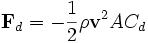
Where the force of drag is equal to half of the density of air times the velocity you are traveling squared times the frontal area times the coefficient of drag. a Z06 for example according to one website has a frontal area of 22.3 square feet. If you decrease your frontal area by a square foot by lowering your car and removing mirrors for example you have made a good dent in drag, a little over 4% reduction in frontal area. (experts please correct me if Im wrong on equations or theory, I think Im pretty close here though)
Another point is that when you lower your car you decrease the amount of air that is able to get under the car and create drag due to the messy undercarriage. This is harder to imagine a quantitative result.
2.How much is it affected by chopping the top,channeling the body over the framerails?
Once again, the depending on how much it is chopped the frontal area is reduced quite a bit. Airflow can also be improved by not forcing the air that you are going through to be displaced as much. When you drive by, all the air that was standing still has to be displaced to allow you to pass. If you reduce the amount of displacement of this air and ease it back to where it was at first with a shape like a tear drop it will decrease the amount of turbulence or drag you will produce.
3.How much is it affected by raking the windshield? (I realize it is affected by this but how much and how much rake is required to gain a noticable difference)
This is a tough question and one that would take more research for me to answer with any confidence. Reading up about auto manufacturers that have done this might be more enlightening. I have noticed that the new honda civics and the hybrids as well as the new dodge trucks have a very large rake to the windshield and it seems to work for them so I imagine this is worthwhile.
4.How much does the rake of the body affect it?I've heard that a 1 degree rake and no rear spoiler seems to be best for a '69 Camaro for example
This depends on whether or not you are going to run ground effects or underbody venturis or such. THere are different ways to go about improving aerodynamics of the bottom of the car. It gets confusing a bit when you realize that speeding up air or squeezing it into a smaller space decreases pressure.
5.How much do brake cooling ducts affect it?
I would not worry about brake cooling ducts until you are sure you need them. Make sure you can overheat your brakes even with the right components and clean fluid before you cool them. You might have enough air to cool them for your type of driving just from the engine compartment air exiting the wheelwells. There would be some drage created I imagine by letting air into an opening in the front of the car rather than letting it smoothly go around the side but how much is hard to say, Hopefully someone who knows will chime in.
6.I realize the grill opening adds to the drag coefficient,but how would someone overcome this?
Like has already been said and proved by me, block it. Try blocking the whole thing with cardboard first, then cut away accordingly if you have to. I extended my air dam instead of opening the grill back up. Make sure you have an electric fan or fan with fan clutch or both for when you sit in traffic.
7.What kind of upgrades to the cooling system wound be required to cool the engine if the grille opening size was reduced?
see above
8.How much does an underbody tray affect it?
havent tried it yet but someone did in on a second gen camaro I believe, try searching belly pan and you will find the thread
9.Does tire width play into it at all since most people are going for wider,and wider wheel/tire combos
Yes, see #1 about frontal area. This is another compromise. Is it more important to go fast/get good gas mileage, or to go fast around corners? The honda insight and various other cars I have noticed including my own car have body work to divert air gently around the tires to minimize drag from the tires. I am sure my cobbled together design isnt optimum but I tried. I need a wind tunnel to tell you if it helped.
10.Don't you just hate people like me that ask so many questions in one post
no.
I have found another unscientific way of testing aerodynamics of different things on your car. I noticed that in the self serve car wash with the high speed pressure washer thing you can see pretty well how air flows around certain parts of your car. I know this doesnt tell you much but it gives you a little idea. I was surprised how much the spoiler on my cavalier launched the air/water. Tufts of yarn or drops of oil also can tell you what air is doing. David pozzi has a link on his website to a coast down approach to figuring out your coefficient of drag without a wind tunnel. I havent had the time to do these things yet. Good discussion here, I am interested in hearing more-Dennis
56 DMAX GMC
http://www.cardomain.com/ride/2135587
1968 Firebird
http://www.cardomain.com/ride/2135556
1966 Suburban
http://www.cardomain.com/ride/2135589
08-21-2006 #14
New to Pro-Touring
- Join Date
- Aug 2006
- Posts
- 46
Hey not a problem, let me know the make and mosel of the car and send any pics if you have them. Originally Posted by boodlefoof
08-26-2006 #15
Registered User
- Join Date
- Nov 2005
- Location
- Mesa, AZ
- Posts
- 133
well..since the last trip where I averaged 38 mpg at 80 mph. I removed the lip from the bottom of the rear bumper and installed new wheels and tires on the cavalier. Today from prescott az to east mesa I averaged 50 mpg still at 80 mph. Even though there is some downhill I would say thats pretty good for a car whose rated highway gas mileage is 33 mpg. If anyone doubted the benefits of small improvements in aerodynamics I hope this takes care of that. i hope more people experiment with these things.
-Dennis
56 DMAX GMC
http://www.cardomain.com/ride/2135587
1968 Firebird
http://www.cardomain.com/ride/2135556
1966 Suburban
http://www.cardomain.com/ride/2135589
08-27-2006 #16
New to Pro-Touring
- Join Date
- Aug 2006
- Posts
- 46
Nice Work! Originally Posted by hotroddr
More pics please.
08-27-2006 #17
Registered User
- Join Date
- Nov 2005
- Location
- Mesa, AZ
- Posts
- 133
ok...here are the pics I have for now. These are the Yamaha R6 mirrors that I used to decrease wind noise and drag. As I mentioned before they could have been designed better but they were an improvement from stock and are smaller in frontal area.
here is the stock mirror for comparison
and another of the motorcycle ones to get an idea of size difference. The motorcycle mirrors are slightly more convex so the viewing angle is wider even though the mirror is smaller.
Here was my initial block off plate for the grill after testing with cardboard
More gains are to be had in decreased drag and increased downforce Im sure by blocking off the rest of the little holes, I just havent gotten around to it.
Here is the extended air dam to compensate for the blocked grill. It is more resistant to collapsing at speed due to the angled support on the back side. Its pretty basic but it works. I have scraped it on lots of things now and even hit stuff on the freeway(including a rabbit and some metal) without ripping it off. I made it from part of a bumper I found in a auto body shop dumpster, yes Im a dumpster diver.
Here is another picture of the front as it was a while ago. I will try to get some updated pictures to give you all more ideas. This car is pretty low. I will measure the height of the air dam and bumper here in the next few days. I cant go over a fast food cup lying on its side without dragging it if that gives you an idea.
These pictures are all older so a few things have changed since then. I hope maybe a few pictures and ideas that have been thrown out here will encourage you all to try some things and report back because there is a lot of improvement to be made in aerodynamics on street cars. I wish I had a lift, some time, and money so I could try it all but that is a few years down the road still.-Dennis
56 DMAX GMC
http://www.cardomain.com/ride/2135587
1968 Firebird
http://www.cardomain.com/ride/2135556
1966 Suburban
http://www.cardomain.com/ride/2135589
08-29-2006 #18
Registered User
- Join Date
- Nov 2005
- Location
- Mesa, AZ
- Posts
- 133
I hit the jackpot. Here is a link to a pdf that details different ways to reduce drag and the approximate percentages of improvement.
http://www.tfd.chalmers.se/%7Elelo/r...g-reducing.pdf-Dennis
56 DMAX GMC
http://www.cardomain.com/ride/2135587
1968 Firebird
http://www.cardomain.com/ride/2135556
1966 Suburban
http://www.cardomain.com/ride/2135589
08-29-2006 #19
New to Pro-Touring
- Join Date
- Aug 2006
- Posts
- 46
lol, that's great info. And put in to laymans' terms.
08-30-2006 #20
Registered User
- Join Date
- Aug 2004
- Location
- Maine
- Posts
- 594
I get thefeeling that English wasn't the primary language of the writers, but it gets its point across well.
John

 Reply With Quote