


Results 1 to 20 of 80
Thread: Torque Arm vs 4-Link
Hybrid View


-
10-13-2020 #1

 Registered User
- Join Date
- Nov 2014
- Location
- East Tennessee
- Posts
- 163
 That's the million dollar question.
 Originally Posted by AEH

500lb/in is actually kind of soft depending on your motion ratio. Since you have a factory subframe I assume you are using the factory motion ratio. I run 600lb/in front springs in my factory subframe. My camaro rides better than my bone stock 2019 Subaru WRX. 500lb/in could work but really it depends on the weight of the car on the front tires. Shocks (dampers) are also very important in regard to ride comfort. Originally Posted by AEH
Seems relatively easy to achieve. Originally Posted by AEH
The obvious solution is leaf springs. Originally Posted by AEH
This will definitely help with ride quality and comfort. Originally Posted by AEH
Neither, leaf springs. You have no use for a 4 link, 3 link, or torque arm. If ride quality is paramount, the lightest system (least unsprung mass) is best so the suspension can react to bumps. 3 links (NOT torque arm) are usually the lightest of the link systems. 3 link vs leaf springs are comparable in regard to weight. Leaf springs are immensely less expensive. Originally Posted by AEH
Very few people I know run mono leaf springs unless they have an unrestored car. My leaf springs are 5 ply. They work great. If "Wow factor" is a stipulation, you need to put that in your list of requirements in the beginning. If you are intolerant to leaf springs then I suggest a 3 link with a Watts Link centering device (not a panhard bar). A panhard bar will feel worse on on-ramps over bumps. Originally Posted by AEH
Electrical/Mechanical Engineer
1968 Camaro RS - Flat Black
-
10-13-2020 #2
Registered User
- Join Date
- May 2018
- Location
- San Diego County
- Posts
- 72
Lot of good info on this thread, but also some not so good.
Ride quality is very dependent upon a number of things, suspension design (links, leafs, T/A - meaning both Truck Arm and Torque Arms) "may" be a big part of it. And maybe not. Spring rates, damping rates, bushing choice (rod ends, rubber, delrin, etc) also play into things. Or not. Here's "our" run down, with full disclosure that we are a supplier to this hobby.
Aside from supplier choice, and assuming that the quality of the design and manufacture is good enough, all Torque Arm systems on the market are essentially the same. They are a good option for a bolt on solution, or "nearly" bolt on, and anyone that owns one, or all of the suppliers of them, will tell you they are the best solution ever invented. They all have the same advantages, and the same downfalls. The shorter the actual "arm" in the system, the worse. Packaging a suitably long Torque Arm greatly interferes with the almost required "x" pipe in the exhaust. They all suffer from potential (which translates to "will have" if you push the car hard enough) brake hop issues.
Aside, again, from supplier choice, with same assumptions, all Triangulated 4-Link systems are essentially the same. They package very well, but the overall geometry (purely from a performance and engineering standpoint) leaves very much to be desired. Anyone that owns them, and all of the suppliers that produce them will tell you they are the best solution ever invented.
Truck arm setups, though not mentioned here, have essentially the same performance disadvantages as Torque Arms. Watch NASCAR. At Sear's Point (Sonoma Raceway) and see how many times the commentators speak of wheel hop in the really hot braking zones. Maybe not an issue for a purely street driven car, but it's a fact. And they break axles ALL the time as a result. Anyone that owns them, and all of the suppliers (which are few), well, you get it.
"Four link" systems, with the addition of a Panhard Bar or Watt's link, aren't "4 links." They are 5 links. And this means that they are mechanically over-constrained. Which is why they handle like crap, they fundamentally bind in roll. Ask any capable Mechanical Engineer. They will ONLY work if you use rubber bushings, which most do, which masks the binding aspect. Anyone that owns one........
Three Link systems, with the addition of either a Panhard Bar, or a Watt's Link to manage the lateral loads, do not suffer from ANY of the above disadvantages with all of the other stick axle setups, if designed and engineered appropriately. A 3-Link is NOT the same as a Torque Arm, the mechanics are completely different. The downside is typically packaging. In our "Next Generation" 3-Link systems, we strove to minimize this aspect, while preserving (and in many aspects, "improving") the performance attributes of our legacy systems. The ones who scored the inaugural optima Ultimate Street Car honors for "Bad Penny," class wins at the One Lap of America, Targa Newfoundland, and many other events that our customers compete in. 3000+ mile long bucket list road trips? Check. Wow factor? Check. So, yeah, we as a supplier will tell you they are the best invention solution currently available. Ask any question, and we will tell you WHY we did what we did. We have a re-introduction thread on the suspension page of this forum, check it out.
Most of all, have fun, whatever path you choose will be a good one. Enjoy the hobby, and be well.Mark Magers
Founder and Principal, Lateral Dynamics LLC
[email protected]
lateral-dynamics.com
One tenth of a second on the race track is often the difference between first place, and fourth.
10-14-2020 #3
Registered User
- Join Date
- Apr 2009
- Location
- Michigan
- Posts
- 332
I respectfully disagree with a couple of things mentioned here, but the biggest one is the knock on parallel 4-links. I know of several cars running them that don't handle like crap. You be the judge regarding whether the builders/owners are capable mechanical engineers or not. Originally Posted by Mark@lateral-dynamics
https://www.hotrod.com/articles/mark...-dont-have-to/
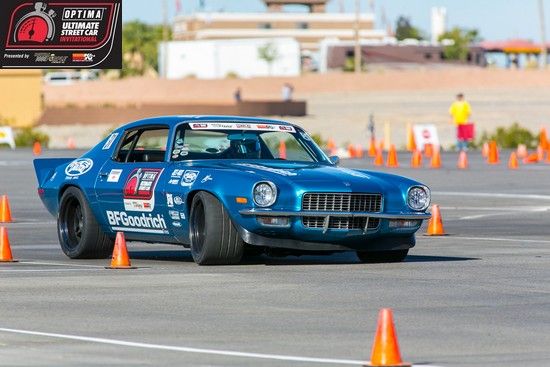
Last edited by stab6902; 10-14-2020 at 10:28 AM. Reason: added link since pic didn't work
- Ryan
10-15-2020 #4
Registered User
- Join Date
- Nov 2006
- Location
- Jacksonville, Fl
- Posts
- 12
I guess it depends on how the truck arm is designed. NASCAR requires truck arms of 38lbs. each. I built composite arms of 12.5lbs. each. Due to their ability to flex I have yet to see brake hop at a track day and I would challenge anyone to build a lighter rear with a live axle. Originally Posted by Mark@lateral-dynamics
https://www.youtube.com/watch?v=San17XlQCGM

 Reply With Quote