


Results 41 to 52 of 52
-
05-23-2006 #41
 New to Pro-Touring
- Join Date
- Jan 2005
- Posts
- 34
Here is a Matlab script I whipped up to calculate spring rates / suspension frequencies.
I adopted the forumlas from various websites (and my undergrad physics textbook) and I'm not 100% sure I have things right (I'm waiting for my copy of RCVD to show up). The vehicle constants are rough approximates for my 69 Firebird.
%%%%%%%%%%%%%%%%%%%%%%%%%%%%%%%%%%%%%%%%%%%%%%%%%% %%%%%%%%%%%%%%%%%%%%%%%%%%%
vehicle_weight = 3400; %total vehicle weight
f_weight_dist = 0.54; %front weight percentage
f_wheel_unsprng = 100; %front wheel unsprung weight (per wheel)
r_wheel_unsprng = 200; %rear wheel unsprung weight (per wheel)
f_mr = 8./16; %approx. front motion ratio from LCA
r_mr = 0.9; %approx. rear motion ratio (live axle)
f_sprate = 850; % given front spring rate (lb/in)
r_sprate = 250; % given rear spring rate (lb/in)
f_damp_ratio = 0.35;
r_damp_ratio = 0.35;
f_freq = 1.7; %Hz
r_freq = f_freq + 0.15.*f_freq; %Hz, rear freq is 15% greater than front freq
wheelbase = 100; %approx. (inches)
avgspeed = 80; % mph
% convert to SI units
fmass = ((vehicle_weight.*f_weight_dist)./2-f_wheel_unsprng).*0.45359237;
rmass = ((vehicle_weight.*(1 - f_weight_dist))./2-r_wheel_unsprng).*0.45359237;
f_sprate = f_sprate.*175.126835;
r_sprate = r_sprate.*175.126835;
% calculate wheel rates
f_wheel_rate = f_sprate.*(f_mr.^2);
r_wheel_rate = r_sprate.*(r_mr.^2);
% calculate undamped spring rates given frequencies
Ksf = 4.*(pi^2).*fmass.*(f_freq^2)./(f_mr^2)./175.126835
Ksr = 4.*(pi^2).*rmass.*(r_freq^2)./(r_mr^2)./175.126835
% calculate undamped frequencies given spring rates
f_freq_undamp = (1./(2.*pi)).*sqrt(f_wheel_rate./fmass)
r_freq_undamp = (1./(2.*pi)).*sqrt(r_wheel_rate./rmass)
%calculate damped frequencies given spring rates
f_freq_damp = f_freq_undamp.*sqrt(1-f_damp_ratio.^2)
r_freq_damp = r_freq_undamp.*sqrt(1-f_damp_ratio.^2)
% calculate damped time constants
f_tau = (2.*pi).*f_freq_undamp.*f_damp_ratio;
r_tau = (2.*pi).*r_freq_undamp.*r_damp_ratio;
% whip up time independent variables
tf = linspace(0,f_tau,1000);
f_to_r_timlag=wheelbase./(avgspeed*63360/3600);%time lag from bump front to rear
tr = tf-f_to_r_timlag;tr = tr.*(tr >= 0);%offset rear time, get rid of neg times
% plot damped trajectories
figure(1); clf;
plot(tf,exp(-f_tau.*tf).*sin(2.*pi.*f_freq_damp.*tf));hold on;
plot(tf,exp(-r_tau.*tr).*sin(2.*pi.*r_freq_damp.*tr),'r');hold off;
title('damped suspension trajectories');
xlabel('time (s)'); ylabel('amplitude (arbitrary units)');
%%%%%%%%%%%%%%%%%%%%%%%%%%%%%%%%%%%%%%%%%%%%%%%%%% %%%%%%%%%%%%%%%%%%%%%%%%%%%%%%%%
Results:
Ksf = 967 lb/in, front spring rate given 1.7Hz (undamped)
Ksr = 281 lb/in, rear spring rate given 2.0Hz (undamped)
f_freq_undamp = 1.6 Hz, front freq. given 850 lb/in spring rate (undamped)
r_freq_undamp = 1.8 Hz, rear freq. given 250 lb/in spring rate (undamped)
f_freq_damp = 1.4931 Hz, front freq. given 850 lb/in spring rate (damped 35% of critical)
r_freq_damp = 1.7280 Hz, rear freq. given 250 lb/in spring rate (damped 35% of critical)
Attached is a plot of the front and rear trajectories:
-
05-24-2006 #42 Registered User
- Join Date
- Nov 2002
- Location
- state of confusion
- Posts
- 1,499

Looks pretty good, although 200 lbs per rear corner sounds a bit high unless you have a real beast of an axle. Are leaf springs really that heavy (remembering that perhaps a third to half of their weight is sprung)?
I ran a sanity check for one of my spreadsheets and got . . .
Ksf = 965 lb/in, front spring rate given 1.7Hz (undamped)
Ksr = 293 lb/in, rear spring rate given 2.0Hz (undamped)
Note that Ksr = 280 lb/in if I use 1.15*1.7 = 1.955 Hz instead of 2.0 Hz.
f_freq_undamp = 1.60 Hz, front freq. given 850 lb/in spring rate (undamped)
r_freq_undamp = 1.85 Hz, rear freq. given 250 lb/in spring rate (undamped)
f_freq_damp = 1.49 Hz, front freq. given 850 lb/in spring rate (damped 35% of critical)
r_freq_damp = 1.73 Hz, rear freq. given 250 lb/in spring rate (damped 35% of critical)
(Sorry for the crappy thumbnail resolution - it's easier to see as a full screen display and then expanded with the sizing button in the lower right hand corner.)
Norm'08 GT coupe, 5M, suspension unstockish (the occasional track toy)
'19 WRX, Turbo-H4/6M (the family sedan . . . seriously)
Gone but not forgotten dep't:
'01 Maxima 20AE 5M, '10 LGT 6M, '95 626, V6/5M; '79 Malibu, V8/4M-5M; '87 Maxima, V6/5M; '72 Pinto, I4/4M; '64 Dodge V8/3A
05-25-2006 #43
New to Pro-Touring
- Join Date
- Jan 2005
- Posts
- 34
Cool, thanks Norm. After I posted, I thought that the rear unsprung weight should have been about half of what I entered. D. Pozzi has 110 lbs (per rear wheel, 220 total) unsprung weight listed on his web site.
05-25-2006 #44 -Moderator-
- Join Date
- Apr 2001
- Location
- Central CA USA
- Posts
- 6,114
I forgot to include the weight of the wheels and tires in that calculation!
Here's some info:
REAR SUSPENSION
rear axle 12 bolt with drm brks, posi -complete 185
leaf spring - multi stock 32
Hotchkis type leaf closer to 40 - 45.
shock 3
Wheel and tire is around 50 lbs
sway bar is probably around 10 lbs
I think you'd take half the weight of the spring, bar, and shock.
somewhere around 287 lbs total depending on your exact wheel/tire weight.Last edited by David Pozzi; 04-17-2009 at 06:03 PM.
David Pozzi http://www.pozziracing.com67 Camaro RS that will be faster than anything Mary owns.
09-11-2006 #45
Registered User
- Join Date
- Aug 2004
- Location
- England
- Posts
- 1,042
would you not have to take the weight of the driver , and tire pressures ?
09-11-2006 #46
Registered User
- Join Date
- Nov 2002
- Location
- state of confusion
- Posts
- 1,499
(1) Best results would consider the driver's weight and his own CG location. And the weight and CG of any other variable loading.
(2) Tire pressures will make a generally small difference, but this effect isn't very usable unless you have some idea of the correlation between inflation pressure and tire vertical/radial spring rate.
Norm'08 GT coupe, 5M, suspension unstockish (the occasional track toy)
'19 WRX, Turbo-H4/6M (the family sedan . . . seriously)
Gone but not forgotten dep't:
'01 Maxima 20AE 5M, '10 LGT 6M, '95 626, V6/5M; '79 Malibu, V8/4M-5M; '87 Maxima, V6/5M; '72 Pinto, I4/4M; '64 Dodge V8/3A
09-14-2006 #47 Registered User
- Join Date
- Nov 2005
- Location
- Auburn, WA
- Posts
- 1,360
Just for a reference, Racecar Engineering quotes:
1 Hz for Caddy rides
1.3Hz for sports cars
1.8Hz high performance road cars
2+Hz for racecars w/o aero aids
It also mentions that ground effect racecars could have attained up to 10Hz! Wow!
Anyway, my personal experience hasn't followed the above guidelines. I've done vehicles with a frequency slightly above 2.0, and it had a very pleasant ride with excellent handling (.95G).Matt Jones
Mechanical Engineer
Art Morrison Enterprises
04-14-2010 #48 Registered User
- Join Date
- Nov 2008
- Location
- TN
- Posts
- 954
I know this is a REALLY old thread... But none of the links work. Does anyone have any new info or spreadsheet links?
Thanks!
BenjaminBenjamin
Twin Dusters
'72 Plymouth Duster "Aero Duster" project
'72 Plymouth Duster "Daily Duster" project
https://www.pro-touring.com/showthre...RO-DUSTER-quot
04-15-2010 #49
Registered User
- Join Date
- Nov 2002
- Location
- state of confusion
- Posts
- 1,499
What links?
All I see are thumbnail pics.
I probably have one version or other of my sheet on most of the computers I ever use, but nowhere that can be linked to directly.
Norm'08 GT coupe, 5M, suspension unstockish (the occasional track toy)
'19 WRX, Turbo-H4/6M (the family sedan . . . seriously)
Gone but not forgotten dep't:
'01 Maxima 20AE 5M, '10 LGT 6M, '95 626, V6/5M; '79 Malibu, V8/4M-5M; '87 Maxima, V6/5M; '72 Pinto, I4/4M; '64 Dodge V8/3A
04-15-2010 #50 Registered User
- Join Date
- Aug 2004
- Location
- Rustburg, Virginia
- Posts
- 3,436
I guess he was speaking of David's link in the first few posts in the thread.... Originally Posted by Norm Peterson

Originally Posted by David's link
1970 RS/SS350 139K on the clock:
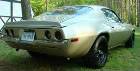
89 TPI motor w/ 1pc rear seal coupled to a Viper T56 via Mcleod's modular bellhousing w/ hydraulic T/O bearing from the Viper, 12 bolt rear w/ 3.73 gearing, SC&C upper control arms, factory lowers with Delalums, C5 brakes at all four corners, Front Wheels 17x8's with Sumi 255/40/17 and Rear Wheels 17x9's with Sumi 275/40/17.
Brief description of the work done so far can be found here: http://www.nastyz28.com/forum/showthread.php?t=112454
04-15-2010 #51
Registered User
- Join Date
- Nov 2008
- Location
- TN
- Posts
- 954
Yes that was it. So nobody knows of another one that I can get too? Or how I could possibly get my Grubby little hands on one of those spreadsheets? I suck at excell. Originally Posted by John Wright
ThanksBenjamin
Twin Dusters
'72 Plymouth Duster "Aero Duster" project
'72 Plymouth Duster "Daily Duster" project
https://www.pro-touring.com/showthre...RO-DUSTER-quot
04-15-2010 #52
Registered User
- Join Date
- Nov 2002
- Location
- state of confusion
- Posts
- 1,499
If you PM me with an e-mail address, I can send out the latest version that's on this computer.
Forum e-mails don't generally permit attachments.
Norm'08 GT coupe, 5M, suspension unstockish (the occasional track toy)
'19 WRX, Turbo-H4/6M (the family sedan . . . seriously)
Gone but not forgotten dep't:
'01 Maxima 20AE 5M, '10 LGT 6M, '95 626, V6/5M; '79 Malibu, V8/4M-5M; '87 Maxima, V6/5M; '72 Pinto, I4/4M; '64 Dodge V8/3A

 Reply With Quote