


Results 21 to 40 of 53
Thread: B-Bodies or Chevelle?
-
07-11-2014 #21
 Registered User
- Join Date
- Apr 2005
- Location
- Colorado Springs
- Posts
- 760
I stand corrected. Hotchkis and Schwartz make chassis components for all makes. I suppose we could also include Comp Engineering and Alston in that list. Originally Posted by Schwartz Performance

However, except for Hotchkis, most of those components require more than simple bolt on modifications. If you are going for an all out upgrade, that may be fine. If you want to retain your numbers matching muscle car and step up its performance, then a bolt on approach may be more desirable.
Even a Gremlin, now that's thinking outside the box! :-)
Yes, and these have been available since the early 70s. However, the Hemi was already so well established in Chrysler architecture and all the racing after market was built around its design, so the Arias heads never caught on. Originally Posted by G-man
Remember, all OEMs were working on Hemis during the muscle era. This is one instance where Chrysler was actually ahead of the curve. While Zora Arkus Duntov (father of the Corvette) made Hemi heads for the flat head Ford all the way back in the '20s, they were not an OEM option and never caught on big. When Chrysler first introduced their first Hemis in the early 50s they were the first of the Big 3 to offer them to the general public and produced them in volume for 5 years. Their high output power made them the preferred choice for drag racing but their heavy and expensive design made them a production nightmare, so they stopped them in production cars. Even the Adrun Ford heads had any number of problems with their design that limited their production from ever catching on in a large scale. By then the Big 3 were deep into OHV engine production, so the flatheads slowly faded away as a performance engine.
By the mid 60s Chrysler decided to resurrect the Hemi as a race only engine. Since the heads are the key to it, the designed a new head and slapped it on an existing block to rush it into production. It was so successful that many sanctioning bodies then demanded it become a production engine available to anyone in an effort to make it available to more drivers, so it began production for passenger cars. Once this happened, Ford and GM were now behind the curve in the horsepower wars. Ford answered the call next with the 427 SOHC Hemi or "Cammer" and the Boss 429 Hemi. To stiffle the SOHC entry into competition, Chrysler began working on a DOHC Hemi. To avoid an escalating horsepower race, Nascar banned the Ford SOHC and Chrysler dropped development on the DOHC. Ford did go into production with the Boss 429 which found its way into many Ford products during that time and the Cammer was used for some time in drag racing. But high production costs and engineering weaknesses prevented them from becoming very prolific.
Pontiac was working on a 427 Hemi design on the GM side during this time. However, the extended development time it took and the politics of the GM heirarchy were such that they didn't have a working prototype until the end of the era was all but sealed. Rising fuel costs, rising insurance costs, more complex racing body rules, and the expense of Hemi production all killed off the GM effort. Similarly, a lower cost Chrysler ball stud Hemi design, actually somewhat similar to the Chevy big block, also died. By this time, the 426 Chrysler design was so entrenched in drag racing, that the efforts of Arias were more of a blip on the radar instead of a horsepower revolution. In this instance, it actually was cheaper and easier to run the Chrysler engine compared to the GM, which required a considerable amount of custom parts only available from one company.
The efficiency of the Hemi design has found its way into may other manufacturers since, predominately none US based, and has evolved into many different SOHC and DOHC, over head cam designs. You will be hard pressed to find a 4 or 6 cylinder engine design that doesn't have opposed valves and at least a semi hemispherical combustion chamber these days. However, Chrysler had trademarked the "Hemi" name some time ago so no one can use it in any mass advertisement of their engines. So even though you can build a hemispherical headed Chevy, in the mind of many enthusiasts , as well as in the legal system, it can't be called a "Hemi" per say.TonyC@HP2
-
07-11-2014 #22 Registered User
- Join Date
- Oct 2013
- Location
- H-Town, TX
- Posts
- 356

I would agree that with enough $$ you should be able to build any of these cars to ultra high standards. Frame or no frame you would probably go aftermarket so that's not a real issue.
Considering the performance and weight of these cars can all be built equally the real variable is size.
I am currently building a. 69 Dodge Charger and next to my 70 GTO it is HUGE! It's a sexy looking car for sure but it is about the same length as my 4 door Ram.
So I think you would need to look at what type of racing / performance you are looking for and what size vehicle fits that better.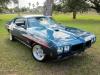
07-11-2014 #23
Banned
- Join Date
- Dec 2009
- Posts
- 256
I think if that is basically the case, then the Chevelle is probably it. I like a chunky looking tank, like a bouncer at a club thats as big as the door. Originally Posted by 1965gp
I think the Roadrunners/chargers have 'faster' lines on them, gives them an athletic build type while the Chevelles just a tank (aka bouncer).
Shortest wheelbase of the lot and my performance type is something that will leave a skyline GTR35 for dead on the street. 800 Horsepower should do it.
This is why power-weight ratio was my main concern (amongst the big 3) and why I wondered which would be lightest if no expense spared like the Cuda Highplains referred to. If I chucked 200,000 at a chevelle, 200,000 at a 68 charger... which will be the lightest/hardest accelerating car? I would assume more car/performance drag race and cornering out of the chevelle than a Mopar. With Hemi heads available for them as well.... probably comes down to the look at the end and once again, Im after a tank looking car.
My most favorite hotrod is the 1949 Mercury Lead Sled and that thing is a TANK. I think in muscle cars the only thing that comes close may very well be the CHevelle because of its butch like design, may be that is what drew me to the chevelle though i was a mopar guy all my life.
I think im done with my asking cause if i ask any more, il be posting another new car here, this time a 49 lead sled...
07-14-2014 #24
Registered User
- Join Date
- Sep 2005
- Posts
- 49,371
Zora Duntov was Born in 1909 and didn't come to the USA til after WW II, so I'm sure he wasn't making Heads in the '20s Originally Posted by High Plains Mopars
07-14-2014 #25
Registered User
- Join Date
- Apr 2005
- Location
- Colorado Springs
- Posts
- 760
Thank you for the correction. Ardun heads didn't evolve until the late '40s, after WW2, as you stated.
Sorry, just my dates mixed up typing my rely.TonyC@HP2
07-14-2014 #26 Registered User
- Join Date
- Jan 2006
- Location
- Cornettsville, ky
- Posts
- 892
well you can do like i did and buy a buick they share almost everything with your chevelle. get one that has solid body and your good. the buick engines make ungodly power in the tq dept to boot. you can find a solid skylark for a few thousand. Originally Posted by High Plains Mopars
07-16-2014 #27
Banned
- Join Date
- Dec 2009
- Posts
- 256
Keeping the chevelle. To me its the ultimate in muscle like bulk. No other muscle car looks like a straight out tank like the 70 chevelle.
07-16-2014 #28
Registered User
- Join Date
- Oct 2013
- Location
- H-Town, TX
- Posts
- 356
The 70 Chevelle has become extremely popular lately- even more than it has in the past.
About 5-10 years ago my dad read an article on collecting cars and it said the 70 Chevelle was the next '57 Chevy- guess they knew what they were talking about.
07-16-2014 #29
Registered User
- Join Date
- Apr 2005
- Location
- Colorado Springs
- Posts
- 760
Originally Posted by nekkidhillbilly
I think you meant to refer this to G-Man. I'm not in the market for an A body.
If I was to pick up an A body, it would probably be a '68-69 Chevelle or a '70 GTO Judge. Although the Stage 1 Buick vs the Hemi debate certainly makes a case for massive torque.
I think my next car may be a '53 Studebaker Starliner or a '33 Dodge Bros LD6. Of course, I still have the V8 Stealth idea rolling around in the back of my head too.TonyC@HP2
07-16-2014 #30
Registered User
- Join Date
- Apr 2012
- Location
- Woodstock, IL
- Posts
- 2,410
B-Bodies or Chevelle?
The only way to find out which one will be "better" is to throw 200k at each of them, and compete head to head with the performance figures like Car and Driver publishes. Then whichever one wins, you keep. Sounds less stressful than just talking about it an having a debate, right? ;)
-DaleSchwartzPerformance
The leader in bolt-in muscle car chassis
SchwartzPerformance.com | GMachineChassis.com | Facebook | Twitter | Instagram
Dealer for: Forgeline, RideTech, Tremec, American Powertrain, Silver Sport Transmissions, GM Performance Parts, RECARO, Cerullo Seats, TMI Products, Vintage Air, Baer Brakes, Wilwood, BeCool, AFCO, Tanks Inc, Holley / Hooker, Ultimate Headers, Rick's Tanks, Moser Engineering, Currie, TechAFX, Stainless Works, II Much Fabrication, and many more
07-16-2014 #31
Banned
- Join Date
- Dec 2009
- Posts
- 256
lol Dale.
Let me know when someone who can afford to do that, does it. Until then... Chevy, here i come!
Tony, You have some interesting taste. Totally not me.
If I ever go a hot rod which I doubt I ever will, the 1949 Mercury, chop top with the long hood like the Baby Lincoln is the only one to get.
http://www.cars-on-line.com/39263.html
Wonder how heavy these are?
07-18-2014 #32 Registered User
- Join Date
- Jul 2006
- Location
- Northwestern NJ
- Posts
- 342
Best gear box & suspension?? Rarely beaten in a straight line (except for the Hemi)?? Ummm, No... The showroom stock GM cars of the late 60's & early 70's routinely equaled or beat their Mopar competition in the 1/4 mile. Mopars were terrible in Trans Am, too, which IMO is the race series that most closely matched the parameters Pro-Touring builders strive to improve upon today. Maybe Mopar had the STRONGEST gearbox, (Hemi 4 speed) but it's nowhere as good shifting as a Muncie. Those trannies never road raced well. The suspensions are interesting, but far from "the best". I agree that Mopar gave the best optional rear suspension parts for drag racing, but those Unibody chassis were just too flexible to get a good suspension under them to make them really handle well. That being said, I'm only speaking about the stock vehicles and I'm absolutely not a Mopar hater. All of the above issues can be relatively easily rectified with modern aftermarket products, but it will take a LOT more money and effort. Originally Posted by benno505
Tommy
Tommy Souren
"The older I get, the faster I was."
Grandma's 20k mile '80 Malibu Classic, in-progress factory style LS6 454, Legend LGT 700 5 speed, 9" 3.70 posi, Global West suspension, 12"/11" discs.
07-20-2014 #33
Registered User
- Join Date
- Jan 2006
- Location
- Cornettsville, ky
- Posts
- 892
yes that was for the op. my next car will be a c body buick or caddi. Originally Posted by High Plains Mopars
07-20-2014 #34
Registered User
- Join Date
- Apr 2005
- Location
- Colorado Springs
- Posts
- 760
Maybe you missed my follow up to this from this part of the thread, but how exactly do we define championship caliber cars in NHRA during the muscle car time period? Stock, super stock, AFX? Its too difficult to say and much harder to slice to define what makes and models were on top and the pecking order changed every weekend. Every make was winning on any given weekend. Originally Posted by LS6 Tommy
IMO, the 727 Torqueflite was actually a much more game changing transmission than the A833 4 spd. As you pointed out, the 4spd, even Hemi versions, had issues, where as the Torqueflite pioneered the automatic as a viable drag race transmission.
I'd also take issue with saying the Mopars were terrible in Trans am. Please define the time period as it seem you are referring to 1970 exclusively. Did you know Mopars won 50% of the over 5 liter TA races held in 1966? They continued to win and regularly place in the top 5 into the first part of 1967 before Ford, Mercury, and Chevrolet starting providing factory support to their teams. Without the factory support, it would have been a different story because of the front suspensions. Mopars actually had negative camber gain under compression, unlike the 65-67 Mustangs and 67 Camaros, which went positive. The exact opposite of what you want in a handling design. Without the Shelby mods or Guldstrand mods, the GM and Ford guys unibody cars would have continued to to battle with the mopars for the top spots. But once Ford and GM stepped into the game, the die was cast for the next three years. By the time the Chrysler factory guys decided to play in 1970, they were three years behind in development work, but they still managed top 5 finishes in every race but 2, and qualified as well or better. Not bad for a last ditch, late to the party effort.
I'm not a GM or Ford hater and I've driven both in competition. It is just stock to stock, they are a bit further behind the mopar designs than you might think. Its the simple mass of the cars available and popularity of them both today that have driven so much continued development on them. I'd contend in pure stock form, the mopars will more than hold their own. Start changing things, and the Fords will slowly creep ahead while the Chevys will rocket forward.TonyC@HP2
07-20-2014 #35
Registered User
- Join Date
- Sep 2007
- Posts
- 457
My two cents:
Develop any of these cars very far, and you will end up building a custom-made rectangular tube chassis and Corvette control arms. The platform becomes a set of wheelbase dimensions and the outer skin.
Engines:
Decades of aftermarket development and mass production cost reductions will outweigh anything about how they were originally designed. The only question is how much money are you willing to throw at it.
07-20-2014 #36
Registered User
- Join Date
- Jul 2006
- Location
- Northwestern NJ
- Posts
- 342
I didn't see your reply, I just logged back on, but I will be sure to read it immediately. I'm not arguing with you. For drag racing, I stated factory showroom cars pretty clearly. No one will argue the Hemi's were untouchable in modified classes. Automatics transmissions don't figure as far as I was talking about how Mopar trannies figure into the vision of Pro-Touring cars emulating road race cars, not Mopar's place in car making history. In any event, Mopar's involvement in Trans Am was far from a "last ditch, late entry". They did well in 66, Plymouth & Dodge finished 2nd & 3rd. In 67 Dodge finished dead last in class. 68 & 69 they were out of it & for the one year MOPAR really got back into it full-bore, they finished 4th & 5th out of 5 manufacturers, WAY behind 3rd place in points.
Tommy
Tommy Souren
"The older I get, the faster I was."
Grandma's 20k mile '80 Malibu Classic, in-progress factory style LS6 454, Legend LGT 700 5 speed, 9" 3.70 posi, Global West suspension, 12"/11" discs.
07-20-2014 #37
Banned
- Join Date
- Dec 2009
- Posts
- 256
Just having look at some 454ci crate prices... $4200 for a 450hp 520ftlbs torque motor?
Are you serious?
I dont remember prices that low when i had my dodge. Whats a 440ci crate around that power and torque cost? Maybe i read stuff wrong. If not... thats awesome.
07-20-2014 #38
Registered User
- Join Date
- Apr 2005
- Location
- Colorado Springs
- Posts
- 760
Tommy,
If we look at only showroom stock tyes of cars in NHRA, that could still encompass stock and super stock classes back then. Even so, NHRA did not begin an accummulative points system for sportsman classes to award an overall championship until 1974. Prior to that, who ever won the World Finals was called the national champion, even if they DNF the rest of the races over the course of the year.
My point about the Trans Am series was that in 1966 when the O-2 class was predominately privateers with minimal factory support, Chrysler cars did well. Once the corporate dudes from Ford, Mercury, and Chevy joined in '67 and brought out the big guns out, the game changed. Chrysler pulled what little support they did provide and did not come back to play until 1970. So while they started out in the game, they pulled out of SCCA to support their Nascar and NHRA drivers until the series had so much momentum it could not be ignored. So maybe they weren't late to the party, they actually were early, but they left early for a beer run and didn't get back until all the the set up for beer pong champions was already at its peak.
G-man,
yes, that is the reality of building a Chevy engine. Chevy's will always outpower the competition in $$ per horsepower production.TonyC@HP2
07-21-2014 #39
Registered User
- Join Date
- Jul 2006
- Location
- Northwestern NJ
- Posts
- 342
I might have been vague about the drag racing, too. When I said Showroom Stock, I wasn't referring to any class of organized racing. I was talking about comparison performance testing of factory bone stock cars in 1/4 mile tests, like magazine shootouts. in any event, I think we're pretty much on the same page. I think you can see I don't "hate" Mopars. Heck, there are cars form every maker I'd LOVE to have...
Tommy
Tommy Souren
"The older I get, the faster I was."
Grandma's 20k mile '80 Malibu Classic, in-progress factory style LS6 454, Legend LGT 700 5 speed, 9" 3.70 posi, Global West suspension, 12"/11" discs.
07-21-2014 #40 Registered User
- Join Date
- May 2013
- Location
- qld Australia
- Posts
- 249
 440 is a better motor, pay for what you get i spose Originally Posted by G-man
Mopar or no Car
440 is a better motor, pay for what you get i spose Originally Posted by G-man
Mopar or no Car
Your either with us or Behind us

 Reply With Quote