


Results 1 to 20 of 32
-
04-14-2012 #1

 Registered User
- Join Date
- Oct 2010
- Location
- Stockholm, Sweden
- Posts
- 110

Desperately need help with brakes
I have run out of options why my brakes does not work.
So my Firebird -68 got Kore3/C5 front brakes during the winter. I also uppgrade the brake booster with the DSE unit (9" DD/Buick Riviera 1980 Quick take-up). I kept the rear drum brakes and install a 10 psi RPV.
When hitting the brake pedal I will lock the rear brake instantly regardless how I adjust the Wilwood proportion valve. The proportion valve works because when I adjust it will be more or less easy to lock the rear breakes. The problem is that the front brakes does not work properly. All braking force comes from the rear brakes. If i plug the front port (the one that goes to the rear brakes) on the MC it is hard to stop the car. If I hit the pedal rapidly with the rear brakes disconnected the front brakes slowly stops the car. It feels like I slowly pushing the brake pedal. I also tested to conect the front brakes to the front port (that supposed to be for the rear brakes) and it did not change anything. All parts are new and I have also changed both the brake booster and the master cylinder. Now I have a Chevy S10, 1" master cylinder. I have spent houres with both bench bleeding and bleeding with all parts assembled. The only thing that is left are the caliper but it is not likely that both calipers would be dysfunktion. So, could I have mounted the caliper or the pads including the steel insert the wrong way? Would this make the front brakes dysfunction? Do we have some brake oracle here that could help me? I feel like a complete bungler ......
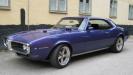
Pontiac Firebird -68, Deep tub, DSE 4-Link, ATS AFX-Spindle, KORE3 C5-Brakes,
Vintage V40, Michelin PS2 255/40-17 335/35-17, 6.0L, CompCam XR265HR(212/218, 0.558/0.563, LSA115), LS6-Intake, Ported TB.
-
04-14-2012 #2 Registered User
- Join Date
- Aug 2005
- Location
- Hamilton, NJ
- Posts
- 4,318

why the RPV?
Scott from NJ.
Vent Windows Forever! ...
Feather-light suspension, Konis just couldn't hold
I'm so glad I took a look inside your showroom doors
04-14-2012 #3
Registered User
- Join Date
- Oct 2010
- Location
- Stockholm, Sweden
- Posts
- 110
Tobin at Kore3 recommended that for the rear drum brakes.
Pontiac Firebird -68, Deep tub, DSE 4-Link, ATS AFX-Spindle, KORE3 C5-Brakes,
Vintage V40, Michelin PS2 255/40-17 335/35-17, 6.0L, CompCam XR265HR(212/218, 0.558/0.563, LSA115), LS6-Intake, Ported TB.
04-14-2012 #4 Registered User
- Join Date
- Mar 2007
- Location
- Florida
- Posts
- 2,391
Call Tobin, he is very helpfull and will be more than willing to help you get your problem straightened out. It may be that you need to change to a master with a different bore size or change the positioning of the piston rod or perhaps the engine isn't pulling enough vacuum to have the power booster functioning properly. In any case he is a wealth of information, have a pad ready to take notes when you call.
04-14-2012 #5 Registered User
- Join Date
- Aug 2006
- Location
- austin
- Posts
- 358
That can be so frustrating. I had a problem with my rear disc s10 conversion. It took a week to get all the air out and multiple bleed sessions. I have no idea why. I have upgraded several cars, and I bleed my viper's brakes for racing 2X yr so very familiar with brakes.
The problem you are having is that these new front calipers take a lot of volume to move, and the rears don't. You need to make sure prop valve is on rear circuit and crank it down for minimal pressure. Some units will allow you to completely cut off rear circuit this way (great for burnouts). If you can plug the rear circuit(completely cut it off), you can at least verify that the fronts are working ok. The front deliver 70% of braking anyway, right?
Do this first and let us know how it goes. Believe it or not, both of the rear calipers I got with my junkyard conversion were bad and I had to buy new ones! Less likely with new calipers, but maybe Core3 was having a bad day...Greg
1976 Trans Am SacrilEdge
twin turbo 455
Ttops and 4spd
one of 110 made
https://www.pro-touring.com/showthre...ect&highlight=
https://www.pro-touring.com/showthre...ilEdge-is-free!
04-14-2012 #6
Registered User
- Join Date
- Oct 2010
- Location
- Stockholm, Sweden
- Posts
- 110
Opnwide, I have disconnected the rear brakes by plugging the outlet port and did not help, still very slow reaction on the front brakes. I do know that the C5 are "low drag calipers" but I cant figure out why the "quick take up" function in the MC does not work as it should. Should I remove the caliper and have it in a differrent position when bleedning?
Pontiac Firebird -68, Deep tub, DSE 4-Link, ATS AFX-Spindle, KORE3 C5-Brakes,
Vintage V40, Michelin PS2 255/40-17 335/35-17, 6.0L, CompCam XR265HR(212/218, 0.558/0.563, LSA115), LS6-Intake, Ported TB.
04-14-2012 #7 Registered User
- Join Date
- Dec 2011
- Location
- Planit Oahu, Hawaii if you don't belive me check shipping prices
- Posts
- 255
at the risk of giving a repeat suggestion, make sure that you do not have any leaks in your system. My last break issues was do to a proportion valve that was bad, it was sucking in more air than leaking. this took me and 4 friends over 3 weeks to find! frustrating is an understatement!
with all the crazy trouble shooting that you are doing, try putting in a T so both ports on the master goes to the front breaks. I think this will tell you if your calipers are good, and if your master has the volume to run the front breaks.
04-14-2012 #8
Registered User
- Join Date
- Oct 2010
- Location
- Stockholm, Sweden
- Posts
- 110
The vacuum from the engine to the brake booster should be enough since my engine is a standard LQ9(LS2) from a Cadillac Escalade, truck cam with very smooth idle.
Pontiac Firebird -68, Deep tub, DSE 4-Link, ATS AFX-Spindle, KORE3 C5-Brakes,
Vintage V40, Michelin PS2 255/40-17 335/35-17, 6.0L, CompCam XR265HR(212/218, 0.558/0.563, LSA115), LS6-Intake, Ported TB.
04-14-2012 #9
Registered User
- Join Date
- Jan 2006
- Location
- Oregon
- Posts
- 1,773
Magnus, I'm sorry that you're still struggling with this issue, however it would be very unlikely that you have two bad calipers as was suggested above. It would in fact be very unlikely to have even one bad caliper as we have had exactly three calipers since 2005 come from PBR with an issue, and each time the only issue was an assembly issue with the outer dust boot not being properly seated around the piston. To my knowledge, we've never had a functional issue come up.
From our previous conversations, you were having some pedal feel issues as well, correct? The last we spoke, the pedal was not returning as quickly as you thought it should, like it was hesitating upon release which seems to be reinforced by your post #6 in this thread. As we've discussed before, this is usually indicative of air in the system, however I know that you've bleed and bleed and bleed the ststem, swapped master cylinder and boosters, etc. I wouldn't hurt to rotate the calipers so that the bleed screws are straight up (they're ~6.5 degrees off axis from the caliper body) by pulling the upper mounting bolt and just pivoting the caliper about the lower bolt so that it's close to vertical, although we've always been able to get a good bleed without going to those lengths on the AFX spindle application. The next step would be to measure the caliper pressures with a gauge in an effort to further isolate and troubleshoot the issue.
If your pedal is high and firm and it just doesn't want to stop, then I would suggest that you look at the pads. We've had one instance in the past with another brand of pads where the pads had practically zero coefficient of friction, like they were glazed from the factory during the burnishing operation. This customer swapped to a hydroboost and still couldn't get the car to stop like it should, but when he swapped some $12 NAO pads for the "performance" pads he was running, it made him kiss the windshield which is what you should be doing. Instead of buying new pads, you might just rough up the ones you have with some 120 to 220-grit sandpaper first and then re-bed the pads to see if that helps. Obviously, a pad issue should not impact the pedal feel/travel/return/etc though, but could certainly impact the overall brake performance.
HTH,
Tobin
KORE3It's what I does.
04-14-2012 #10
Registered User
- Join Date
- Oct 2010
- Location
- Stockholm, Sweden
- Posts
- 110
Tobin, the pedal is still not feeling as I thought is should feel. There is a delay, but it is much less compared with before. It is a slow respons on both apply and release. When you talking about measuring the caliper pressure do you mean the clamping force or the line pressure? For the line pressure, what are the typical pressure on my set-up ? Would it help if I measure the actual piston stroke lenght on master cylinder with the engine on. I guess that you have a perception what it should be with a system free from air. I don´t think that it is some thing wrong with the hardware, more likly the software (me ...
 ) I thought that this brake swap would be an easy task, it was not.
Pontiac Firebird -68, Deep tub, DSE 4-Link, ATS AFX-Spindle, KORE3 C5-Brakes,
Vintage V40, Michelin PS2 255/40-17 335/35-17, 6.0L, CompCam XR265HR(212/218, 0.558/0.563, LSA115), LS6-Intake, Ported TB.
04-15-2012 #11
Registered User
- Join Date
- Oct 2010
- Location
- Stockholm, Sweden
- Posts
- 110
So I checked the piston stroke on the MC. With the engine off I have 14 mm(9/16") stroke and with the engine running the stroke is 20 mm (~3/4"). I also made a new attempt to bleed the lines with the two person method. I do see air bubbles in the fluid coming out of the tubing but the question is, do these bubbles come from the brake line or is it air sucked in from the bleeding screw?
Pontiac Firebird -68, Deep tub, DSE 4-Link, ATS AFX-Spindle, KORE3 C5-Brakes,
Vintage V40, Michelin PS2 255/40-17 335/35-17, 6.0L, CompCam XR265HR(212/218, 0.558/0.563, LSA115), LS6-Intake, Ported TB.
04-15-2012 #12
Registered User
- Join Date
- Mar 2005
- Posts
- 345
For line pressure it should be in the 1,000 to 1,200 psi range. This is checked at the bleeder port. Be sure that the booster has vacuum in it when doing this.
For the slow response, this may be from the booster that is being used. People that buy Cadillac's expect things to be smooth, so GM may have engineered the booster to be just that by slowing the response. Where the pedal rod enters the booster there is a filter, can remove or possibly open up that area for a faster response.
It will hiss more when apply the brakes when this is done, which is normal.
Bob.
04-15-2012 #13
Registered User
- Join Date
- Jan 2006
- Location
- Oregon
- Posts
- 1,773
As Bob said, you want to measure the operating pressure at the caliper, so a caliper specific gauge kit is typically required so that you can thread the adapter into the M10x1 bleed port and get a good, accurate reading. Output pressure will vary with input force at the pedal, but 1000-1200 PSI should be readily attainable with moderate pedal effort given that you're running dual-9" booster, 1" bore, etc. Front and rear pressures should match with the adjustable proportioning valve set the the lowest (zero) proportioning setting...if they don't, then it's a hydraulic issue most likely due to air in the system. If they do match, then I would take a hard look at the pads.
Keep troubleshooting things one step at a time, you'll isolate the issue and figure it out.
Tobin
KORE3It's what I does.
04-15-2012 #14
Registered User
- Join Date
- Oct 2010
- Location
- Stockholm, Sweden
- Posts
- 110
So I have order a brake pressure gauge from SSBC but since Sweden is far away from USA it will probably take a week or so before I get it.
Pontiac Firebird -68, Deep tub, DSE 4-Link, ATS AFX-Spindle, KORE3 C5-Brakes,
Vintage V40, Michelin PS2 255/40-17 335/35-17, 6.0L, CompCam XR265HR(212/218, 0.558/0.563, LSA115), LS6-Intake, Ported TB.
04-16-2012 #15 Registered User
- Join Date
- Dec 2002
- Location
- MusicCity
- Posts
- 477
That is A 2000 S10 RH drive conventional two piston 1" bore unit shown in your pics AC Delco 18M974 / Raybestos MC390572.
REAR PORT = FRONT BRAKES / FRONT PORT = REAR BRAKES.
The QTU Riviera MC should have provided more initial volume to the front brakes (per the 3 piston quick take up design).
I *could* be wrong (nah...?), though I do not believe that the '80 Riv MC was a QTU design (off the cuff without further research). To the best of my knowledge, '82 was the first year of the QTU 3 piston design MC (with some exceptions). To visually confirm, the QTU design midsize GM MC's typically had an exaggerated rear register size larger than 1.625"-1.680" inches (due to the large rear most high volume QTU piston).
I suggest you do some port plug diagnostics while you wait for your gauges to show up. If you plug off your one (or both) of the two brake flex hoses / lines and still don't have a rock hard pedal, then you may have a bum MC or something else bizarre going on in the front brake circuit.
Read this article very thoroughly at least once: http://hydratechbraking.com/braketech1.html
Curious - does backing off the rear brake shoe adjustment seem like it helps any? Try this if you haven't (may increase pressure rise to the front brakes before actuating the rear). Also might want to temporarily remove / bypass the 10lb RPV in the rear line (have seen these screw up per manufacturing defect and hold way more than 10 lbs causing all kinds of weird behavior).
One more thought: Try shimming the MC away from the brake booster with some equal thickness washers on each side. Why? IF the MC pistons are not allowed into a full state of brake release when your foot is not on the brake (due to possible MC piston preload due to a slightly off spec MC pushrod in the vac booster), it may not be allowing the rear most MC piston (which just so happens to actuate the front brakes on this MC) to fully dump pressure when you release the brakes (and subsequently not "charge" fully during brake apply).
I know, I know - it should be plug n play...


Last edited by Hydratech®; 04-16-2012 at 06:03 PM.
There IS a difference - Thank you for choosing Hydratech!
Paul M. Clark
Founder / Master Engineer
Hydratech Braking Systems ®
www.hydratechbraking.com
04-17-2012 #16 Registered User
- Join Date
- Oct 2004
- Location
- Charlotte, NC
- Posts
- 795
Just as stated above. If that is a DSE booster and master, some of their units, the front port is for the rear and the rear is for the front.
04-17-2012 #17 Registered User
- Join Date
- Sep 2010
- Location
- Benicia, Ca.
- Posts
- 4,131
I agree with Tobin, glazed pads could cause the prob. Have you swapped out the pads? Did you season the pads the first time you drove it?
Measuring PSI at the fronts is going to help a lot here.
Do you have at least a little free play in your pedal, as to not pre-load the brakes? This could cause an incomplete takeup as hydratech said.
Hydroboost is the best option for getting amazing pressure at the wheels but should not be "necessary" to make the system work right.
Have you considered a diff. Style master?
MattMCB - Matt's Classic Bowties
5360 Gateway Plaza Dr.
Benicia, Ca. 94510
866-628-8746
TEXT ONLY: 925-989-9091 (Replied 8-4)
www.mcbparts.com
Email: [email protected]
Like us on Facebook for exclusive offers, info and chat: www.facebook.com/mcbparts
Hours: Monday to Friday 8am - 4pm Pacific
We ALWAYS enjoy talking to our customers!
We have a full time staff to answer ALL Questions, Tech Support or Order Status Tracking!
04-17-2012 #18
Registered User
- Join Date
- Oct 2010
- Location
- Stockholm, Sweden
- Posts
- 110
Now I am more confused than ever ... Hydratech, you are completly right about the part number of my new S10 MC. I thought it was a QTU MC, I guess I did not investigate it thoroughly. With the new information, is it so that I now have two MC´s without the QTU design? I feel like a complete idiot ! If I measure inside diameter of the MC housing on the side that mounts to the brake booster it is 1" on both MC´s. If I understand you it should be around 1,6" if it is a QTU MC, am I right ? So, if I have to by a third MC do you have any proposal on a QTU that fits my purpose? Part no ? What about Buick Riviera 1983, Raybestos part no 39376? Would it fit my caliper AND my brake booster (DSE unit) ? According to the description it is a 24,5 & 36 mm bore size. Thanks / Magnus
Pontiac Firebird -68, Deep tub, DSE 4-Link, ATS AFX-Spindle, KORE3 C5-Brakes,
Vintage V40, Michelin PS2 255/40-17 335/35-17, 6.0L, CompCam XR265HR(212/218, 0.558/0.563, LSA115), LS6-Intake, Ported TB.
04-17-2012 #19
Registered User
- Join Date
- Dec 2002
- Location
- MusicCity
- Posts
- 477
QTU MC's
The QTU MC's have the exaggerated large rear piston as shown in your image above. The concept there is that the LARGE X HUGE rear most 3rd piston seen at the rear of the MC is actuated first during initial brake input, which pushes a large volume of fluid to the front brake calipers to "quickly take up" the air gap between the pads and rotors. To the best of my knowledge, once a 100~ PSI is reached in the front brake circuit, the high volume piston "shuts off" and then the two further pistons in the MC follow through conventionally to build the higher pressures to provide the actual clamping force. Low drag seals in certain specific caliper designs are specially designed to retract the pistons a few thou upon brake release, in the effort to decrease rolling friction = improved fuel economy by actually allowing the brake pads to retract ever so slightly further away from the rotors when not in use. When a conventional two piston MC is installed in place of a QTU 3 piston MC, the initial stroke will increase before the front pads actually "bite". Having made that statement, I would like to counter by stating that swapping in a two piston MC in place of a 3 piston QTU MC is *not* a dramatic difference - some difference yes, but not the difference between function and non function. Swapping in a conventional two piston MC in place of a 3 piston QTU MC however *can* bring in the rear brakes earlier... Spoken the other way around, a true 3 piston QTU MC will bring in the front brakes earlier by the high volume hit initially produced by the large rearmost 3rd piston...
As far as what will fit the DSE booster? Good question... The rear register size will be in the area of 1.700" OD. If the recess in the DSE booster can accomodate this large diameter, then you are good to go. A Vernier caliper measurement will tell you if you have a large enough "mouth" on the vac booster to accomodate the QTU MC. I think it will, but square pegs and round holes either fit or do not.
As far as a recommendation, the 80's G body and E body GM MC's will have an angled plastic tank, while the '80's S10 MC's will have the level plastic tank.
What is interesting is that the QTU type MC's were used in the '80's, then discontinued. They were prone to reacting a bit differently depending upon how quickly you hit the brake and with how much force was applied, which translated into slightly erratic functions under certain circumstances. The QTU design MC's can also be a bit more difficult to initially bench bleed. Modern brake tech dictates that there is no particular drag on the brake rotors without retracting the MC pistons, so QTU MC's are no longer used in modern vehicles (to the best of my knowledge). What sounded good on paper didn't follow the test of time...There IS a difference - Thank you for choosing Hydratech!
Paul M. Clark
Founder / Master Engineer
Hydratech Braking Systems ®
www.hydratechbraking.com
04-17-2012 #20
Registered User
- Join Date
- Jan 2006
- Location
- Oregon
- Posts
- 1,773
Good info Paul. Just to add to that a bit, I read back through the thread and based on Magnus' post #6, it was stated that the C5 calipers are "low-drag calipers", however that is not the case, at least not in the sense that the lates-70's/early-80's calipers were low-drag and supplied on applications with QTU master cylinders.
The C5/C6 calipers use the conventional modern square seal design and only minimally retract the pistons when released. The C5/C6 applications are supplied with conventional 2-piston 1" bore tandem master cylinders mounted to a dual-9" diaphragm booster, so I truly don't think a QTU is the solution to whatever problem it is that Magnus is experiencing. That said, a QTU should result only in a slightly higher, firmer pedal, assuming everything else is kept the same.
Tobin
KORE3It's what I does.

 Reply With Quote