


Results 1 to 8 of 8
-
07-18-2022 #1
 Registered User
- Join Date
- Jun 2012
- Location
- Chicago burbs
- Posts
- 247

69 442 Custom 3 link/Watts project
I’ve been meaning to do a write up on my custom 3 link for a while now. I’ve also had a hard time PM’ing the450r, so I figured now was a good time to post hoping he’ll see it.
I’ll break up into a few posts and am happy to answer any questions. I'm not an expert, but I've eaten enough Waffle House to know what's up.
I had never had any plans of making a custom rear end. I just wanted my tires to stop rubbing. A watts link at a minimum promised to stop the 10 bolt from migrating side to side. mine moved ¾’’ each side. The big conflict I found online was the issue of having two roll centers. The location the upper arms converge from a side angle defines a “virtual” roll center, and the watts link defines a “physical” roll center(it's an actual bolt). The argument is these conflict with each other and it's a terrible idea to do this. The main argument saying it's okay is that the Watts link forces the UCA's have compliance due to rubber bushings.
I read everything Ron Sutton posted on the subject, read Savitke’s book and also talked to him at length. That doesn’t make me an expert by far, but it gave me enough info to start making my own decisions and I ordered up the FAYS2Watts to start my learning curve.
When I started, the setup in the rear was:
- BOP 10 bolt with 3:23 and factory posi.
- Adjustable upper arms.
- Factory boxed lower control arms.
- Varishock SS(non adjustable) with AFCO 175lb(I think) springs, lowered
- 28.5’’ tall 295/45/R18 NT05’s. ’69 olds have a large circular arch for a wheel opening that in my opinion need a tall tire to fill it out properly, otherwise I’d run less sidewall for sure.
Benefits of a Watts link on a triangulated 4 link.
- Rollcenter adjustment within a decent rage will allow you to change under/oversteer.
- Stops all lateral axle migration
- This stops tire rubbing for the most part(expect sidewall flex)
- It also means when you dive into a corner, the rear no longer bounces side to side several times making for a very unpredictable corner, it just hunkers down just like the front and stays there.
- I found the FAYS2Watts to be excellent construction, well fitting and the range of adjustment has suited my car perfect. If you’re an experienced fabricator, you can probly make your own, but for me..this was everything I hoped for and have no plans to change it.
Cons of a Watts link on a triangulated 4 link
- If your car needs the watts roll center near the very bottom adjustment, it WILL bind in a corner and the resulting snap back is very unpleasant. For my setup, this only occurred in the bottom slot(where I never run because it is extreme understaeer), but I am also running a taller tire than most a bodies just due to visuals. The more flexible you can make the rear uppers the less bind you will have…think stock rubber bushings on both sides. You don’t need stiff poly anymore to control lateral movement…just let it squish.
In short: the physical RC of the roll center overrides the virtual RC on the UCA’s…up until the UCA’s rubber can no longer squish. At that point, they bind, and when they unbind the rear end becomes an unpredictable handful.
- My stock frame has been abused for 50 years,and I had to push my rails apart about 3/8’th for the FAYS2Watts to slot in.
- You need to relocate the gas tank. I liked seeing the red frame exposed so eventually I just moved to a fuel cell(don't judge me lol).
I probably street drove it for a year with the new Watts. I LOVED it. It was an entirely different car. I had no idea how unpredictable the rear end shuffle affected the car going into a corner. But now that it was gone(along with my tire rubbing) I noticed how good the upgrades to the front of the car had made it. I also loved that I could leave the setting a bit high on the street and have a ton of fun with an easy-to-oversteer car. If I wanted more grip in the rear..just drop it one or two notches. Unfortunately, while digging into the watts theory I didn’t realize I had jumped head first into the rabbit hole. Now that my car was stable and predictable, what else could I do to improve it?
Attachment 201012
Attachment 201011Attachment 201013Attachment 201014
Attachment 201012Attachment 201011Attachment 201013Attachment 201014Attachment 201015
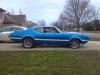
1969 442 6.0L LQ9 T56
Fab9 w/ custom 3 Link conversion
FAYS2 Watts link
Thanks to Mark at SC&C for his honesty and passion for the sport, and Ron Sutton for the wealth of knowledge that has helped shape so many of the cars on this site.
-
07-20-2022 #2
Registered User
- Join Date
- Aug 2007
- Location
- Normal, IL
- Posts
- 258
Man, you had me up until moving the gas tank. That's a deal breaker.
07-22-2022 #3
Registered User
- Join Date
- Jun 2012
- Location
- Chicago burbs
- Posts
- 247
Bruh I get it for sure, that was my reaction at first. But my tank was trash, so the idea of just replacing with the Nova 18 gal tank(that's the one they recommend), started to make a lot of sense. But if you've already got a nice $550+ tank...deal breaker. If thats the case, an adjustable Panhard bar my package a little easier and still get most(if not all) the benefits. Originally Posted by badbu68

1969 442 6.0L LQ9 T56
Fab9 w/ custom 3 Link conversion
FAYS2 Watts link
Thanks to Mark at SC&C for his honesty and passion for the sport, and Ron Sutton for the wealth of knowledge that has helped shape so many of the cars on this site.
07-22-2022 #4
Registered User
- Join Date
- Jun 2012
- Location
- Chicago burbs
- Posts
- 247
Watts Setup thoughts.
The arms do not have to be horizontal.
They HAVE to be the same length and the same ANGLE. On initial setup, rotating the axle mounts so that the arms are horizontal makes it easy and in my case, packaged best.
To get the same length, I made a quick jig out of 2x4s. It's not hard, but it's important. Any difference in length will result in deformation and ultimately binding. Again, not hard, but I used the jig because the tape measure just wasn't getting me what I needed.
Once it's setup with equal length arms, and both are horizontal, you are good to go. Moving the bellcrank pivot bolt up or down will make the arms not parallel, and that is totally fine. They will have equal angles and that is all that matters.
When I was at the track, I wanted to adjust the rollcenter, but didn't have the right size socket. Jim Fay provides a card to call if you have any questions anytime, so I called it on Saturday..Jim answered, let me know the right size socket to ask for and wished me good luck. I went over to a dude who had a full trailer, telsa and a generator and asked for the socket to borrow and was in business. I guess the point is, that Jim was real cool on the phone, and stands by a well made product. Wish there was more of this, you know?
1969 442 6.0L LQ9 T56
Fab9 w/ custom 3 Link conversion
FAYS2 Watts link
Thanks to Mark at SC&C for his honesty and passion for the sport, and Ron Sutton for the wealth of knowledge that has helped shape so many of the cars on this site.
07-23-2022 #5
Registered User
- Join Date
- Aug 2007
- Location
- Normal, IL
- Posts
- 258
Very cool, heh, funny you mentioned the nova tank, I wonder if its similar to mine. I have the tanks inc fuel injection tank with the corners cut to allow for bigger bigger tires/3" tails.
Honestly, this is very informative, keep up the documentation. Once my 68 chevelle is put back together and driving, I'll probably want to change the rear suspension.
I looked at the Fays2 website, do they sell one for A bodies or did you just adapt an f-body or mustang one?
07-24-2022 #6 Registered User
- Join Date
- Sep 2010
- Location
- corona,ca.
- Posts
- 1,120
Jim does sell the watts link for abodies. I actually made one for my 72 chevelle, but axed it t after speaking with Tony g from abc performance, don't know if I'm going to build a torque arm from parts from speedtech, or make a 3 link similar to what sslance has for his Monte Carlo. Originally Posted by badbu68
If you need the parts for a watts I have them sitting in the garage collecting dust!72 chevelle.
07-24-2022 #7
Registered User
- Join Date
- Dec 2021
- Location
- PNW
- Posts
- 38
A little confusing. You mention 3 link and 4 link. Which one did you go with and whats the end result? How does it drive?
07-25-2022 #8
Registered User
- Join Date
- Jun 2012
- Location
- Chicago burbs
- Posts
- 247
Yeah I see what you mean, let me try to clear up the timeline. When I installed the watts, I had the stock triangulated 4 link with adjustable upper arms and poly bushings. When I was testing the extremes of the watts adjustment, I encountered the binding from the two roll centers fighting each other. When it binds, the rear end movement is locked-and then it snaps back and is quite scary since I was mostly testing on empty on ramps. Originally Posted by Rb_69camaro
I replaced the poly upper bushings with stock rubber from autozone, and it helped-not eliminated-but helped the start of when it would bind. The adjustment point where it started to bind was at the lowest setting, and I have never found a need to use that setting, as I am mostly making small adjustments around the center.
Driving the car with the 4 link and the watts was amazing. It made the car feel so much more stable and predictable, and if I had stopped there I would have been just as happy with the dynamics. But if I ever have to start over with a new A-body…it would be one of the first mods I do along with front suspension and discs.
With the watts, I realized I could start taking this thing to road course HPDE events and having some real fun. It didn’t take long for me to want a legit posi rear end, proper gears, stronger axles, and a way to adjust anti-squat. Long story short-that led me to design the 3 link with the ford 9’’. I could have kept the 4link with the ford 9’’, but the three link allows me to use any watts setting as well as adjust antisquat easily.
Hope this helps, I plan to get into the details of the 3 link in my next post.
1969 442 6.0L LQ9 T56
Fab9 w/ custom 3 Link conversion
FAYS2 Watts link
Thanks to Mark at SC&C for his honesty and passion for the sport, and Ron Sutton for the wealth of knowledge that has helped shape so many of the cars on this site.

 Reply With Quote